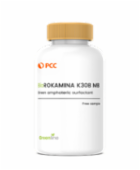
Surfactants are a key group of chemical compounds with a wide range of applications – from advanced industrial and pharmaceutical processes to common products such as detergents and emulsifiers. Amphoteric surfactants are of particular importance in this class of compounds.
Amphoteric surfactants are characterised by the fact that they contain both positively and negatively charged groups within the same structure. This molecular structure leads to unique properties – high solubility, low irritation potential and resistance to complex systems.
The ionisation state of amphoteric surfactants varies depending on the pH of the solution in which they are found. In an acidic environment, the molecule acquires a positive charge and behaves like a cation, while in alkaline solutions, the negative charge dominates and the molecule behaves like an anion. In the area of the isoelectric point, amphoteric surfactants take the form of zwitterions.
The properties of amphoteric surfactants are closely related to the structure of the molecule. They depend primarily on the length of the hydrophobic hydrocarbon chain, the number of positively and negatively charged groups, and their relative positions.
Thanks to their unique properties, amphoteric surfactants are widely used in many industries.
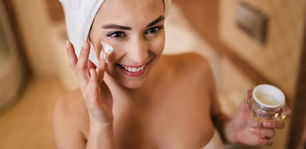
These surfactants are particularly valued in body care products such as shampoos, hair conditioners and shower gels, where mildness and skin compatibility are important. They are characterised by their gentle cleansing properties. Products containing amphoteric surfactants are particularly recommended for use in cosmetics for sensitive skin, as well as in baby care products. Their antistatic effect is equally important. They reduce the static charge that builds up on hair and other surfaces, which is particularly important in shampoos and conditioners. They are also often used as auxiliary substances – they mitigate the effect of certain anionic surfactants.
The ability of amphoteric surfactants to concentrate at the phase boundary results from their amphiphilic structure. This is particularly important in the case of complex mixtures of ingredients with different chemical properties. Cosmetic formulations are an example of such mixtures. The use of amphoteric surfactants improves the stability of emulsions and the clarity of finished products, which translates into the functional properties of the finished product. In addition, amphoteric surfactants, in combination with anionic surfactants, show a positive, synergistic increase in foam volume and improved stability.
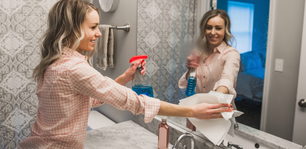
One important area of application for amphoteric surfactants is in household cleaning products. They work well on various surfaces, such as glass, stainless steel, chrome fittings, stone countertops, etc. They have a low tendency to leave streaks. In addition to domestic use, they are ideal for products intended for professional cleaning and industrial and institutional washing.
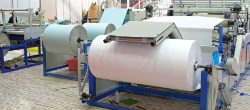
Amphoteric surfactants play an important role in construction and materials engineering. They are often used as air-entraining admixtures for concrete. The introduction of small, stable air bubbles into the concrete mixture increases its durability and frost resistance. Amphoteric surfactants also act as stabilisers. They are also added in small quantities to asphalts and bituminous compounds.
Another important industry that uses amphoteric surfactants is textiles. These compounds are a key component in, among other things, compositions for printing on fabrics and dyeing fibres. Thanks to their excellent surface properties, amphoteric surfactants support the process of dispersing, for example, poorly soluble ester salts in dyeing preparations. As a result, the salt does not precipitate and the emulsion remains stable during the process, which improves the quality of the final textile product.
Subscribe to receive information about new products on the Product Portal and commercial information about the PCC Capital Group
Sienkiewicza 4
56-120 Brzeg Dolny
Poland
Przemysław Kanikowski
email: iod.rokita@pcc.eu