




















































































































Bituminous emulsions are one of the most important materials used in modern road construction and waterproofing. Although at first glance they look like ordinary black liquid, they are in fact advanced chemical systems whose stability and performance depend on a very specific ingredient – surfactants, or surface-active agents. It is these agents that enable bitumen to combine with water to form a stable emulsion with a wide range of applications.

What is waterproofing?
Waterproofing is the protection of structures against water and moisture penetration. Waterproofing is used, among other things, in foundations, terraces, roofs, tunnels, reservoirs, and in road construction – as sealing and bonding layers. Its purpose is to:
- protect buildings against biological and chemical corrosion,
- protect structural elements from degradation,
- extend the durability of structures,
- improve comfort of use (e.g. no damp walls or foundations).
One of the most popular waterproofing materials are bituminous emulsions.
Bituminous emulsions – what exactly are they?
A bituminous emulsion is a mixture of bitumen (asphalt) and water, in which the bitumen is dispersed in the form of microscopic droplets. Since bitumen and water do not mix naturally, it is necessary to use special additives – surfactants – to stabilise the entire system. A typical bituminous emulsion consists of:
- bitumen – dispersed phase,
- water – continuous phase,
- surfactants (emulsifiers) – stabilise the system,
- fillers/modifying additives (e.g. bentonite, limestone powder, latex, polymers, defoamers, rheology modifiers).
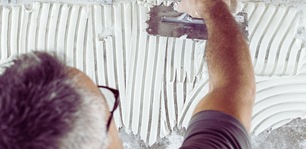
Bituminous emulsions are environmentally friendly, safe and easy to apply, as they can be spread cold and do not require the use of organic solvents.

How are bituminous emulsions made?
The production process of bituminous emulsion consists of:
- Heating the bitumen to a temperature that allows it to liquefy.
- Preparing the aqueous phase, containing surfactants and any additives.
- Introducing the bitumen into the water in a special device, e.g. a colloid mill or dissolver.
- The bitumen is broken down into microscopic droplets (usually 1–10 micrometres).
- Stabilising the system with surfactants that prevent the bitumen droplets from recombining.
The result is a homogeneous, stable liquid that can be easily spread on building surfaces.
Surfactants – the invisible heroes of emulsions
Surfactants (surface-active agents) are chemical compounds that reduce the surface tension between water and bitumen. This allows a stable emulsion to form. During emulsification, surfactants line up at the water-bitumen interface, forming a protective layer around the bitumen droplets. This prevents them from combining and the emulsion from separating.
The role of bituminous emulsions in waterproofing
Bituminous emulsions are widely used as waterproofing materials because:
- they form a flexible, tight coating,
- they adhere well to various substrates (concrete, brick, wood, steel),
- they are resistant to water, moisture and aggressive environments,
- they can be applied cold,
- they are environmentally friendly.
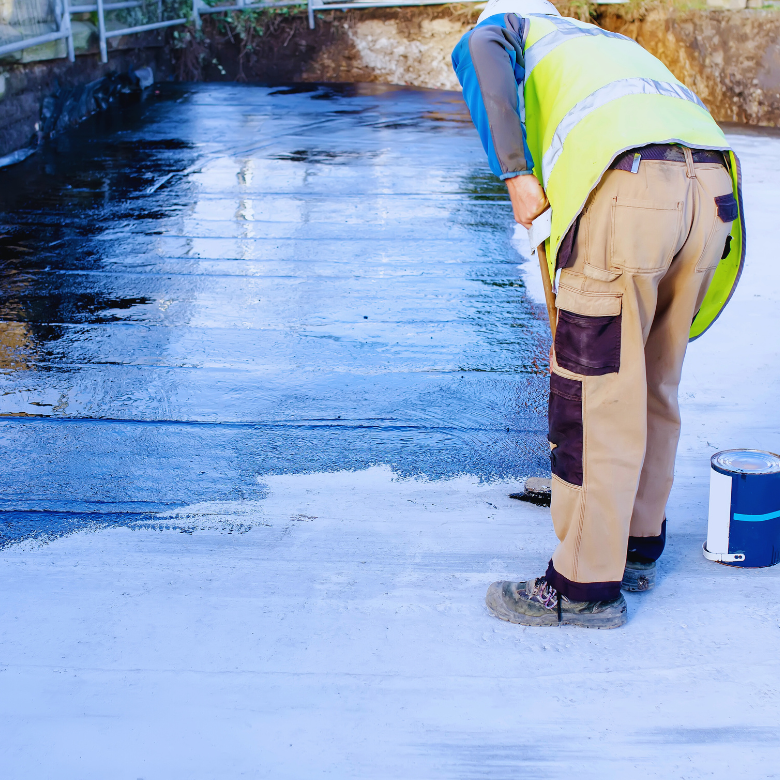
In practice, they are used as:
- foundation insulation,
- protective roof coatings,
- primers for roofing felt and membranes,
- protection for underground structures,
- bonding and sealing layers in road construction.
The EXObit series from PCC Exol
EXObit is a new series of additives offered by PCC Exol for the asphalt industry. It is a series of surfactants used mainly as emulsifiers for bituminous emulsions. Emulsifiers determine the type of bituminous emulsion (anionic, cationic or more modern – non-ionic). The use of EXObit products allows for the production of stable, high-quality emulsions. Both synthetic emulsifiers (EXObit E-S9, EXObit E-D7) and those based on natural raw materials (EXObit E-K40, EXObit E-K3B) are used as emulsifiers for bituminous emulsions. In addition to their role as emulsifiers, EXObit products can also act as viscosity modifiers, stabilisers or wetting agents. The choice of the appropriate emulsifier depends, among other things, on the type of emulsion obtained and the type of filler in the formulation.
Summary
Surfactants play a key role in the creation of bituminous emulsions – it is thanks to them that bitumen can be stably dispersed in water, creating a material with unique waterproofing properties. Bituminous emulsions are environmentally friendly, durable and versatile, and their applications include both general construction and road construction. Understanding the role of surfactants allows us to better appreciate how technologically advanced these seemingly simple materials are.