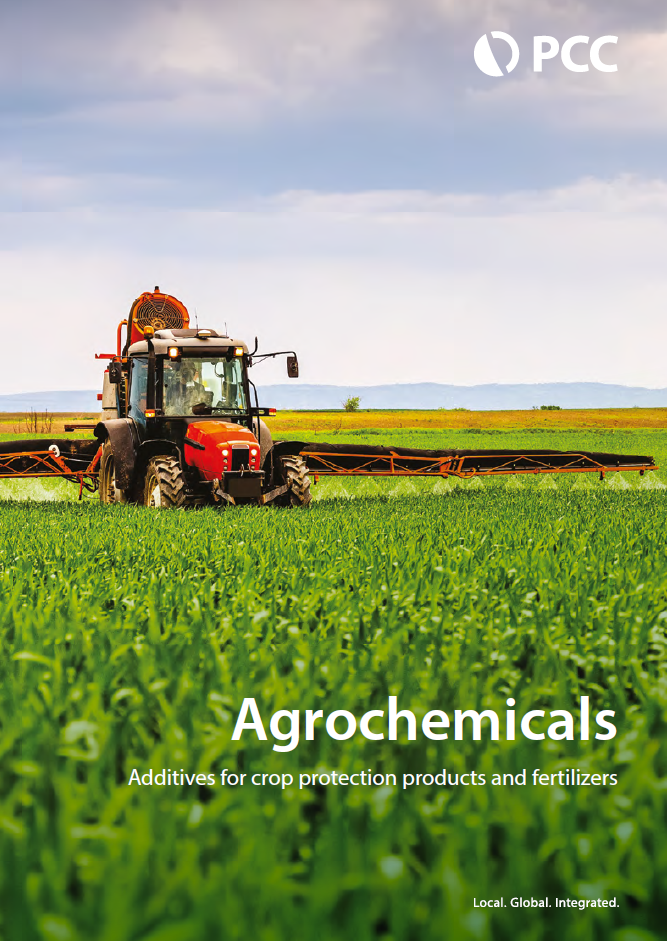
Liquid foliar fertilisers are nutrient solutions applied directly to the leaves of plants to deliver nutrients instantly. This approach yields faster results than soil application, as the nutrients are absorbed directly by the leaf tissue rather than via the root zone.
Foliar fertilisation is of key importance in modern agriculture due to its speed of action, high efficiency and the ability to intervene at critical stages of plant development. Applying fertilisers directly to the leaves stimulates plant activity, has a beneficial effect on water management (including the plant’s uptake of water from the soil), and this in turn stimulates root growth. Consequently, foliar fertilisers also accelerate the uptake of nutrients from the soil. To maximise yields and improve plant health, foliar fertilisers should be used in conjunction with soil fertilisers, rather than as a substitute for them.
In industrial agriculture, foliar fertilisers are a tool of great importance. This form of fertilisation allows for the precise delivery of nutrients at the appropriate stage of development and immediate intervention at critical moments for plant growth, e.g. in the event of deficiencies or stress. This plays a vital role in optimising crop yield and quality, as deficiencies in both macro- and micronutrients are highly detrimental to plants. For example, magnesium and iron deficiencies inhibit photosynthesis, whilst deficiencies in nitrogen and sulphur contribute to abnormal protein production.
The use of liquid foliar fertilisers is more effective than soil application in difficult conditions, i.e. when the root system is unable to absorb nutrients from the soil. This may be due to drought, low temperatures, unsuitable pH levels or high salinity. In such cases, foliar fertilisation becomes the only viable alternative, enabling plants to maintain proper growth by supplying the necessary minerals directly through the leaves.
A foliar fertiliser is mainly a mixture of macro- and/or micro-nutrients in the form of dissolved salts and complexes. This method of application to plants requires the formulation to be homogeneous, with individual components being highly water-soluble. This prevents the substances from crystallising in the finished fertiliser formulation. On the other hand, in the case of suspension-type foliar fertilisers, the emphasis is on ensuring the suspension’s stability, gradation and the inhibition of crystal growth, which can lead to the clogging of spray nozzles. To prevent this, special functional additives in the form of solubilisers or dispersants must be incorporated into the formulation.
The composition of the foliar fertilisers produced depends on their intended use. Depending on the plant species, growth stage or growing conditions, attention must be paid to the type of raw materials, the concentration of individual components in the formulation, as well as its physical and chemical properties. An important parameter to consider when selecting sources of individual macronutrients is the salt index. This indicates the extent to which a given fertiliser increases the salt concentration in the soil solution or on the leaf surface. The lower it is, the better, as this is associated with a lower risk of leaf burn, osmotic stress and phytotoxicity.
The most important groups of raw materials used in foliar fertilisers include:
Surfactants play a key role in improving the wettability of leaf surfaces when using foliar fertilisers, due to their ability to reduce the surface tension of the formulations. The PCC Group’s portfolio includes products that can fulfil a range of functions essential in liquid foliar fertilisers. Ethoxylated fatty alcohols (ROKAnole, including the DB, GA, IT, L and NL series) have good wetting properties, ensuring that the fertiliser components are evenly dispersed and spread more effectively across the leaf. Polyoxyethylene glycols (POLIkole) are effective solubisers, preventing crystal precipitation and allowing for higher nutrient concentrations in the formulation, as well as humectants that help retain moisture on the plant for longer. In addition, the range also includes ethylene oxide and propylene block copolymers (ROKAmers), whose variants exhibit different properties depending on their structure and EO/PO ratios. ROKAmers PP450, 2000, 2100 and 2330 have good wetting properties and are low-foaming compounds. ROKAmers 6500 and 1010 perform well as co-dispersants, as well as wetting agents and anti-drift agents, whilst ROKAmers from the G series can act as low-foaming co-dispersants in suspension formulations. The lack of foaming in foliar applications is important due to the risk of sprayer nozzles becoming clogged by foam, resulting in uneven spraying.