PCC
RegisterLogin Page

Cationic surfactants

Cationic surfactants, although less commonly used than other groups of surface-active compounds, still play a key role in many industries. They are examples of compounds with good emulsifying, dispersing and wetting properties.

Okładka katalogu
Filtry
Function
Composition
Segment
Manufacturer
Chemazine VOIM Chemazine VOIM is a vegetable derived oleyl imidazoline that may be used in various industries for generating exceptional foam. This chemistry also improves wetting...
Composition
Amines
CAS No.
95-38-5
Chemazine VOIM
Chemeen HT Chemeen HT may be used as a raw material for the production of ethoxylated amines.
Composition
Oil derivatives
CAS No.
61788-45-2
Chemeen HT
Chemquat 508/40 Chemquat 508/40 is a short chain quaternary compound that provides coupling and detergency in alkaline and neutral cleaners while maintaining a low foam profile.
Composition
Quaternary compounds
CAS No.
959-55-7
Chemquat 508/40
Chemquat BC/60 Chemquat BC/60 may be used as a corrosion inhibitors in multiple applications as well as an acid inhibitor in pickling solutions.
Composition
Quaternary compounds
CAS No.
68603-67-8
Chemquat BC/60
Chemquat DCDM/75 Chemquat DCDM/75 is a cationic surfactant that has antistatic, textile dyeing aid, and corrosion inhibitors properties. It may also be used in softener formulations...
Composition
Amines
CAS No.
61789-77-3
Chemquat DCDM/75
EXOtrope CS EXOtrope CS is a specialised, multifunctional cationic surfactant. The product has a form of a clear liquid containing approximately 60% of the active substance....
Composition
Alkoxylated fatty amines, Quaternary compounds
CAS No.
68989-03-7
EXOtrope CS
ROKAmin K15K (PEG-15 cocomonium methosulfate) ROKAmin K15K is a specialized cationic surfactant, INCI name: PEG-15 Cocomonium methosulfate. The product is in the form of a clear liquid and Hazen-scale colour...
Composition
Alkoxylated fatty amines, Quaternary compounds
CAS No.
68989-03-7
ROKAmin K15K (PEG-15 cocomonium methosulfate)
ROKAmin SRK8 (Fatty amine) ROKAmin SRK8 is a specialist cationic surfactant. The product is a quaternized and oxyethylenated fatty amine. It is a clear, viscous liquid with max. colour. 190...
Composition
Quaternary compounds, Alkoxylated fatty amines
CAS No.
73138-81-5
ROKAmin SRK8 (Fatty amine)
TEQUAT®LC 90i (Tallow esterquat) Tequat LC90i is a cationic surfactant. It is obtained by the condensation reaction of fatty acids of animal origin and triethanolamine, and then quaternized. The...
Composition
Mixtures, Quaternary compounds
TEQUAT®LC 90i  (Tallow esterquat)
TEQUAT®E (Tallow esterquat) Tequat E is a cationic surfactant. It is obtained by condensation of fatty acids of animal origin and triethanolamine, and then quaternised. The commercial product...
Composition
Mixtures, Quaternary compounds
TEQUAT®E  (Tallow esterquat)
1 - 10 of 10 products
Items on page: 20

Cationic surfactants – characteristics and properties

Surfactants are amphiphilic compounds that contain both hydrophobic and hydrophilic groups, making them soluble in both organic solvents and water. Cationic surfactants are compounds that have a positively charged fragment in their structure.

The structure of cationic surfactants determines many of the functional properties that are desirable in industrial applications:

  • When added to a system, they accumulate at the phase boundary and reduce surface tension, thus enabling rapid wetting of the surface.
  • Interfacial action is also an important aspect of formulation stabilisation. Therefore, cationic surfactants act as emulsifiers in many mixtures.
  • They have good antistatic properties. They are usually dispersed on the surface and their role is to increase surface conductivity, which helps to prevent the accumulation of surface charge.
  • Cationic surfactants are used as corrosion inhibitors to protect metal materials from corrosion. The adsorption of the surfactant on metals and metal oxides creates a barrier that can inhibit corrosion.
  • The dispersing action promotes the formation of fine droplets of one phase that disperse in the other phase. This reduces sedimentation and agglomeration, increasing the stability of the formulation.
  • Some cationic surfactants are referred to as hydrotropes. This means that they increase the solubility of other components in the formulation.

Application of cationic surfactants

Textiles

As a component of softening formulations, cationic surfactants are used in the textile industry to give finished products antistatic and softening properties. They are also used as one of the components dedicated to fibre dyeing. Cationic surfactants reduce the stiffness, roughness and coarseness of fabrics, making them soft and fluffy.

Cosmetics and detergents

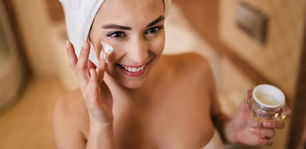
Cationic surfactants are important conditioning ingredients in hair care cosmetics such as shampoos, regenerating conditioners and hairsprays. Their primary function is to improve combability, softness and reduce static electricity. In household chemicals, they are used in concentrates and fabric softeners, where they act as softeners. In addition, they are used in the antistatic treatment of industrial fibres.

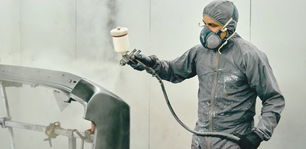
Cationic surfactants are also an important ingredient in car care products. They are found in waxes and polishes, and are also an active component in rinses designed to speed up the drying of car bodies while preventing streaks and water spots.

Plastics

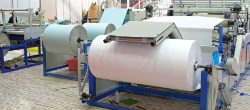
Cationic surfactants are used as additives in the production of plastics, primarily due to their antistatic properties. Their use in production is very important because the phenomenon of electrical charge accumulation limits the speed of the technological process, generates material losses, causes product contamination and accelerates its decomposition. Cationic surfactants are used, among other things, in the production of polyethylene or polypropylene films.

Paper industry

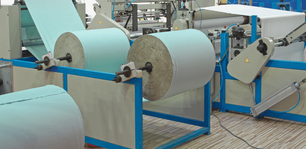
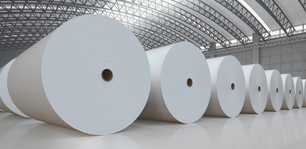
In paper production, cationic surfactants are included in softening formulations. During the production process, they give the finished products antistatic properties and have a softening effect.