















































































The HLB (Hydrophile Lipophile Balance) index is also known as the hydrophilic-lipophilic balance or hydrophilic-hydrophobic balance. In practice, it is a scale of values representing the ratio between the hydrophilic and lipophilic parts of a molecule. This parameter allows the degree of polarity of chemical compounds to be determined. The usefulness of measuring the HLB of a molecule is most often discussed in the context of emulsifiers, i.e. a group of surfactants.
HLB scale
This is a conventional scale, the first in history, called the Griffin scale, which has twenty degrees, from 0 to 20, and refers mainly to non-ionic surfactants. The position of a substance’s properties on the scale allows certain characteristics to be predicted:
- It is assumed that from zero to ten, a substance has a greater affinity for lipophilic molecules, and therefore dissolves better in oils and hydrophobic compounds than in water.
- Above ten, the affinity for water and hydrophilic particles increases. Surfactants with an HLB value >10 are therefore more hydrophilic, and their solubility increases in water and decreases in oils.
- An intermediate value of 10 means that the compound has both hydrophilic and hydrophobic parts of the molecules. The ratio of their values to each other is approximately 1:1.
- Extreme values: 0 indicates a compound consisting exclusively of hydrophobic groups, and 20 is assigned to substances that have only hydrophilic parts in their structure.
What does the HLB scale tell us?
In the context of surfactants use, the hydrophilic-hydrophobic balance scale is the basis for formulation development. Depending on its value, surfactants have different properties:
- Values from 1 to 3 – anti-foaming agents,
- Values from 3 to 6 – W/O emulsifiers, i.e. water in oil, giving the effect of a milky suspension,
- Values from 7 to 9 – wetting and coating agents, which are a stable milky suspension,
- Values from 9 to 18 – O/W emulsifiers, i.e. oil in water, which are mostly transparent and clear suspensions,
- Values from 13 to 15 – washing agents, detergents, transparent solutions,
- Values from 13 to 18 – solubilisers, transparent solutions.
Knowing the HLB value makes it possible, among other things, to select the right emulsifier for a given emulsion system.
Extension of the Griffin scale
The original 20-point scale was eventually extended to 40 points. This is due to ionic lipophilic compounds, which become increasingly hydrophilic during changes in solutions.
How to calculate HLB?
- For most substances, we use a simplified formula:

- For oxyethylated fatty acids, i.e. compounds from the ester group, a formula was derived, extended by their saponification and acid numbers.
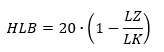
Where:
- LZ – saponification number of the oxyethylation product
 ,
, - LK – acid number of the oxyethylated acid
 .
.
Experimental methods
The HLB number can not only be calculated, but also determined and verified experimentally. This is done using techniques such as emulsion methods, NMR spectrophotometry, and gas chromatography, which are based on the characteristic properties of surfactants, including:
- Heat of adsorption,
- Foaming properties,
- Wetting angle,
- Interfacial tension,
- CMC, or critical micelle concentration,
- PIT, or phase inversion temperature.

Emulsions
Hydrophilic-hydrophobic balance is a key element in the selection of functional formulations. Every emulsion, for example: creams, lotions and balms, consists of two parts – an aqueous phase and an oil phase. Due to their divergent chemical properties, these two parts do not mix with each other, and when forced to homogenise, they form only unstable emulsions. The molecules of one liquid are dispersed or suspended between the molecules of the other.
For this reason, substances called emulsifiers are added to formulations to improve the ability of the other ingredients to form stable emulsions.
What determines the choice of the ideal emulsifier?
-
- Properties and composition of the lipid phase,
- Type of emulsion desired:
- O/W, or oil in water, is a type of emulsion commonly used in cosmetics, in which the lipophilic oil phase is dispersed in the hydrophilic water phase. Such emulsions are characterised by a light consistency and easy absorption.
- W/O, or water in oil, is an emulsion in which the hydrophilic aqueous phase is dispersed in the lipophilic oil phase. Such emulsions are distinguished by a greasier and denser consistency, which helps to reduce moisture loss and protect the skin from external factors.
Examples of W/O emulsifiers
Non-ionic emulsifiers, which are esters of alcohols and fatty acids, esters of polyhydric alcohols and fatty acids, esters of sorbitan and higher fatty acids:
-
-
- White beeswax,
- Yellow beeswax,
- Lanolin,
- Glyceryl monostearate.
-
Examples of O/W emulsifiers
This group includes anionic and non-ionic emulsifiers:
-
-
- Soaps: sodium, potassium and ammonium salts of higher fatty acids and multivalent metal soaps, such as magnesium oleate,
- Polysorbates: Tween, Myrj, block polymers.
-
HLB in practice
For fatty raw materials, we can create a list of the best emulsifiers, depending on the type of emulsion we want to obtain. Below are examples of HLB emulsifiers that can be used to obtain an emulsion from a given raw material and water:
Lipophilic phase component for emulsions
| Lipophilic phase ingredient for emulsions | W/O | O/W |
| Stearic acid | 6 | 15 |
| Cetyl alcohol | – | 15 |
| Stearyl alcohol | – | 14 |
| Anhydrous lanolin | 8 | 10 |
| Cotton oil | 5 | 10 |
| Mineral oil | 5 | 12 |
| Beeswax | 4 | 12 |
Example: In order to obtain a W/O emulsion for beeswax and water, an emulsifier with an HLB value of 4 should be used. To obtain an O/W emulsion from the same ingredients, it is necessary to use an emulsifier with an HLB value of 12. In the case of cetyl and stearyl alcohol, the production of a W/O emulsion does not require the presence of an emulsifier.
Calculating the HLB of an emulsifier
In order to stabilise the emulsion of interest, the HLB value for the emulsifier or emulsifier mixture must be calculated. For this purpose, the HLB value is calculated only for the fatty part, even if its share in the formulation is negligible. For emulsifier mixtures, the HLB value is calculated based on the individual components and their relative proportion in the mixture. Most oils, butters and waxes have an HLB value between 6 and 8, but some fats may deviate significantly from these values. For example, the HLB value of castor oil is 14. This means that the use of a mixture of fats in the oil phase can cause a complete change in the HLB value of the emulsifier recommended for emulsification, depending on their component proportions.
Example HLB values for emulsifiers
-
- GMS: 3-4,
- Propylene glycol monostearate: 3.4,
- Glycerol monostearate: 3.8,
- Span 80: 4.3,
- Tween 80: 15,
- Polysorbate 20: 16-17.
- Michocka, K. Otrzymywanie i właściwości użytkowe nowych surfaktantów z ugrupowaniem cukrowym. Uniwersytet Ekonomiczny w Poznaniu, 2012. Wydawnictwo UE Poznań – wersja podglądowa PDF dostępna online: https://wydawnictwo.ue.poznan.pl/books/978-83-8211-090-6/sample.pdf
- Receptura.pl. „Równowaga hydrofilowo-lipofilowa i jej znaczenie w recepturze aptecznej.” Dostęp online: https://receptura.pl/rownowaga-hydrofilowo-lipofilowa-i-jej-znaczenie-w-recepturze-aptecznej/
- Zgoda, M. M., Hreczuch, W., Woskowicz, M., Nachajski, M., Kołodziejczyk, M. „Związki powierzchniowo czynne z grupy polioksyetylenowanych estrów kwasów tłuszczowych.” Polimery, 2003.