PCC
RegisterLogin Page

GLYCERETH-8
Glycerol, ethoxylated

Products with INCI GLYCERETH-8 names in the offer of PCC Group

GLYRERETH-8 is the name in the International Nomenclature of Cosmetic Ingredients (INCI) for a non-ionic surfactant. From a chemical point of view, the name ‘Glycereth’ refers to substances that are ethers of glycerine and polyethylene glycol (PEG). The second part, i.e. the number, tells us the average number of molecular units with the semi-structural formula ‘-CH2-CH2-O-’.

Such substances, also known as glycerine ethoxylates, belong to the chemical class of alkoxylated alcohols, which are also polyether alcohols. The substance with the INCI name GLYRERETH-8 is therefore an ethoxylated glycerine, a polymer with an average degree of ethoxylation of approximately 8 moles. The global chemical substance identification number (CAS) for GLYRERETH-8 is: 31694-55-0.

Structure and Properties

GLYCERETH-8 has three hydrophilic groups in its structure, which are parts of molecules that have a stronger affinity for water, but also for other polar molecules. The high affinity of a substance or its parts for water, also known as hydrophilicity, facilitates the binding of the substance’s molecules with polar molecules (including water).

The presence of hydrophilic groups in a molecule can therefore result in rapid dissolution in both water and other polar solvents, such as:

  • alcohols,

  • acetone,

  • acetic acid,

  • acetonitrile,

  • dimethyl sulfoxide (DMSO).

The molar mass of GLYCERETH-8 is approximately 445 g/mol. Polyethylene glycols (PEGs) with an average molecular weight of up to 600 g/mol are characterised by a liquid state. This ethoxylated glycerine is a non-volatile, relatively viscous liquid at room temperature.

  • Its colour is rated at a maximum of 100 Hazen units.

  • The kinematic viscosity:

    • at 40 °C is approx. 88 cSt (centistokes),

    • at 100 °C – approx. 11 cSt.

The unit St, or stokes, corresponds in the SI system to the unit [m^2/s] in the ratio 1 St = 10^(-4) m^2/s.

The substance is biodegradable, i.e. it can be broken down into simple inorganic substances that do not adversely affect the environment. The product is not classified according to Regulation (EC) No 1272/2008 [CLP/GHS] and is therefore not considered to pose a risk to human health or the environment.

Preparation

GLYCERETH-8 is produced on a mass scale by subjecting glycerine and ethylene oxide to a chemical reaction. Polyether alcohols are often formed as a result of the reaction of alcohol with epoxides, such as ethylene oxide or propylene oxide.

Epoxides are a class of organic chemical compounds characterised by the presence of a three-membered, saturated ring composed of an oxygen and two carbon atoms. They are cyclic ethers which, due to the presence of a strained ring, have slightly different properties from ethers.

A key property in the production of GLYCERETH-8 and other polyether alcohols is their very high reactivity. Such a type of chemical reaction, which is a common method for obtaining polyether alcohols, is called alkaline catalysis.

The initiation of alkaline-catalysed synthesis of ethoxylated glycerine involves adding epoxide to a dry solution of the appropriate alcohol, in this case glycerine. Due to the fact that the ether formed as a result of the reaction of one molecule of alcohol with one molecule of epoxide is also an alcohol, this series of reactions with epoxide can continue until its supply is exhausted. Another way to terminate such a chemical reaction is to add acid to the system.

In the final stage of production, one or more oxidising agents (e.g., hydrogen peroxide) or stabilisers (e.g., butylated hydroxytoluene) are usually added.

Examples of natural raw materials containing GLYCERETH-8 include oils such as:

  • macadamia oil,

  • olive oil,

  • babassu oil obtained from the seeds of the Attalea palm.

Application

Thanks to its structure, GLYCERETH-8 is an excellent humectant, i.e. an agent that has the ability to bind and retain water. It can be used in products, including cosmetics, to maintain the right level of moisture. This is due to its excellent solubility in water, caused by its hydrophilic properties.

In body cosmetics, the use of humectants helps to:

  • restore skin tone,

  • increase its firmness,

  • ensure optimal moisture levels.

Due to its properties, GLYCERETH-8 is also an excellent base for lubricants, as its moisturising effect reduces friction. And due to its biodegradability, it is also an environmentally friendly lubricant ingredient.

Due to its exceptionally high reactivity, this substance can be used as a raw material for further modifications and structural transformations to obtain new chemical compounds with countless applications. Common co-reagents for such transformations include fatty acids, which increase the potential uses of ethoxylated glycerine.

In medical products, polyethylene glycols, which include GLYCERETH-8, are very often used as additives. Due to their solubilising properties, they are ideal as solubilisers for other substances that are difficult to dissolve in water.

In addition, they help to achieve the desired consistency and properties, for example in the manufacture of various types of suppositories and globules, and are an ideal hydrophilic base that is soluble not only in water but also in mucous membrane secretions.

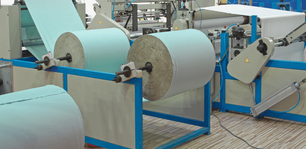
Esters of glycerine and polyethylene glycol, known as ‘GLYCERETH-n’ in the INCI nomenclature, are also widely used in the textile industry, especially in the production of dyes and finishing materials.

They act as:

  • humectants,

  • solubilisers,

  • viscosity regulators during many textile processes.

As solvents, they work well for dyes and chemicals used during the dyeing and printing of materials, improving the uniform dissolution and dispersion of colours. By ensuring adequate moisture and viscosity, they help to prevent material brittleness and ensure proper application and coverage with dyes and printing pastes.

Acting as a protective layer, they improve the overall appearance and quality of the textiles produced.