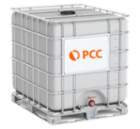
PEG-6 Caprylic/Capric Glycerides is the INCI systematic name (International Nomenclature of Cosmetic Ingredients) for a chemical substance classified as an emulsifier. It is a glyceride of a mixture of two acids – caprylic and capric – that have been ethoxylated with six moles of ethylene oxide.
In Polish nomenclature, the name “Glicerydy kaprylowo-kaprynowe PEG-6” is used. The abbreviation PEG indicates the substance’s chemical origin, i.e. polyethylene glycol, while the number refers to the average number of repeating units with the semi-structural formula –CH₂–CH₂–O– present in the molecule. The number “6” thus denotes the number of ethylene oxide moles used during the production process.
The term “caprylic” refers to the presence of caprylic acid (also known as octanoic acid), while “capric” indicates the presence of capric acid (decanoic acid). Both fatty acids are mainly introduced during the acylation reaction.
PEG-6 Caprylic/Capric Glycerides is considered safe for cosmetic use without specific restrictions. It is not classified as a hazardous substance under chemical regulations. It does not cause allergic reactions and is well tolerated by the skin. It is also a gentle substance. The global CAS number for PEG-6 Caprylic/Capric Glycerides is 308067-11-0.
PEG-6 Caprylic/Capric Glycerides is a derivative of polyethylene glycol and a mixture of mono-, di-, and triglycerides of caprylic and capric acids. It contains an average of six moles of ethylene oxide.
At room temperature (20–25 °C), it appears as a clear, thin liquid with a colour measured at 150 on the Hazen scale. It has two notable characteristics: an odour and good solubility in water, alcohol, and oils. It dissolves well in aqueous solutions of surfactants but can also dissolve oils and oil-soluble ingredients.
This substance is subject to ADN regulations but not to ADR/RID rules. It may be of synthetic or natural (plant-based) origin. It is commonly derived from coconut oil, in which caprylic and capric acids are combined with glycerine and then oxyethylated. This makes the substance suitable for use in vegan cosmetic formulations.
PEG-6 Caprylic/Capric Glycerides is stable in electrolyte solutions but sensitive to pH changes — it is stable under low pH and susceptible to hydrolysis under high pH conditions. It is resistant to hard water, which typically contains calcium and magnesium ions.
PEG-6 Caprylic/Capric Glycerides is most commonly obtained from coconut oil. Commercial versions of the substance may be certified under the RSPO Mass Balance model. This certification ensures that palm oil used in the production of its derivatives originates from plantations that do not cause environmental degradation and operate with respect for local communities.
Glycerides are conversion products of glycerine, forming esters through reactions with fats. These may result from either transesterification or direct esterification with one or more fatty acids. Caprylic triglyceride, for example, is a mixed triester of glycerol and two fatty acids: caprylic and capric.
It is produced by separating fatty acids and glycerol from coconut oil through hydrolysis — a process that uses heat and pressure to break down the raw material. The separated acids are then reattached to glycerol via esterification.
The main function of PEG-6 Caprylic/Capric Glycerides in cosmetics is as an emulsifier. It enables the formation of emulsions such as creams, lotions, and balms. Emulsifiers help combine immiscible liquids — typically oil and water — into a stable dispersion.
Like all emulsifiers, PEG-6 Caprylic/Capric Glycerides contains two key parts: a lipophilic part (oil-attracting) and a hydrophilic part (water-attracting). Derived from medium-chain triglycerides, it has an HLB (Hydrophilic–Lipophilic Balance) value of approximately 12.5–14. This makes it an effective oil-in-water (O/W) emulsifier.
The HLB scale rates a substance’s hydrophilicity or lipophilicity: a value of 0 indicates a fully lipophilic molecule, while a value of 20 means it is fully hydrophilic. PEG-6 Caprylic/Capric Glycerides falls within the HLB range suitable for O/W emulsifiers, detergents, and solubilisers.
In addition to being an emulsifier, it is also a non-ionic surfactant. It functions as a foaming agent, helping stabilise and enhance foam quality when used with anionic surfactants. It also serves as a rheology modifier, improving product consistency through increased viscosity.
These characteristics make it especially useful in cleansing products that contain anionic surfactants, as it facilitates the formation of mixed micelles. These structures — colloidal particles composed of multiple surfactant types — contain both hydrophilic and hydrophobic regions. As a result, they effectively remove impurities from a wide range of surfaces, interacting with both water- and fat-soluble substances.
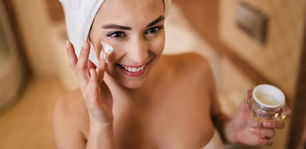
In the cosmetics industry, PEG-6 Caprylic/Capric Glycerides is widely used in products for facial, body, and hair cleansing. It appears in creams, lotions, and shampoos, usually at concentrations ranging from 0.5% to 5%, where it acts as a softening, moisturising, dissolving, and wetting agent.
In skincare formulations, it functions as an emollient. Its fatty acid composition helps regenerate the skin’s surface and prevents moisture loss. As a non-ionic ingredient, it provides lightweight, non-greasy hydration.
It performs especially well in micellar waters and other cleansing products, where its dual emulsifying and emollient properties help break down and remove serum and impurities without overly drying the skin. For this reason, it is a common ingredient in make-up removers.
Due to its properties, it is also widely used in shampoos. There, it not only acts as a mild, non-allergenic, and effective cleansing agent but also enhances the performance of secondary surfactants — improving foam quality and providing a silky texture.