



















































































































They are one of the most commonly and readily used protective agents, designed to eliminate weeds effectively, efficiently and safely. They not only affect crop yields, but also have a real impact on their quality.
What exactly are they, what function do they perform and what types are there? Learn key information about the definition, purpose and strengths of herbicides.
What are herbicides?
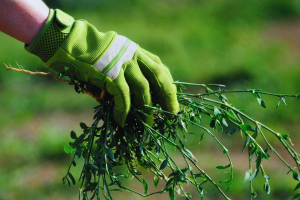
Herbicides are chemical plant protection products designed to control unwanted vegetation, or simply put, weeds.
Like many other substances (including fungicides and insecticides, which we have already written about on our blog), they play a key role in modern agriculture focused on safety, quality and quantity. What do they do? They are mainly responsible for eliminating and, consequently, regulating the level of weed infestation. Without them, food production would be much less efficient and, in many cases, impossible.
What types are there? Basic classification of herbicides.
Currently produced preparations are selective and safe (especially compared to their predecessors). They therefore allow for the precise control of specific weed species without harming crops. Herbicides are classified according to several criteria.
By mode of action:
- Contact – acting locally. They destroy only those parts of the plant with which they come into direct contact.
- Systemic – absorbed by the plant, they act holistically and destroy weeds from within.
By scope of action:
- Selective – they destroy only specific weed species and ‘bypass’ crops.
- Non-selective – so-called total. They act on all plants – without exception.
In addition to the above, we also distinguish between: application periods (pre-sowing – applied before sowing, pre-emergence – applied before plant growth, post-emergence – when plants are already visible) and application sites (soil, foliar).
How do they eliminate weeds?
These agents work by disrupting key life processes, which leads to the elimination of weeds. In this area, we can distinguish between treatments such as:
- Blocking photosynthesis, which prevents the production of sugars and leads to the depletion of energy reserves.
- Stopping protein production (using amino acid synthesis inhibitors).
- Uncontrolled plant growth (via growth regulators).
Each group works differently, but all lead to the weakening and death of the plant. This selectivity of herbicides results from differences in anatomical structure, metabolic processes and detoxification capacity.
When and where to use herbicides?
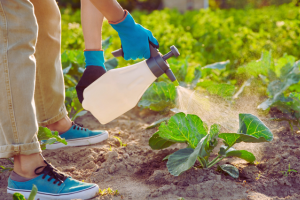
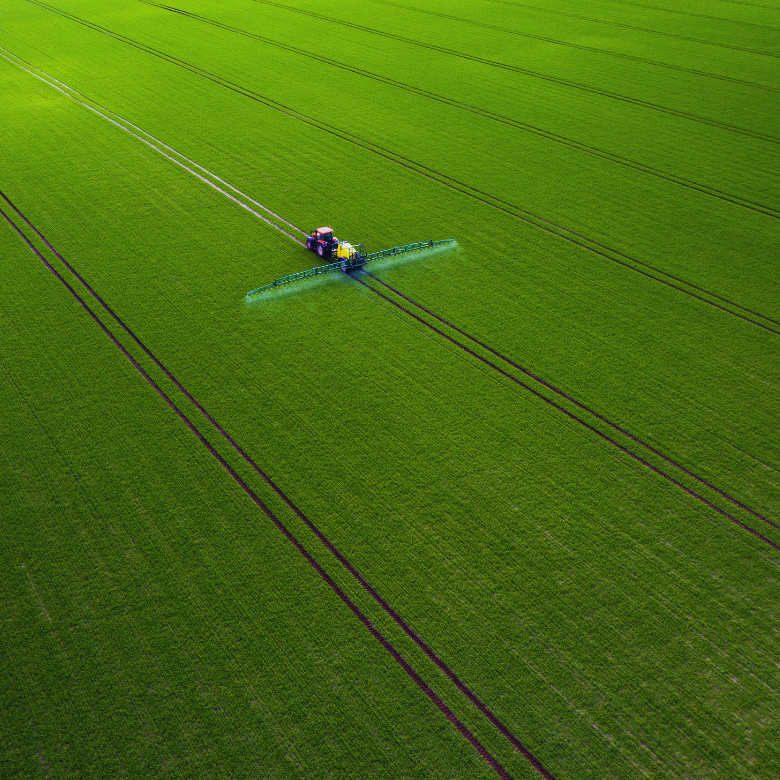
In the introduction to this paragraph, we must clearly state that each species requires a different approach. Herbicides (including their doses) should be selected according to: the type and stage of cultivation, as well as the prevailing conditions. The optimal conditions for spraying are considered to be a temperature between 10 and 25°C, humidity above 60% – preferably with no or very little wind.
Avoid: application on hot days, just before rain, and the constant use of the same products (we recommend rotation – every other season).
Benefits and risks – what is worth knowing?
The advantages include, above all, an increase in yields, which (due to the elimination of weeds) can be even several dozen percent higher. In addition to the quantities themselves, the quality also improves, and with it – potentially higher prices that can be obtained from sales. The positives can also be seen in the ‘handling’ and care of the crops themselves. The use of appropriate products reduces labour costs.
As for the ‘cons’, these include potential risks to health or the environment, but… only if herbicides are used improperly.
Are you looking for additional sources of knowledge?
Herbicides are part of a wide range of agrochemicals that we supply to farms throughout the country and beyond. We encourage you to explore our full range.
If you want to expand your knowledge of plant protection products, be sure to read our article on the classification of chemical plant protection products. You will also find more practical advice on our blog.
- U.S. EPA - Herbicides. (2025). „Herbicides are chemicals used to manipulate or control undesirable vegetation …” EPA CADDIS website. Dostęp: https://www.epa.gov/caddis/herbicides
- https://www.britannica.com/science/herbicide