



























































































Effective and safe preservation of cosmetics is not only a way of extending their shelf life. It is also (and perhaps above all) a method of protecting substances from the negative effects of microorganisms.
What are they and how do they work? What impact do they have on health and what does the scientific research on parabens used in the cosmetics industry tell us about them?
What are parabens?
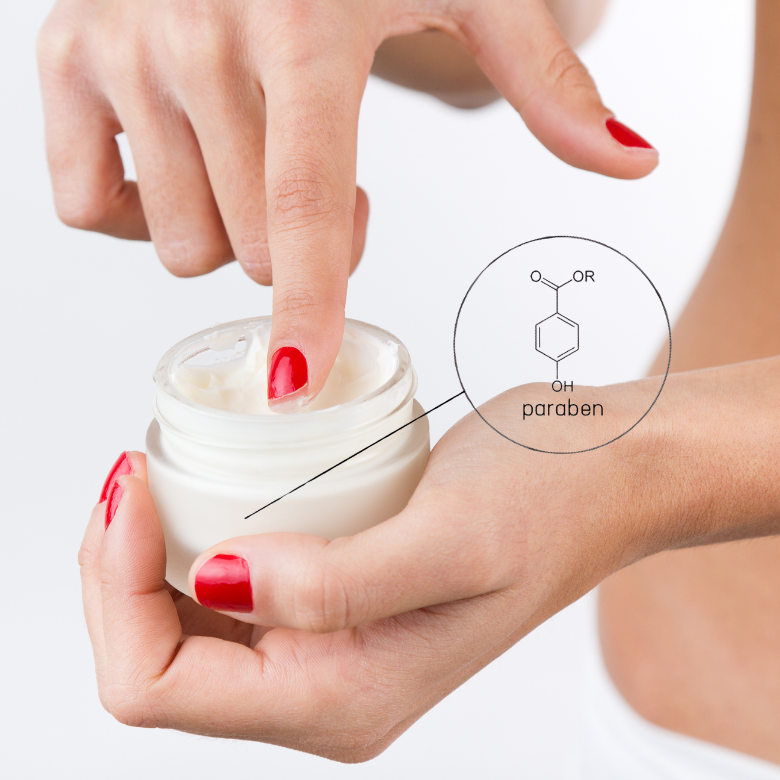
Parabens are chemical compounds (esters of parahydroxybenzoic acid). Their main task is to protect products from spoilage. They act as preservatives that prevent the appearance and subsequent growth of bacteria, mould and fungi. It is these characteristics that make them widely used in the manufacture of cosmetics. They can be found in creams, lotions, shampoos, perfumes, make-up products and much more.
What types of parabens are found in cosmetics?
Four groups of parabens deserve special mention, including:
- Methylparaben and ethylparaben – often found in the formulation of skincare products.
- Propylparaben and butylparaben – used in cosmetics that have a longer shelf life.
Which parabens are NOT used in the cosmetics industry?
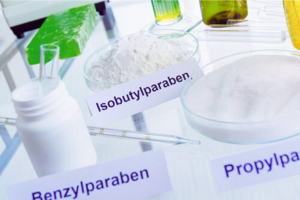
This group includes: isobutylparaben, isopropylparaben, phenylparaben, benzylparaben, pentylparaben. Their use in cosmetics has been banned in the European Union due to their potential negative health effects.
How do they work and why are they added to cosmetics?
Cosmetics manufacturers use parabens primarily for two reasons:
- Firstly, because they effectively protect their products from pathogens and, consequently, from spoilage (e.g., as a result of bacteria, fungi, etc.).
- Secondly, because they are simply a rational and safer alternative to other preservatives (provided they are in safe concentrations).
Are they safe for health?
The possible impact of parabens on human health is a very complex and not at all clear-cut topics. Some people point out the potential risks of hormone disruption, fertility problems or links to the causes of breast cancer. Allergic reactions are relatively rare.
However, we must stress that research does not confirm any harmful effects at concentrations used in cosmetics. In addition, it is worth remembering that their use in production is supervised by designated institutions that regularly test and evaluate the safety of parabens. Naturally, this issue does not apply to the ‘bad’ parabens, which have been officially banned for use in cosmetology.
And speaking of control…
What does the law say about this? Standards and restrictions on parabens.
The good news is that the current regulations in the European Union are among the strictest. They clearly indicate which parabens are permitted for use in cosmetics (and in what concentrations) and which are categorically prohibited. The limitations are derived from analyses and studies carried out by independent experts.
Alternatives to parabens – are ‘paraben-free’ cosmetics always a good choice?
Cosmetics whose formulations do not contain these substances are certainly gaining in popularity. However, it is worth remembering that the use of alternative preservation methods (e.g. sorbic acid or plant extracts) is not always as effective.
Some ingredients that are considered natural can lead to irritation and even cause allergic reactions. Price also plays an important role. Due to their lower popularity and the need for higher concentrations, they are simply more expensive. On the other hand, cosmetics without any preservatives have a significantly shorter shelf life.
Parabens in cosmetics – harmful or safe?
As we slowly approach the end of this publication, it is time for a brief summary. Publicly available information allows us to conclude that parabens used in cosmetics are safe for most people, provided that:
- They are selected appropriately (methylparaben, ethylparaben, propylparaben, butylparaben).
- The concentration of these substances is appropriate (as specified, for example, by EU standards).
Exceptions include people who are allergic to these ingredients.
Their potential harmfulness is significantly lower, especially when we consider the risks associated with the growth and activity of microorganisms that can arise in cosmetic products without such preservatives.
Looking for more information?
Parabens are just one of many ingredients used in the production of long-lasting, safe and effective cosmetics. Surfactants, which you will find in the PCC Exol offer, also play an important role. For an extra dose of knowledge on chemistry and beyond – visit our blog.
- https://www.fda.gov/cosmetics/cosmetic-ingredients/parabens-cosmetics
- Scientific Committee on Consumer Safety (SCCS), Opinion on Parabens (SCCS/1348/10, SCCS/1514/13, SCCS/1552/15), European Commission, Brussels 2014 https://ec.europa.eu/health/scientific_committees/consumer_safety/docs/sccs_o_041.pdf