PCC
RegisterLogin Page

I&I Cleaning

The PCC Group offers a wide range of raw materials and finished products dedicated to the industrial and institutional cleaning industry. This offer is addressed both to manufacturers of industrial cleaning and washing agents, as well as to end-users.

Okładka katalogu
Filters
Function
Composition
Segment
Manufacturer
of 20
EXOfos®PB-136K/90 (Phosphoric ester) EXOfos PB-136K/90 is an anionic surfactant classified as a phosphate ester. This ester is based on ethoxylated tridecyl alcohol, and it is offered neutralised as...
Composition
Phosphate esters
EXOfos®PB-136K/90 (Phosphoric ester)
EXOfos®PB-1810 (Phospohric ester) EXOfos PB-1810 is an anionic surfactant that belongs to the group of phosphoric esters. This ester is based on an ethoxylated, saturated alcohol with a C16-C18 carbon...
Composition
Phosphate esters
CAS No.
106233-09-4
EXOfos®PB-1810 (Phospohric ester)
EXOfos®PB-184 (Phosphoric ester) EXOfos PB-184 is anionic surfactant classified among phosphate esters. This ester is based on ethoxylated oleyl alcohol. This product is offered in acidic form and...
Composition
Phosphate esters
CAS No.
39464-69-2
EXOfos®PB-184 (Phosphoric ester)
EXOfos®PB-264 (Phosphoric ester) EXOfos PB-264 is an anionic surfactant belonging to the group of phosphoric esters. This ester is based on ethoxylated lauryl alcohol, INCI name: Laureth-4 Phosphate....
Composition
Phosphate esters
CAS No.
68511-37-5
EXOfos®PB-264 (Phosphoric ester)
EXOfos®PB-267 (Phosphoric Ester) EXOfos PB-267 is an anionic surfactant that belongs to the group of phosphoric esters. This ester is based on ethoxylated lauryl alcohol. This product is offered...
Composition
Phosphate esters
CAS No.
68511-37-5
EXOfos®PB-267 (Phosphoric Ester)
EXOfos®PB-136B (Phosphoric ester) EXOfos PB-136B is anionic surfactant classified among the phosphorus esters. The ester is based on ethoxylated tridecyl alcohol, and it is offered in acidic form....
Composition
Phosphate esters
CAS No.
9046-01-9
EXOfos®PB-136B (Phosphoric ester)
EXOfos®PD-103LP EXOfos PD-103 LP is a special mixture that consists of phosphorus ether based on ethoxylated branched fatty alcohols and alkoxylated alcohol. The product has the...
Composition
Phosphate esters
EXOfos®PD-103LP
EXOfos®PF-623 (Phosphoric ester) EXOfos PF-623 is an anionic surfactant classified among the phosphorus esters. The ester is based on C8-C10 alcohol, and it is offered in acidic form. It has the...
Composition
Phosphate esters
CAS No.
68130-47-2
EXOfos®PF-623 (Phosphoric ester)
EXOhib PC400 EXOhib PC400 is a corrosion inhibitor intended for paint products. The product is a mixture of aminoboranes and is provided in the form of approx. 50% aqueous solution...
Composition
Mixtures
EXOhib PC400
EXOlat C40 (Sodium Polyacrylate) EXOlat C40 is an aqueous solution of polyacrylic acid sodium salt. At room temperature, the product has a form of a clear or slightly turbid liquid. It contains...
Composition
Acrylic acid derivatives, Mixtures
EXOlat C40 (Sodium Polyacrylate)
EXOlat C40A (Ammonium polyacrylate) EXOlat C40A is an aqueous solution of ammonium salt of polyacrylic acid. At room temperature, the product has a form of a clear or slightly turbid liquid. It contains...
Composition
Mixtures, Acrylic acid derivatives
EXOlat C40A  (Ammonium polyacrylate)
EXOlat MC60 EXOlat MC60 is an aqueous solution of acrylic acid and maleic acid copolymer sodium salt. At room temperature, the product is a clear and viscous liquid with the...
Composition
Copolymers
EXOlat MC60
EXOlat ZA EXOlat ZA is an aqueous solution of acrylic acid and maleic acid copolymer sodium salt. At room temperature, the product is a clear or slightly turbid liquid, colourless...
Composition
Mixtures, Acrylic acid derivatives
EXOlat ZA
EXOfos®PB-139 (Phosphoric ester) EXOfos PB-139 is anionic surfactant classified among phosphate esters. This ester is based on ethoxylated tridecyl alcohol, and it is offered in acidic form. At...
Composition
Phosphate esters
CAS No.
9046-01-9
EXOfos®PB-139 (Phosphoric ester)
EXOstab NP6 (C9-16 alcohol ethoxylated) EXOstab NP6 is a professional blend of non-ionic surfactants which is the most effective and environmentally friendly alternative to ethoxylated nonylphenols. The...
Composition
Alkoxylated alcohols, Ethoxylated alcohols
CAS No.
97043-91-9
EXOstab NP6  (C9-16 alcohol ethoxylated)
EXOstab TSA EXOstab TSA is a special multi-ingredient mixture intended for spraying foams foamed using water. The product is a clear liquid with a coagulation temperature of...
Composition
Alkoxylated nonylphenols
EXOstab TSA
EXOtrope CS EXOtrope CS is a specialised, multifunctional cationic surfactant. The product has a form of a clear liquid containing approximately 60% of the active substance....
Composition
Alkoxylated fatty amines, Quaternary compounds
CAS No.
68989-03-7
EXOtrope CS
Hydrochloric acid min. 33%, synthetic Hydrochloric acid synthetic is a chemical compound which is an aqueous solution of hydrogen chloride gas. It has strong corrosive properties, a strong, irritating...
Composition
Non-organic acids
CAS No.
7647-01-0
Hydrochloric acid min. 33%, synthetic
Hydromax 101 Hydromax 101 is used to solubilize nonionics in alkaline solutions of up to 25% KOH and 20% NaOH. This product provides better detergency and wetting characteristics...
Composition
Organometallic salts
Hydromax 101
Hydromax 300 Hydromax 300 is used to solubilize nonionics in alkaline solutions of 10% KOH and 5% NaOH. This product provides additional detergency of oily soils and improves...
Composition
Quaternary compounds
CAS No.
959-55-7
Hydromax 300
121 - 140 of 392 products
Items on page: 20

The key ingredients are surfactants, also produces by the PCC Group. Depending on their design, they can perform various functions in professional cleaning agents.

Industrial and institutional cleaning

Industrial and institutional cleaning (I&I) is of great importance for the food, dairy, brewing industry as well as the maintenance of industrial and institutional buildings. Caring for hygiene and cleanliness in hospitals and other public places should be a key activity, for health reasons. The risk of contagious diseases has caused consumers to become more and more aware of the dangers of not maintaining cleanliness. As a result, over the last years this has led to a general increase in expenditure on prevention and health protection. It is predicted that the growing consumer awareness of infectious diseases caused by bacteria and viruses will be a driver of the boom in the industrial and institutional cleaning industry. Maintaining the cleanliness of the healthcare environment, and thus minimizing the concentration of pathogens, is the best way to prevent infections. This directly translates into patient safety as well as reducing the cost of healthcare to the public.

Ensuring cleanliness is also extremely important in the food industry and is a key aspect related to food safety. Cleaning and disinfection prevents microbial contamination, which in extreme cases can even lead to situations that threaten human life. The use of appropriate cleaning and disinfecting agents directly translates into the lifetime of machines and production installations, which is an extremely important aspect, for example in heavy industry.

Groups of cleaning products and their intended use

I&I consumes very large amounts of chemicals whose main purpose is to provide purity and sterility. Of course, cleaning products can also perform a number of other functions related to, for example, the maintenance of buildings and industrial installations. For this purpose, appropriate cleaning and washing technologies are used.

The largest group of such agents are preparations dedicated to technical cleaning. There are products with a wide variety of applications, e.g. for cleaning the interior of manufacturing factories, car workshops, warehouses and their equipment (e.g. transport vehicles), as well as for specific types of surfaces (e.g. metals) or for selected characteristics (e.g. degreasing, varnishing or chemical treatment).

Free ebook for industrial laundering
Developed by PCC Group experts

Laundry chemicals for professional use
Download presentation I&I

Another group of cleaning products are formulations for the hospitality industry. They are mainly used for mechanical dishwashing, cleaning of cooking equipment and disinfecting purposes.

Among household chemicals, there are also products for cleaning and maintaining the hygiene of buildings. They include agents used in interiors (e.g. for cleaning floors, air conditioning and toilets), as well as outside (e.g. for refreshing buildings).

The last group is cleaning and disinfecting products for the food sector, as well as agents used in agriculture, for example for maintaining the hygiene of livestock buildings. They can also be detergents used in the dry cleaning and in health care.

Institutional cleaning is crucial for maintaining an adequate level of hygiene in public places. It also includes cleaning in closed systems (so-called CIP – Cleaning in place), especially important in the food industry. In these applications, it is important that the cleaner does not generate foam. In I&I cleaning, foam can have two applications. On the one hand, it is a very important factor when cleaning surfaces, but it can also turn out to be a major obstacle in the processes carried out in closed systems (e.g. in industrial washing).

Types of cleaning agents

It is crucial that cleaning agents in the I&I industry are highly effective and at the same time efficient. A very important aspect is also their impact on the environment. Cleaning products in the form of solutions reaching the sewage should be as least harmful to the environment and easily biodegradable.

Surfactants influence the effectiveness and efficiency of cleaning products. Their use in cleaning agents makes it possible to remove difficult dirt. Surfactants dissolve, disperse and emulsify it, and due to their wetting properties, these processes take place very quickly. Surfactants help to protect cleaned surfaces and materials, especially those sensitive to mechanical damage. In addition, these agents are compatible with disinfectants and enhance their performance by facilitating the penetration of cleaned surfaces.

Foaming surfactants

In applications where the presence of foam is desired, surfactants with foaming capacity are used. The PCC Group offers a range of products with such properties. These include anionic agents such as sulfated fatty alcohols (ROSULfan), their ethoxylated derivatives (SULFOROKAnol) and alkylbenzene sulphonates (ABS acid and ABSNa). The main advantage of ROSULfans is their ability to produce dense and stable foam, facilitating the removal of impurities. In turn, SULFOROKAnol, in addition to its foam-forming properties, is also characterized by a high degree of foam hydration and creates bubbles of small diameter.  Products from this series are used as detergent ingredients with a very wide range of applications. An important group of foam-forming surfactants are betaines in the form of ROKAmina product series. In addition to generating high and stable foam, they also have thickening properties. An especially recommended product in this series is ROKAmina K40, which is used as a component of All-Purpose Cleaning (APC) preparations. This product is recommended for cleaning glass and shiny surfaces due to the fact that it does not leave streaks.

Low-foaming surfactants

In applications where foam is unfavourable, it is recommended to use surfactants with reduced foaming properties. ROKAnol LP is a group of alkoxylated fatty alcohols characterized by high wetting properties, as well as the ability to regulate foaming. For non-foamed applications or those where foam removal is required, ROKAmer products can be used. This is a series of EO/PO block copolymers dedicated to institutional and industrial cleaning. Thanks to their anti-foam properties, ROKAmer series reduce the surface tension between liquid and air, improving foam drainage and reduction.
Wetting surfactants

A very important group of ingredients found in preparations for the I&I industry are wetting additives. They facilitate the process of removing contaminants by effectively reducing the surface tension between the surface to be cleaned and the cleaning solution. The PCC Group offers ethoxylated fatty alcohols of various chain lengths, which thanks to their structure provide adequate wettability. These include, among others, C13 alcohol derivatives (ROKAnol IT series), C9-C11 alcohol (ROKAnol NL series) and C6-C12 alcohol (ROKAnol ID series). Excellent wetting properties are also exhibited by ROKAnol GA series – ethoxylated derivatives of Guerbet alcohol, i.e. branched C10 alcohol. The aqueous solutions of these products show resistance to acids and hard water, thanks to which they can be used in a wide range of cleaning agents.
Emulsifying surfactants

The use of ingredients with high efficiency of emulsification is crucial in removing various types of dirt. The emulsifiers work by combining two immiscible liquids, resulting in an emulsion. In such applications, ethoxylated fatty acids (ROKAcet series) and ethoxylated C16-C18 fatty alcohols (ROKAnol O, ROKAnol K, ROKAnol T series) are perfect. The products of the ROKAcet series ensure compatibility with anionic and amphoteric surfactants. In addition, they are based on renewable plant raw materials and completely biodegradable.
Cleaning formulations

The PCC Group also offers cleaning formulations for various applications. Among them are products such as EXOclean AC, an acidic preparation designed to remove particularly difficult dirt from tankers, containers and pipelines. Another preparation is EXOclean MC dedicated for cleaning and degreasing metal surfaces in order to prepare for applying paint coatings. The RotClean and Rotquick preparations provide effective degreasing and removal of petroleum derivates from various surfaces.
Chlorinated products

Simple chemical substances are also of great use in the production of industrial cleaners. These include: soda lye, sodium hypochlorite and hydrochloric acid. These products are manufactured on modern installations of the PCC Group – membrane electrolysis plant and in the hydrochloric acid synthesis department – enabling products of the highest quality and purity to be obtained. Caustic soda and soda lye are used in the production of surfactants, and are also used as washing and disinfecting agents perfect for decontamination, clearing and cleaning of various surfaces and sanitary fittings. Sodium hypochlorite, which can act as a disinfectant used for decontamination, degreasing and cleaning of various surfaces as well as sanitary fittings, is also perfectly suited for these applications.

Professional cleaning agents

In addition to raw materials for the production of cleaning products in the I & I industry, the PCC Group’s offer also includes ready-made products in the form of professional cleaning agents for removing dirt of various origins. Innovative technological solutions used in the ROKO series allow for a wide spectrum of applications. Thanks to their effectiveness and universality, these preparations can also be used in machine washing. This series includes, among others, preparations for cleaning glass surfaces, e.g. ROKO GOLD GLAWIN. Due to its structure, this product does not leave streaks and stains and hinders the deposition of steam on glass materials, such as frames, car and window panes and mirrors. The offer of professional products also includes preparations for cleaning, disinfection and bleaching various surfaces (ROKO CLASIK WC TRIO), as well as for removing dirt, rust and deposits from tiles, fittings and surfaces resistant to acids (ROKO CLASIK SCALE AND RUST)

In the wide product portfolio of the PCC Group, you can also find agents for washing thermal process installations (in particular: coated with carbon deposits, sinters, charring, with scorch marks) and closed circuits, contacting food and animal feeding stuffs. The Solvaren product series is also ideally suited for injector cleaning and degreasing of smoke chambers, baking ovens and convection-steam ovens.

The global demand for washing and cleaning agents has been caused by a significant increase in population growth and rising standards associated with the ever-increasing concern for hygiene. Cleaning without using any detergent is extremely time-consuming and relatively inefficient. Therefore, the use of professional products is very important, because it simplifies such tasks, making them fast and above all effective. In addition, the growing awareness of the spread of infectious diseases, ensuring the safe storage of food, or sterilization of domestic surfaces effectively drives the market for washing and cleaning agents. Thanks to a growing awareness, consumers are more willing to purchase high-quality detergents.

Industrial cleaning and washing

Industry is one of the pillars of social development. It brings together many industries that produce on a global scale. This includes the metallurgical industry, the engineering industry, the energy industry, the building materials industry, the food industry, or the energy industry and many others.

Most of the production is based on huge installations and consists of many industrial machines. To ensure the best possible product quality, more and more modern technological solutions are implemented. However, the most important factor to maintain the safety of employees and users of the resulting products is cleanliness in production. Cleaning of industrial installations requires the use of appropriate preparations and sometimes also special equipment. It is important that industrial cleaners are selected according to their intended use. Other preparations will be suitable for the food industry and others for the building materials industry. Improper selection of industrial washing agents can have a negative impact on the subsequent production process.

The technical condition of equipment and machines is an important factor for work efficiency. Cleaning of industrial machinery is a process that can be carried out in different ways. Among other things, there are technologies such as dry ice cleaning, cleaning with industrial cleaning agents, dry steam cleaning or pressure cleaning.

Manufacturers of industrial cleaning products pay special attention to make the products highly efficient and very effective. Bearing in mind the environmental aspects. The cleaning of industrial installations requires a large amount of agents. Therefore, it is important that the solutions that go into the wastewater after washing are biodegradable and least harmful to the environment.

Cleaning of machines and installations must be carried out regularly and with appropriate precautions. It is best to use proven quality industrial cleaners. This will ensure the safety of the production process and workers.

Industrial washing

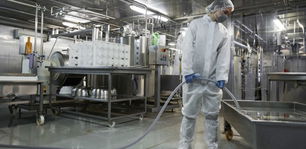
One of the key aspects in properly maintaining the industry is to maintain cleanliness on the production lines. Every industry requires special working conditions, but purity is particularly important in the food, medical and pharmaceutical industries.

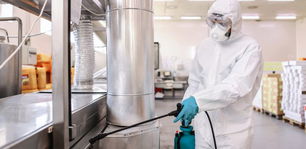
The cleaning of industrial installations and machines ensures the safety of products which are intended for later sale. Industrial washing and disinfection prevent, among others, microbiological contamination, so that products do not endanger the health and life of consumers. Keeping the workplace clean is also an important aspect for employees. Proper hygiene ensures our safety.

Industrial cleaning agents – PCC Group

Industrial washing plays a key role and it is important to use proven cleaning and disinfecting agents. Regular cleaning operations are reflected in the service life of industrial installations and machines.

Preparations should be selected according to their intended use for a given industry, as this may have a significant impact on the final product.

The PCC Group’s offer includes ready-made cleaning formulations, disinfectants, as well as a range of chemical raw materials supporting industrial cleaning agents. The product catalogue presents a large selection of surfactants for foaming, low foam, wetting or emulsifying. Chlorinated products, such as sodium hypochlorite or hydrochloric acid, are also an important category for both disinfection and cleaning of industrial installations.