

























































































































Private label is one of the most effective ways to build a unique product range without having to invest in your own production facilities and costly technological infrastructure. In the cosmetics and chemicals industries, this model is becoming increasingly popular – both among large retail chains and rapidly growing e-commerce brands. If you’re looking for an answer to the question “what is a private label” and wondering whether this model will work for your business – you’ve come to the right place.

Private label – what is it?
Private label is a business model in which a product is manufactured by an external contract manufacturer but sold under the buyer’s brand. The buyer – be it a retail chain, a beauty boutique or an online shop – commissions a production contract to a specialist facility and then launches the product onto the market with its own branding and labelling.
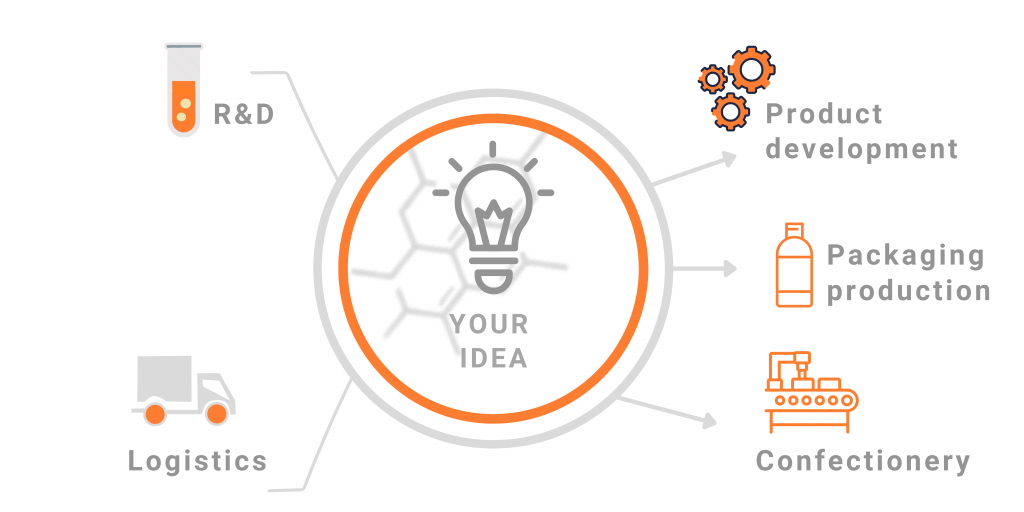
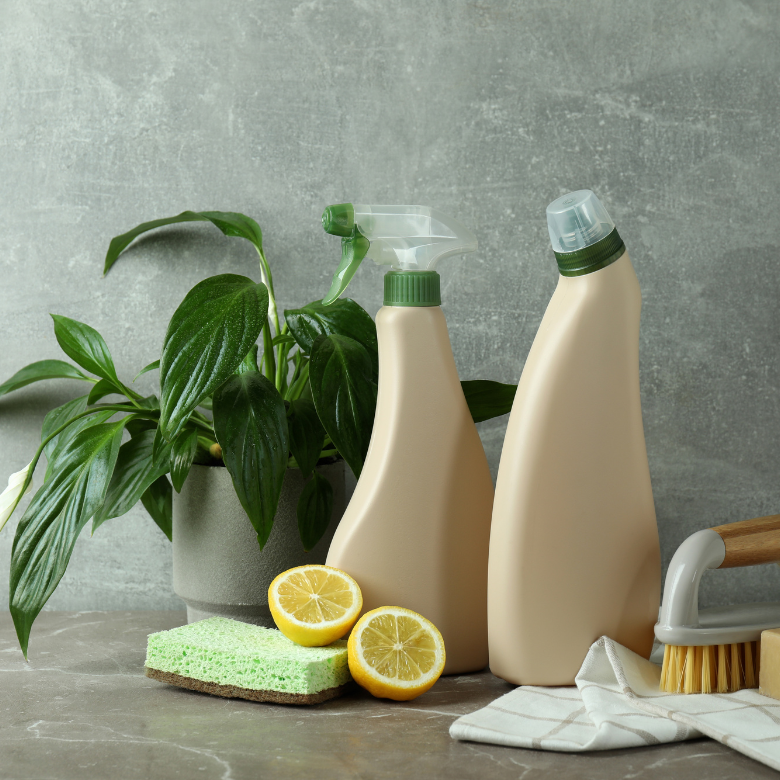
Alongside the quality of the product itself, packaging design plays a key role here: it is the packaging and label that communicate the brand’s identity, build its image and make it stand out on the shop shelf. A modern private label manufacturer often offers a full ‘from concept to shelf’ service: sourcing raw materials, processing them, co-packing, and even packaging production and labelling.
Thanks to this model, the company does not need its own production lines. Instead, it focuses on what matters most: brand building, marketing strategy, sales and customer relations. What does the production of cosmetics according to these standards involve? PCC Consumer Products Kosmet is an excellent example of a private label manufacturer that ensures products sold by leading discount retailers under their own brands are competitively priced and of high quality. The company provides a wide range of services, from developing a cosmetic formula according to specifications to producing the appropriate packaging. Private label is, in fact, an entire process that takes you from your idea to consumers who are satisfied with their choice of your products.
Our scope of services:
Any questions? Get in touch with us – contact
Private label vs white label – how do they differ?
Although the terms ‘private label’ and ‘white label’ are often used interchangeably, there are certain differences between them.
In the white label model, the product is created by the manufacturer in a single, standard version – identical composition, same formula – and then various companies purchase this product and sell it to end customers under their own branding. The same white label products can therefore be sold by several companies under different names. There is no scope here for customising the formula; only a ready-made solution is available. The manufacturing contract is limited to purchasing the finished product and applying one’s own label.
The private label cooperation model offers much greater freedom. The client can co-create the recipe, select raw materials, define quality parameters, and even shape the co-packing process. The product is created exclusively for one brand – no one else will sell it under the same label.
When should you choose a white label product?
White label works well when you want to enter the market quickly with a minimal budget and a low MOQ. It is ideal for brands testing a new product category or shops that want to expand their range without risk. Examples include drugstore chains selling basic skincare products, detergents or cleaning products under their own brands.
When should you opt for a private label?
Private label is an option for brands seeking to build a lasting competitive advantage. In the beauty industry, private label enables the creation of unique formulations for perfumes, creams, shampoos or body care products – precisely tailored to the needs of a specific customer segment. It is also the model preferred by e-commerce businesses, which build customer loyalty around their own brand based on a distinct identity.
Sourcing and contract manufacturing with co-packing
Sourcing, i.e. the search for and verification of raw material suppliers, is the foundation of a profitable private label. Even the best branding will not protect a brand if the raw material base is of poor quality or unreliable. Professional sourcing involves comparing offers from multiple suppliers, assessing their certifications (GMP, ISO), analysing unit prices and minimum order quantities (MOQ).
Contract manufacturing is a service whereby an external facility produces goods according to the client’s technical specifications. In the cosmetics and chemicals sector, the contract manufacturer ensures the formula complies with legal regulations (REACH, EU Cosmetics Regulation No. 1223/2009), conducts safety tests and issues product documentation (CPSR, PIF). The entire complex production process is the responsibility of the contractor.
PCC Kosmet offers comprehensive contract manufacturing services, including the production of packaging and labelling for cosmetic products and household chemicals. Thanks to many years of experience and our own laboratories, every private label project is carried out with full documentation, in compliance with GMP standards and ISO certifications.
Which industries does private label cover?
The private label model works in virtually every consumer sector, although some sectors use this model much more frequently.
- Cosmetics and personal care (beauty private label) – creams, serums and other facial care products, shampoos, masks, colour cosmetics and private label perfumes. GMP and ISO certifications, as well as compliance with current regulations, are particularly important here.
- Household chemicals – cleaning products, laundry detergents, shower gels for hotels, restaurants and B2B chains. Read more about contract manufacturing in the household chemicals sector.
- Dietary supplements and nutraceuticals – require pharmaceutical GMP certification and supervision by the Sanitary Inspection Authority.
- Food and beverages – supermarket own-brand products (e.g. oils, juices, snacks), which also form a significant part of the range offered by food e-commerce platforms.
- Textiles and clothing – fashion retailers create their own brands, outsourcing production to Asia or Eastern Europe.
Digital marketing has revolutionised the accessibility of the private label model. Today, even a small e-commerce business can order private label cosmetics under its own brand with an MOQ of 500–1,000 units, set up an online shop and reach thousands of customers through social media advertising. This has opened up the private label market to SMEs and start-ups.
Private label cosmetics – production and requirements
The global private label cosmetics market was already valued at approximately $10–12 billion in 2024 and is growing at a rate of around 5–9% per annum (CAGR), depending on the research methodology, according to reports by Grand View Research, Data Bridge and Verified Market Research. The following segments are growing particularly rapidly: private label perfumes, natural and organic cosmetics, and the baby care range.
GMP and ISO certificates – why are they so important?
GMP (Good Manufacturing Practice) certificates for cosmetics are defined by the ISO 22716 standard. A facility holding ISO 22716 GMP certification guarantees that its manufacturing processes, quality control, storage and distribution meet European safety requirements. This certification is required by many retailers and e-commerce platforms operating in the EU.
ISO certificates, in turn — particularly ISO 9001 (quality management system) and ISO 14001 (environmental management system) — confirm the manufacturer’s operational maturity. For e-commerce brands selling private-label cosmetics in the EU, UK and US markets, it is becoming standard for the contract manufacturer to hold these certificates.
Minimum Order Quantity (MOQ)
MOQ (Minimum Order Quantity) is the minimum number of units a contract manufacturer is prepared to produce in a single batch. For private label cosmetics, the MOQ typically ranges from 500 to 5,000 units per SKU, depending on the complexity of the formulation and packaging. The MOQ has a direct impact on the unit cost of the product and capital requirements — the lower the MOQ, the higher the unit cost, but the lower the risk to the start-up budget.
Minimum order quantities for private label products – how to negotiate?
Negotiating MOQs is one of the critical steps in building a profitable private label product line. Excessively high minimum order quantities can tie up working capital and hinder stock turnover, particularly for start-ups or when testing a new product.
A few rules for effective MOQ negotiation for private label products
- Start by analysing demand: how many units will realistically sell within 60–90 days? The MOQ should cover one quarter’s sales without accumulating large surpluses.
- Propose a long-term partnership: manufacturers are willing to lower the MOQ if the buyer commits to regular orders throughout the year.
- Consider standardising packaging: shared packaging (so-called stock packaging) for different formulations allows for a lower MOQ for each variant.
A high margin in private label is achievable with a well-negotiated MOQ. The typical gross margin in private label cosmetics is 40–70%, depending on the brand positioning and sales channel.
Pricing strategy, margin and profitability of private label
One of the main advantages of private label is the ability to set margins without the restrictions imposed by a branded manufacturer. The right pricing strategy can be a source of sustainable competitive advantage.
Pricing models:
- Cost-plus: selling price = production cost + margin. Simple, but does not take into account the customer’s perceived value of the product.
- Value-based pricing: the price is set based on how much the customer is willing to pay for a specific outcome (e.g. smoother skin, long-lasting perfume). Particularly effective in the premium segment.
- Competitive pricing: positioning relative to market leaders — the same quality at a lower price or higher quality at the same price.
Adapting the pricing strategy to channels:
- B2B (retail chains, wholesale): lower unit prices for large quantities, long payment terms (30–60 days). Profitability based on volume.
- DTC (direct-to-consumer) e-commerce: higher price, lower volume, higher unit margin. Customer LTV and customer acquisition cost (CAC) are key.
- Marketplace (Allegro, Amazon): the pricing strategy must take into account commissions and algorithm indexing.
Why use a private label?
Private label is a model that combines contractual flexibility with the ability to build lasting brand value. Here are the key benefits:
- Lower barriers to entry: you do not need your own factory or GMP certification. The contract manufacturer provides the ready-made infrastructure and know-how.
- High margins: private label products typically generate 20–40% higher margins than reselling other brands.
- Full control over the brand: formulation, labelling, pricing, communication – it’s all up to you.
- Speed of response to trends: market analysis and market segmentation allow you to flexibly adapt your offering to changing consumer preferences.
- Scalability: as sales grow, your logistics and supply chain scale alongside the brand – without the need to invest in new production capacity.
Success in private label, however, requires careful market analysis and customer segmentation, a well-thought-out pricing strategy tailored to the distribution channel, and efficient supply chain management. Brands that invest in these areas build sustainable profitability — not just seasonal volume.
Start your journey into private label cosmetics with PCC Kosmet
If you are looking for an experienced manufacturer of private label cosmetics and household chemicals — PCC Kosmet offers comprehensive private label services: from formulation, through certified contract manufacturing with full GMP ISO 22716 compliance, to co-packing and ready-to-use safety documentation (CPSR). We serve both B2B clients (retail chains, wholesalers, hotels) and e-commerce brands seeking flexible MOQs.
Private label as a growth strategy
Private label is much more than just a substitute for expensive branded products. It is a comprehensive business ecosystem in which seamlessly integrated sourcing, contract manufacturing, co-packing, packaging design, quality control and digital marketing create lasting value for the brand owner and their customers.
- Key questions to ask yourself before launching a private label project are:
- Who is my customer and what motivates them to buy? (market segmentation)
- Through which channel will I sell? (B2B vs e-commerce)
- What MOQ can I realistically handle at the outset?
- Does my contract manufacturer hold GMP and ISO certifications?
- What is my pricing strategy and target margin?
If you want to launch a private label beauty or private label perfume project with a certified partner — contact PCC Kosmet and enquire about the terms of cooperation.
- Valaskova Katarina, Jana Kliestikova, Anna Krizanova, "Consumer perception of private label products: An empirical research", Journal of competitiveness, 2018
- Egorova Irina, Investigating factors influencing intention to purchase private label brands in cosmetics category, MS thesis, 2016
- https://ondo.eu/artykul/private-label-czyli-czym-jest-marka-wlasna/
- https://en.wikipedia.org/wiki/Private_label
- https://gofarm.pl/private-label-w-branzy-farmaceutycznej/
- https://pep.pl/poradnik/private-label/
- https://autopay.pl/baza-wiedzy/blog/ecommerce/white-label-a-private-label