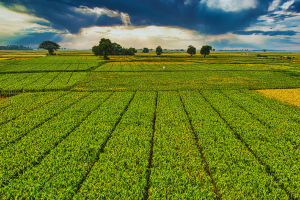























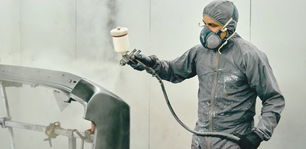
























































































Agriculture eagerly uses wetting agents, which improve the effectiveness of pesticides, foliar fertilisers and biostimulants. The following article explains how they work and what role they play in optimising spraying.

The effectiveness of spraying depends on many factors. One of the key factors is the ability of the pesticide solution to remain on the plants. The natural hydrophobicity of leaves significantly reduces the effectiveness of plant protection products, as the droplets bounce off and run off. The addition of wetting agents to the formulation changes the properties of liquid pesticides. These are usually surface-active molecules, specially designed to reduce the surface tension of water. Its high value can be a serious challenge in various industries, including agriculture [1, 2].
How do wetting agents work?
Low spraying efficiency is a key challenge in agriculture. The first step in optimising the performance of pesticides is to understand the impact of the individual components of the formulation on its properties. In this context, wetting agents have strictly defined functions [1, 2]:
– Reducing the surface tension of liquids – the surface tension of water is naturally high. Its surface offers strong resistance to external forces because molecules near the phase boundary are attracted inwards by neighbouring molecules. Wetting agents are designed to reduce surface tension. This is possible thanks to their characteristic structure. Wetting agent molecules are composed of two parts: hydrophilic and hydrophobic. Adsorbed at the phase boundary, thanks to their specific arrangement, they break the network of hydrogen bonds that are responsible for the cohesive forces between individual molecules.
– Increasing the contact area – when a drop of liquid hits a solid surface, it initially spreads across it due to inertia, but its further behaviour depends on many parameters, the most important of which are the size of the drop, its speed, the wettability of the surface and surface tension. Reducing the wetting angle makes the liquid spread better – it can cover a larger area, including entire leaves and stems, as spherical, convex droplets flatten to form a uniform layer. In turn, lowering the surface tension reduces the energy needed to spread the droplets over the surface, thus weakening the cohesive properties of the liquid and strengthening its adhesive properties.
– Supporting stomatal infiltration – more effective distribution of the liquid spray means that the active substances reach even the hard-to-reach parts of the plant. The reduction of surface tension and wetting angle by wetting agents in pesticides promotes the penetration of the spray liquid through the stomata, allowing for deeper penetration and absorption into plant tissues. This mechanism increases the effectiveness of the treatment, allowing for a reduction in the dose of the substance used while minimising the risk of phytotoxicity.
– Reducing the viscosity of suspensions and supporting the action of dispersants – suspension formulations require preliminary homogenisation using a high-speed mixer and grinding in a bead mill. Thanks to their small molecules, wetting agents are mobile, quickly reach newly formed surfaces during grinding, adsorb, reducing friction between grains and lowering the viscosity of the suspension. This is important during grinding, as it prevents excessive heat generation and reduces the energy required. Wetting agents also help the dispersant molecules to adsorb onto the grains and fill the spaces between them, making the suspensions more stable.

Wetting agents in agriculture – the key to effective spraying
Although modern agriculture is constantly looking for new solutions to support agricultural production, it continues to take initiatives to increase the effectiveness of existing ones. Additives to pesticide formulations significantly affect the effectiveness of spraying, solving problems resulting from the presence of a hydrophobic cuticular layer and hairs covering plant leaves [3].
One of the main advantages of using wetting agents in agriculture is a significant increase in the area covered by the spray. The working fluid is evenly distributed over the entire plant, even in hard-to-reach areas. The pesticide substance, which reaches the plant uninterrupted, works better and, as a result, allows for the selection of the optimal dose. Usually, greater spraying efficiency means that smaller doses are required. In addition to protecting the environment, this is an opportunity to reduce overall costs and achieve real savings [3].
PCC Exol as a manufacturer of professional wetting agents for the formulation of plant protection products?
The choice of the right wetting agent is based on several important criteria. The fundamental issue is compatibility with the other ingredients in the formulation, as well as the absence of any negative impact on the plants on which the pesticide is used. Equally important are physicochemical properties such as water solubility and resistance to environmental conditions.
Substances called surfactants are used to improve the wetting properties of pesticide formulations. This is a very diverse group of compounds with surface-active properties. Their characteristic feature is the amphiphilic structure of the molecule, consisting of a so-called “head” (a hydrophilic part with a high affinity for polar compounds) and a “tail” (strongly interacting with non-polar compounds). However, in most cases, surfactants have a more complex structure, with long linear chains as hydrophilic groups, branched chains as hydrophobic groups, and may also contain several hydrophilic or lyophilic groups in different locations. This unique structure enables surfactants to reduce the surface tension between different phases, facilitating the spreading of liquids and wetting of surfaces. It should be noted that the kinetics of surfactants in reducing surface tension in a pesticide solution depend on the functional hydrophilic and hydrophobic parts of the molecular structure [4, 5].
Depending on the presence of groups and their charge, surfactants are divided into anionic, cationic, non-ionic and amphoteric, which have both cationic and anionic groups.
Choosing the right surfactant is not easy. Anionic surfactants have good foaming properties, while cationic surfactants (such as ROKAmin K15K) generate significantly less foam but are toxic to plants by binding to negatively charged phospholipids and damaging cell membranes, so they are not recommended for spraying. At the same concentration and with a similar structure, ionic surfactants exhibit higher surface tension and weaker ability to organise themselves at the phase boundary than non-ionic surfactants, due to the repulsive interaction caused by like-named groups. Added to this is the presence of charges that can be accumulated by leaves. Leaves usually take on negative charges due to the presence of carboxyl and phenolic groups and better adsorption of anions by the leaf surface. On the other hand, leaves take on positive charges much less frequently, and these can only occur under certain conditions [4, 5].
Therefore, the most commonly used surfactants are non-ionic, and their concentration is often determined based on the relationship between surface tension reduction, foam generation and plant growth efficiency as a function of concentration. It is not advisable to exceed the recommended concentrations of wetting agents, as it has been observed that exceeding the critical micellisation concentration for a given surfactant does not produce better results; on the contrary, it can reduce the effectiveness of spraying and even inhibit crop growth. In general, the use of different amounts of surfactants leads to different wetting properties [4, 5].
Among surfactants, organosilicon compounds, known as polysiloxanes, deserve special attention. These are polymers whose structure contains silicon and oxygen atoms linked in chains or networks. They can also be modified by adding polyethylene glycols (PEG) for better emulsification in water. Additives to formulations based on polysiloxanes are highly effective. These surfactants ensure rapid absorption and high retention of agrochemicals in plants. They are also resistant to leaching by rainfall or irrigation, compared to other wetting agents. They are non-toxic, but are biodegradable to a limited extent due to their stable silicon-carbon bonds [4].
Another widely used group of surfactants are alcohol-based compounds – mainly alkoxylated fatty alcohols (ROKanol product group). They typically have an HLB in the range of 8-14. This value is sufficient for the surfactants to dissolve in water and not so high that the spray droplets become too hydrophilic. The appropriate HLB value allows them to spread better over the cuticular layer of the leaves. The ROKAnol series L, D, DB, GA, ID, IT and NL deserve special attention here. Fatty alcohols undergo not only ethoxylation but also propoxylation to give them low-foaming properties. An example here is the ROKAnol LP series, which does not generate foam. Their great advantage is that they can be obtained from natural raw materials, e.g. coconut oil (ROKAnole L and O) [4, 5].
EO/PO block copolymers (ROKAmer product group), which also have an amphiphilic structure, can also be used as wetting agents. The hydrophilic part consists of ethylene oxide units, and the hydrophobic part consists of propylene oxide units. Sometimes they may also have a random EO/PO fragment (ROKAmer B4000), which lowers their melting point and gives them low-foaming properties. After spraying, they retain moisture for a longer period of time, which gives the active substance more time to be absorbed by the plant. EO/PO copolymers also exhibit dispersing and suspension stabilising properties (ROKAmer 6500, 6500W, 6500BW and ROKAmer 1010), especially at medium molecular weights, which is why they are valued in SC and FS formulations [4, 5].
Wetting agents with an anionic group are used somewhat less frequently in plant protection product formulations. These are usually sulphates (SULFOROKAnol and SULFOBURSZTYNIAN product groups) or phosphoric esters (EXOfos product group). Another group, this time of amphoteric surfactants, are betaines (ROKAmina product group), with ROKAmina K30B being particularly popular. It is also worth mentioning that they are often chosen for SL formulations with glyphosate due to their additional synergistic effect. These surfactants are less frequently chosen due to their foaming properties, but they are also used, especially in some SL formulations [4, 5].
In summary: The choice of wetting agents used in plant protection product formulations is very wide, and new products are constantly being developed to meet the requirements of manufacturers. Recently, naturally derived surfactants that are easily biodegradable, environmentally neutral and pose no threat to consumers have been gaining in importance. This trend is gaining momentum and is linked to the growing environmental awareness of society.
Read also: Wetting agents in foliar fertilisers
- [1] Tadros, T. F. Surfactants in agrochemicals. Wiley VCH. 2005.
- [2] Foy CL, Pritchard DW, editors. Adjuvants for herbicides. Champaign, IL: Weed Science Society of America; 1992.
- [3] Knowles A. Pesticide formulation and adjuvant technology. Boca Raton: CRC Press; 1998.
- [4] Rosen, Milton J., and Joy T. Kunjappu. Applied Surfactants: Principles and Applications. Weinheim: Wiley‑VCH, 2012.
- [5] PCC Group, Agrochemicals – Markets and applications, 2026. https://www.products.pcc.eu/en/products/markets-and-applications/agrochemicals/