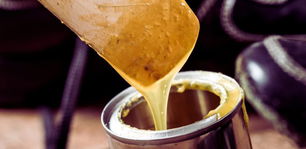
Active Play AS H 8013_2 is a one-component polyurethane adhesive developed on the basis of a highly functional MDI mixture (>2.5). The product appears as a dark amber liquid with a viscosity at 25°C ranging from 1000 to 2000 mPas. The NCO content of 14.5–15.5% ensures excellent application properties and high quality of the resulting bonds.
Active Play AS H 8013_2 is a raw material dedicated to the production of elements formed both cold and hot, using EPDM and SBR rubber granulates, including those obtained through recycling processes. Thanks to its carefully designed chemical composition, it enables the creation of durable and flexible joints, ideal for use in modern rubber processing technologies. The adhesive is moisture-curing.
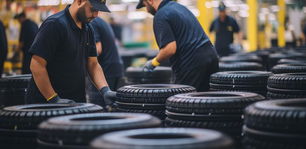
Active Play AS H 8013_2 is a polyurethane prepolymer dedicated to bonding in various recycling processes. It is particularly effective for binding black SBR granulate obtained from shredded, used car tires. It provides an excellent solution for manufacturers of elastic surfaces and molded rubber components. The product can also be used for bonding other shredded materials such as flexible polyurethane foams, EVA, cork, or gravel.
SBR granulate is produced by mechanically cutting car tires. It is characterized by a black color, high abrasion resistance, and excellent durability under atmospheric conditions. Additionally, it offers outstanding acoustic properties, effectively dampening noise and vibrations. It is ideal for producing items such as safety tiles, underlay mats, road accessories, and soundproofing mats.
Before use, the prepolymer Active Play AS H 8013_2 should be thoroughly mixed. Rubber granulate (SBR or EPDM) is mixed with the adhesive in an appropriate mixer, after which the glue-moistened material is placed into a mold. Under pressure, temperature, and humidity, curing occurs to form a durable, resistant bond.
The final properties of the element (e.g., a tile) depend on the granulate size and type, the amount of adhesive used, and the degree of compression during curing. The process takes place at a temperature between 90°C and 150°C, and the proper selection of parameters such as temperature and humidity can reduce curing and polymerization time. Adhesive consumption is approx. 5–17%, depending on the type and amount of SBR or EPDM granulate and the curing method.
The combination of the prepolymer and SBR granulate creates a joint with very good stiffness while maintaining flexibility and durability. The product is free from volatile organic solvents, making it safe and environmentally friendly.
Active Play AS H 8013_2 has been developed for the production of SBR and EPDM granulate-based products such as weights and other molded rubber items.
Application advantages:
Easy to apply – simple adhesive for bonding rubber granulates,
Wide range of applications – suitable for both hot and cold processing,
High temperature resistance – usable between 90°C and 150°C,
Increased humidity shortens the curing time of surfaces or molded elements.
Properties and applications
Product properties:
the prepolymer can be applied cold or hot,
the product forms a rigid joint with good elasticity,
the product does not contain volatile organic solvents,
the product is easy to apply for joining various rubber granules,
the product has high resistance to temperature - in the production of formable elements temperatures in the range from about 90°C to 150°C can be applied,
higher humidity allows shortening of the curing process of a surface or element,
the product improves good mechanical properties of formed elements.
Application:
broad application in the polyurethane sector,
for making cold and hot molded parts from SBR or EPDM rubber granules,
suitable for the manufacture of, inter alia, weights and similar products,
the product is intended only for use in industrial installations or professional activities.
(MDI) prepolymer based on diphenylmethane diisocyanate
Manufacturer: PCC Rokita SA
PCC Rokita SA is one of the largest chemical companies in Poland as well as Central and Eastern Europe. Its activity includes the production of chloroalkali, polyether polyols, polyalkylene glycols and phosphorus derivatives.
All the above information related to the product are provided according to the best knowledge of the manufacturer and published in good faith. However, the manufacturer does not guarantee the information and contents of this document are complete and accurate, and shall not be liable for the results of using them. The user is obliged to verify and confirm the information and contents of this documentation on his/her own. The manufacturer reserves the right to change the content of this document at any time without stating reasons of such changes.