PCC
RegisterLogin Page

Raw materials for adhesive production
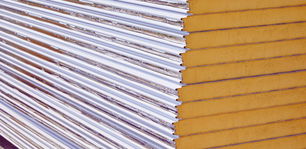
The modern adhesive industry is a dynamically developing field of materials chemistry, in which the success of a product depends on the appropriate selection of raw materials. Polymers, resins, polyols and dispersions form the basis of adhesives with various properties – from instant bonding to resistance to extreme environmental conditions. They are the key to innovation, sustainability and ecological development in the adhesive industry.

Okładka katalogu
Filters
Function
Composition
Segment
Manufacturer
of 3
Rokopol® 50-B-330 Ready to use Rokopol® 50-B-330 is a reactive plasticiser, a hydrophobic polyol, PO. It exists in the form of homogeneous, colourless to yellow liquid. It contains antioxidants...
Composition
Butanol, PAG , Polyether polyols, Partially water soluble PAG, Monols
CAS No.
9038-95-3
Rokopol® 50-B-330
Rokopol® 50-B-46 Ready to use Rokopol® P-B-46 is a reactive plasticiser, a hydrophobic polyol, PO. It exists in the form of homogeneous, colourless to yellow liquid. It contains antioxidants...
Composition
Butanol, PAG , Polyether polyols, Partially water soluble PAG, Monols
CAS No.
9038-95-3
Rokopol® 50-B-46
Rokopol® 50-B-680 Ready to use Rokopol® 50-B-680 is a reactive plasticiser, a hydrophobic polyol, PO. It exists in the form of homogeneous, colourless to yellow liquid. It contains antioxidants...
Composition
Butanol, PAG , Polyether polyols, Partially water soluble PAG, Monols
CAS No.
9038-95-3
Rokopol® 50-B-680
Rokopol® DE2020 Rokopol® DE2020 is a specialized reactive diol used for production of 1C and 2C adhesives, sealants and elastomers, as well as other polyurethane materials in reaction...
Composition
Polyether polyols, Alkoxylated alcohols, Diols
CAS No.
9003-11-6
Rokopol® DE2020
Rokopol® DE4030 Rokopol® D4030 is a specialized reactive diol used for production of 1C and 2C adhesives, sealants and elastomers, as well as other polyurethane materials in reaction...
Composition
Alkoxylated alcohols, Polyether polyols, Diols
CAS No.
53637-25-5
Rokopol® DE4030
Rokopol® MOS 100 Ready to use Rokopol® MOS 100 is a plasticiser, a hydrophobic polyol with low reactivity, BO. It exists in the form of homogeneous, colourless to yellow liquid. It contains antioxidants...
Composition
PAG , Polyether polyols, Water Soluble
Rokopol® MOS 100
Rokopol® MOS 460 Ready to use Rokopol® MOS 460 is a plasticiser, a hydrophobic polyol with very low reactivity, BO. It exists in the form of homogeneous, colourless to yellow liquid. It contains...
Composition
PAG , Polyether polyols, Water insoluble
Rokopol® MOS 460
Rokopol® MOS 68 Ready to use Rokopol® MOS 68 is a plasticiser, a hydrophobic polyol with low reactivity, BO. It exists in the form of homogeneous, colourless to yellow liquid. It contains antioxidants...
Composition
PAG , Polyether polyols, Water insoluble
Rokopol® MOS 68
Rokopol® MOS 680 Ready to use Rokopol® MOS 680 is a plasticiser, a hydrophobic polyol with very low reactivity, BO. It exists in the form of homogeneous, colourless to yellow liquid. It contains...
Composition
PAG , Polyether polyols, Water insoluble
Rokopol® MOS 680
Rokopol® T (Polyether polyol) Ready to use Rokopol® T is a reactive, aliphatic-aromatic polyether polyol, based on TDA for application of PUR rigid foam. It exists in the form of clear, brown liquid. It has...
Composition
Polyether polyols, Amine polyols
Rokopol®  T (Polyether polyol)
Rokopol® DE320 (Propylene glycol) Rokopol® D320 is a specialized reactive diol used for production of 1C and 2C adhesives, sealants and elastomers, as well as other polyurethane materials in reaction...
Composition
Alkoxylated alcohols, Polyether polyols, Diols
CAS No.
53637-25-5
Rokopol® DE320   (Propylene glycol)
Rokopol® DE4020 (Propylene glycol) Rokopol® D4020 is a specialized reactive diol used for production of 1C and 2C adhesives, sealants and elastomers, as well as other polyurethane materials in reaction...
Composition
Alkoxylated alcohols, Polyether polyols, Diols
CAS No.
53637-25-5
Rokopol® DE4020   (Propylene glycol)
Rokopol® M5000 (Polyether polyol) Rokopol® M5000 is a polyether polyol produced in the KOH technology. It exists in the form of homogeneous, clear liquid. It contains antioxidants (excluding BHT)....
Composition
Alkoxylated alcohols, Polyether polyols, Triols
CAS No.
9082-00-2
Rokopol® M5000  (Polyether polyol)
Rokopol® RF170 (Polyether polyol) Rokopol® RF170Rokopol® RF170 is a reactive, three-function aliphatic polyether amine polyol. It exists in the form of amber-coloured liquid. It has hydroxyl value...
Composition
Polyether polyols, Alkoxylated alcohols, Amine polyols
CAS No.
37208-53-0
Rokopol® RF170  (Polyether polyol)
Caustic soda flakes Sodium hydroxide in solid form, also called caustic soda, is an inorganic chemical compound belonging to the strongest alkali. In solid form, it is a white substance...
Composition
Alkali
CAS No.
1310-73-2
Caustic soda flakes
Caustic soda lye 50% solution Sodium hydroxide is an inorganic chemical compound of the hydroxide group, belonging to the strongest alkali. In liquid form it is a colourless, odourless and non-flammable...
Composition
Alkali
CAS No.
1310-73-2
Caustic soda lye 50% solution
Caustic soda lye 25% solution Sodium hydroxide (25% solution) is an inorganic chemical compound of the hydroxide group, belonging to the strongest alkali. In liquid form it is a colourless, odourless...
Composition
Alkali
CAS No.
1310-73-2
Caustic soda lye 25% solution
Caustic soda lye 30% solution Sodium hydroxide (30% solution) is an inorganic chemical compound of the hydroxide group, belonging to the strongest alkali. In liquid form it is a colourless, odourless...
Composition
Alkali
CAS No.
1310-73-2
Caustic soda lye 30% solution
Caustic soda lye 35% solution Sodium hydroxide (35% solution) is an inorganic chemical compound of the hydroxide group, belonging to the strongest alkali. In liquid form it is a colourless, odourless...
Composition
Alkali
CAS No.
1310-73-2
Caustic soda lye 35% solution
Caustic soda lye 40% solution Sodium hydroxide (40% solution) is an inorganic chemical compound of the hydroxide group, belonging to the strongest alkali. In liquid form it is a colourless, odourless...
Composition
Alkali
CAS No.
1310-73-2
Caustic soda lye 40% solution
21 - 40 of 42 products
Items on page: 20

What is an adhesive?

Adhesive is essentially a multi-component system in which different substances form a coherent polymer structure with specific adhesive and cohesive properties. The composition of such a formulation may vary depending on the type of adhesive, its application and working conditions, but it is always based on three groups of components:

  • base raw materials – polymers, polyols, resins or dispersions,
  • functional additives – stabilisers, surfactants, plasticisers, catalysts,
  • solvents or water – determining viscosity and method of application.

From a chemical point of view, the aim is to achieve the right balance between adhesion (adhesion to the substrate) and cohesion (internal cohesion of the adhesive layer). It is the molecular structure of the raw materials – the length of the polymer chain, the type of functional groups or the degree of cross-linking – that determines the durability of the bond.

Polymers and polyols – the basis of adhesive formulations

The most important component of most adhesives are polymers – substances with a high molecular weight that form adhesive bonds with the surfaces of the materials being joined. Depending on the type of adhesive, these can be:

  • polyether and polyester polyols, used in polyurethane systems,
  • acrylic and styrene copolymers, used in dispersion adhesives,
  • epoxy resins, which provide high mechanical and chemical resistance,
  • vinyl copolymers, widely used in wood and paper adhesives.

Polyols and polyurethane (PU) adhesives

Polyols, i.e. compounds containing numerous hydroxyl groups (-OH), form the basis of polyurethane adhesive systems. When reacted with isocyanates, they form urethane bonds, which are responsible for high adhesion and resistance to moisture and temperature.
PU adhesives are very versatile and are used in, among others, furniture manufacturing, construction, automotive and footwear industries. They come in single- and two-component forms, and their formulation allows for both flexible and rigid bonds.

In chemical terms, the balance between the hard and soft segments of the polymer plays a key role, determining flexibility and resistance to ageing. Modern PU adhesives increasingly contain partially bio-derived polyols, e.g. from vegetable oils.

Dispersions and resins

Dispersion and acrylic adhesives are based on polymer dispersions, i.e. systems in which polymer particles are evenly dispersed in water. They are an environmentally friendly alternative to solvent-based systems as they do not contain volatile organic compounds (VOCs).

The most commonly used are acrylic, vinyl-acrylic and styrene-acrylic copolymers, which provide very good adhesion to porous substrates (paper, wood, fabrics). In the furniture and packaging industries, they form the basis of modern, safe adhesive formulations.

These dispersions are often modified with cross-linking agents, stabilisers and plasticisers to increase their resistance to water and heat. Chemical control of particle size, viscosity and pH is critical to the application properties and durability of the adhesive.

Epoxy adhesives

Epoxy adhesives are based on the reaction of epoxy resin with a hardener, e.g. amine or anhydrite. The resulting polymer network is characterised by very high mechanical strength, chemical and thermal resistance.

This makes epoxy adhesives suitable for use in construction technologies – they bond metals, glass, ceramics and composites. They are indispensable in the electronics and aerospace industries, where stability over a wide temperature range is required.

From a chemical point of view, the curing of epoxy resins involves the reaction of epoxy rings with amino groups, leading to the formation of a three-dimensional network of covalent bonds. This structure is responsible for their exceptional strength and rigidity.

Additives and modifiers

In addition to the base components, functional additives play an extremely important role in the production of adhesives. They allow for the control of viscosity, setting time, thermal resistance and formulation stability. This group includes, among others:

  • surfactants – they facilitate the even distribution of ingredients and stabilise emulsions,
  • plasticisers – give adhesives elasticity and resistance to cracking,
  • catalysts – accelerate polymer cross-linking processes,
  • antioxidants and UV stabilisers – protect the binder from degradation under the influence of light and oxygen,
  • thickening and rheological agents – ensure the right consistency and facilitate application.

Additive chemistry is a precise balancing act – too much plasticiser can reduce strength, while too much catalyst will cause the adhesive to set too quickly. Therefore, the adhesive formulation process requires a thorough understanding of chemical reaction mechanisms and interactions between ingredients.