15-07-2022
When you take a bottle of carbonated drink in your hand, it is likely that you will find a characteristic ingredient on its label – we are talking here about H2CO3, which is carbonic acid. The applications and properties of this chemical compound deserve attention as it is one of the most unstable and, at the […]
26-05-2022
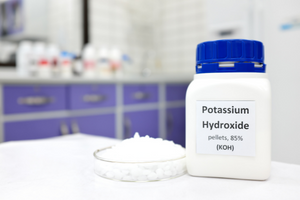
Potassium hydroxide is a chemical compound which has become enormously popular as an ingredient required for the production of cleaning agents, soaps or batteries. Where can you buy it? What are its properties and major uses in industry?
25-05-2022
Calcium carbonate is an inorganic compound that has a wide range of household and industrial applications. This natural raw material is also known as calcite or carbonic acid calcium salt. What are the features of calcium carbonate? Is it harmful? What role does calcium carbonate play in the soil and what can you produce from […]
23-05-2022
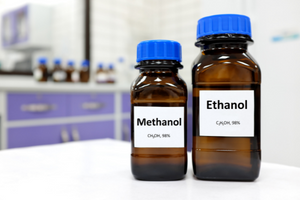
The two most basic and commonly used alcohols are indistinguishable to the naked eye. Unfortunately, this similarity can result in tragic mistakes. What properties of methanol make it particularly dangerous? Does ethanol alone pose any risk?
20-04-2022
Technical (or industrial) gases are gases or gas mixtures produced for use in industrial and manufacturing processes. Industrial gases are used in a wide range of industries: chemical, scientific and research, food, construction, rubber and plastic processing and many others – wherever welding, freezing, propulsion, heating, industrial cleaning, ventilation or testing is required.
6-04-2022
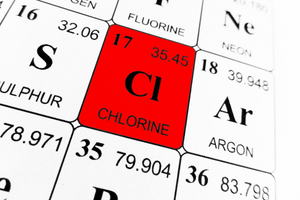
The first part of a series of articles on chlorine presents the story of its discovery. We also explain how this substance is produced on an industrial scale and where and in what form it occurs in nature.
30-06-2021
Chlorine is among the most popular and widely used chemical substances. Its properties ensure it finds a multitude of applications even though it is a highly dangerous substance. Most of us encounter chlorine every day, often without realising it. What is its history, where can we find it and how is it produced? Read the […]
12-02-2021
Analysis, synthesis, content determination and many other key tests could not take place without specialised chemical reagents, which is why you find a lot of them in any chemical laboratory. How do we classify chemical reagents? How do they differ and where are they used? You can read all about them in the article below.
9-05-2019
Sodium hydroxide may occur in two forms. The first one is a solution, also known as sodium lye, while the second one is the solid form – flakes, prills or microprills of caustic soda.