PCC
RegisterLogin Page

Fire prevention

Alkyl ether sulphates (AES) are one of the three most important groups of anionic surfactants. The hydrophilic moiety of these surfactants is a sulphate group and a polyethylene chain. The hydrophobic part is usually a carbon chain derived from a fatty alcohol. The most common commercial form of alkyl ether sulphates are their sodium salts, such as Sodium Laureth Sulfate (SLES).

Filters
Function
Composition
Segment
Manufacturer
ROSULfan®OD ROSULfan OD is an anionic surfactant belonging to the group of alkyl sulphates. The product is a sodium salt of n-octyl and n-decyl sulphate. The concentration of...
Composition
Alkyl ether sulfates
ROSULfan®OD
SULFOROKAnol® L170/1 (Sodium C12-C14 Laureth Sulfate) SULFOROKAnol L170/1 is an anionic surfactant from the group of alkyl ether sulphates (INCI name: Sodium Laureth Sulphate). The product is mainly based on raw material...
Composition
Alkyl ether sulfates
CAS No.
68891-38-3
SULFOROKAnol®<sup> </sup>L170/1  (Sodium C12-C14 Laureth Sulfate)
SULFOROKAnol® L225/1 (Sodium C12-C14 Laureth Sulfate) SULFOROKAnol L225 / 1 is an anionic surfactant of the group of alkyl ether sulphates (INCI name: Sodium Laureth Sulphate). The product is available as an approximately...
Composition
Alkyl ether sulfates
CAS No.
68891-38-3
SULFOROKAnol® L225/1  (Sodium C12-C14 Laureth Sulfate)
SULFOROKAnol®L327 (Sodium C12-15 Pareth Sulfate) SULFOROKAnol L327 is an anionic surfactant from the group of alkyl ether sulphates (INCI name: Sodium Pareth Sulphate), based on synthetic alcohol. The product comes...
Composition
Alkyl ether sulfates
CAS No.
125301-92-0
SULFOROKAnol®L327 (Sodium C12-15 Pareth Sulfate)
SULFOROKAnol®L370/1 (Sodium C12-C14 Laureth Sulfate) SULFOROKAnol L370 / 1 is an anionic surfactant of the group of alkyl ether sulphates, based on natural alcohol (INCI name: Sodium Laureth Sulphate). The product...
Composition
Alkyl ether sulfates
CAS No.
68891-38-3
SULFOROKAnol®L370/1  (Sodium C12-C14 Laureth Sulfate)
SULFOROKAnol®N232P (AES C9-11 Na salt) SULFOROKAnol N232P belongs to the group of specialist anionic surfactants and is the sodium salt of ethoxylic sulphate. It is offered as an approximately 32% low...
Composition
Alkyl ether sulfates
CAS No.
160901-28-0
SULFOROKAnol®N232P  (AES C9-11 Na salt)
SULFOROKAnol®A325/1 (Ammonium Laureth Sulfate) SULFOROKAnol A325/1 is an anionic surfactant with the name defined by INCI as: Ammonium Laureth Sulfate. The product is provided in the form of a viscous liquid...
Composition
Alkyl ether sulfates
CAS No.
32612-48-9
SULFOROKAnol®A325/1 (Ammonium Laureth Sulfate)
SULFOROKAnol®D232P (Ethoxylated Sodium Decyl Sulfate) SULFOROKAnol D232P belongs to the group of specialist anionic surfactants. The product is based on natural raw material and it is the sodium salt of ethoxylic sulphate....
Composition
Alkyl ether sulfates
CAS No.
68610-66-2
SULFOROKAnol®D232P   (Ethoxylated Sodium Decyl Sulfate)
SULFOROKAnol® D232P MB (Ethoxylated Sodium Decyl Sulfate) SULFOROKAnol D232P MB belongs to the group of specialist anionic surfactants. The product is based on natural raw material and it is the sodium salt of ethoxylic...
Composition
Alkyl ether sulfates
CAS No.
68610-66-2
SULFOROKAnol® D232P MB  (Ethoxylated Sodium Decyl Sulfate)
SULFOROKAnol® IT330 Ready to use SULFOROKAnol IT330 is an anionic surfactant from the alkyl ether sulphate group, based on ethoxylated isotridecyl alcohol. Natural alcohol with the INCI name: Sodium...
Composition
Alkyl ether sulfates
SULFOROKAnol® IT330
SULFOROKAnol® L170/1 MB (Sodium C12-C14 Laureth Sulfate) SULFOROKAnol L170/1 MB is an anionic surfactant from the group of alkyl ether sulphates (INCI name: Sodium Laureth Sulfate). The product is mainly based on raw material...
Composition
Alkyl ether sulfates
CAS No.
68891-38-3
SULFOROKAnol® L170/1 MB  (Sodium C12-C14 Laureth Sulfate)
SULFOROKAnol® L225/1 MB (Sodium C12-C14 Laureth Sulfate) SULFOROKAnol L225/1 MB is an anionic surfactant of the group of alkyl ether sulphates (INCI name: Sodium Laureth Sulphate). The product is available as an approximately...
Composition
Alkyl ether sulfates
CAS No.
68891-38-3
SULFOROKAnol® L225/1 MB  (Sodium C12-C14 Laureth Sulfate)
1 - 12 of 12 products
Items on page: 20

PCC Group as a manufacturer of a wide range of surfactants offers foaming agents for producers of extinguishing concentrates and foam extinguishers fillers of various types.

Fire prevention

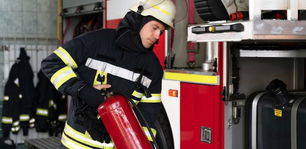
Fire is one of the most important discoveries in the history of mankind which has played a key role in the technological and cultural development of civilization. Over the centuries, it has provided light and heat, allowed for cooking and production of tools and everyday objects. It has been an important part of religious and social events. On the other hand, fire is a dangerous element that may cause substantial damage by destroying forests, residential buildings, farm buildings, factories or monuments.

Fire extinguishing

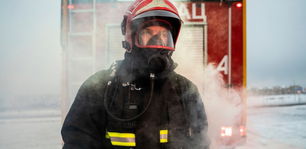
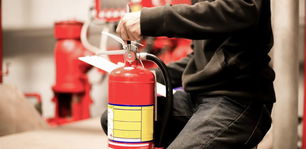
In case of fire, in order to minimize damage, a rapid reaction is one of the key factors. The selection of extinguishing agent is equally important in achieving maximum capacity and extinguishing time while reducing the risk of fire recurrence. Factors such as fire size, kind of protected property and burning material, weather conditions and extinguishing properties of an agent should be considered when selecting an extinguishing agent. Water is the simplest and most easily accessible extinguishing agent, however, its application is restricted mainly to fires involving solid materials. After water is mixed with foam concentrate, solution enables foam formation by means of special devices like generators, foam-forming assembly and extinguishers. Depending on the selected foaming agent, it may be used to extinguish fires involving solid materials, liquids miscible and immiscible with water, including oils and cooking fats. Fire extinguishing powders and inert gases (carbon dioxide, nitrogen and argon) are also used to extinguish fires. They are the best solution whenever the presence of water is undesirable for various reasons, inter alia, when putting out burning archives, monuments, metals, live electrical equipment. Providing fire brigades with extinguishing agents is particularly important in the case of chemical plants, petrol stations, airports and offshore platforms.

How firefighting foam works

Foam concentrate includes a number of ingredients that determine its physicochemical and performance parameters. The most important of these are the surfactants enabling production of sufficiently high and stable foam that when spread over burning material works according to several mechanisms. Primarily, by closing off the oxygen, it effectively puts out the fire and prevents it from spreading. Water releasing from extinguishing foam is responsible for cooling the burning liquid or solid material. In addition, a tight layer of foam protects flaming liquid from evaporation, which also reduces extinguishing time and prevents its reoccurrence.

Foaming surfactants

PCC Group as a manufacturer of a wide range of surfactants offers foaming agents for producers of extinguishing concentrates and foam extinguishers fillers of various types. Our portfolio includes in particular anionic surfactants such as fatty alcohol sulphate salts (ROSULfans) and their ethoxylated derivatives, offered under the SULFOROKAnols trade name. The products exhibit exceptional foaming properties and enable foaming of fire-fighting concentrate. The offer is expanded to a series of betaines with various content of an active substance, i.e. ROKAmina. These are amphoteric surfactants that have excellent foaming properties, are great stabilizers and assist in the process of foam formation.

Firefighting foam concentrates

PCC Group offers synthetic fire suppression agents intended for the manufacture of mechanical firefighting foam having various levels of foaming. They are intended to put out class A and B fires with tap water (Roteor M3 SP and Roteor M3 Premium) and, in the case of M Roteor Premium, also with seawater. The offered products are of high fire-extinguishing class, which means very good fire-fighting effectiveness and prevention of recurrence of fires. In addition to appropriately selected foam surfactants, they also contain substances that lower the freezing point and provide anti-corrosion protection. Roteors are highly sensitive to the biodegradation process, which makes them environmentally safe.

Petroleum pollution removal

PCC Group’s portfolio includes also products intended for degreasing and removing oil contaminants from smooth and porous hard surfaces such as asphalt, concrete flooring, metal surfaces or plastics. Rotclean is a product containing a surfactant concentrate that provides very good degreasing properties and it must be diluted with water before using. Rotquick, however, is a ready-to-use product. Owing to the content of appropriately selected surfactants, both products are highly effective in removing oil from deep layers of porous surfaces. They do not contain organic solvents and substances harmful to the environment and are readily biodegradable. They are used mainly to remove oil spills from communication routes, parking lots or spills near fuel dispenser. They are highly recommended for use at petrol stations, refineries, industrial plants and by fire brigades and road operators.

Effectiveness and safety of the offered products are tested by authorised institutions and approved by relevant documents such as the approval of the National Institute of Hygiene (in Polish: atest PZH) and an approval certificate issued by the Scientific and Research Centre for Fire Protection – National Research Institute (in Polish: CNBOP-PIB).