PCC
RegisterLogin Page

Lubricants and Metalworking fluids
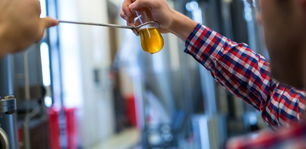
Modern lubricants are highly specialized and complex products. They contain mainly base oils (most often these are petroleum fractions, poly-alpha-olefins, esters, polyalkylene glycols or silicones) and a number of additives that reduce friction, increase viscosity, improve lubricating properties or increase corrosion resistance.

Filters
Function
Composition
Segment
Manufacturer
of 17
ROKAmer® R2650 (EO/PO block copolymer) ROKAmer R2650 is a non-ionic surfactant belonging to the group of block copolymers of ethylene oxide and propylene oxide (EO/PO). The product is a colourless liquid...
Composition
EO/PO block copolymers
CAS No.
9003-11-6
ROKAmer® R2650  (EO/PO block copolymer)
ROKAmer®R2800 (EO/PO block copolymer) ROKAmer R2800 is a non-ionic surfactant belonging to the group of block copolymers of ethylene oxide and propylene oxide (ROKAmers). The product is a clear, colourless...
Composition
EO/PO block copolymers
CAS No.
9003-11-6
ROKAmer®R2800 (EO/PO block copolymer)
ROKAmer®R3100 Ready to use ROKAmer R3100 is a non-ionic surfactant belonging to the block copolymers of ethylene oxide and propylene oxide EO/PO. The product is a colourless liquid with a...
Composition
EO/PO block copolymers
CAS No.
9003-11-6
ROKAmer®R3100
ROKAmid KAD (Cocamide DEA) ROKAmid KAD is a nonionic surfactant called INCI: Cocamide DEA. It is produced on the basis of natural vegetable oils. It has the form of a clear or slightly turbid...
Composition
Alkanoloamides
CAS No.
68155-07-7
ROKAmid KAD (Cocamide DEA)
ROKAmid RAD (Rapamide DEA) ROKAmid RAD is a non-ionic surfactant of the alkanolamide group (INCI name: Rapamide DEA). The product is a clear or slightly turbid liquid with a light yellow to...
Composition
Alkanoloamides
CAS No.
68603-38-3
ROKAmid RAD (Rapamide DEA)
ROKAmid KAD MB (Cocamide DEA) ROKAmid KAD MB is a nonionic surfactant called INCI Cocamide DEA. It is produced on the basis of natural vegetable oils. It has the form of a clear or slightly turbid...
Composition
Alkanoloamides
CAS No.
68155-07-7
ROKAmid KAD MB (Cocamide DEA)
ROKAmid MRZ4 (PEG-4 Rapeseedamide) ROKAmid MRZ4 is a non-ionic surfactant, part of the group of ethoxylated alkanolamides, under the INCI name PEG-4 Rapeseedamide. The product has the form of a liquid...
Composition
Alkoxylated amides
CAS No.
85536-23-8
ROKAmid MRZ4 (PEG-4 Rapeseedamide)
ROKAmin K15 (PEG-15 Cocoamine) ROKAmin K15 is a non-ionic surfactant belonging to the group of ethoxylated coconut amines with an average degree of ethoxylation of 15 moles. It has the form of...
Composition
Alkoxylated fatty amines
CAS No.
61791-14-8
ROKAmin K15 (PEG-15 Cocoamine)
ROKAmin SR11 (C16-18 alkyl amine) ROKAmin SR11 is a non-ionic surfactant (INCI name: PEG-11 Hydrogenated Tallow Amine). It belongs to the group of ethoxylated fatty amines with an average ethoxylation...
Composition
Alkoxylated fatty amines
CAS No.
61791-26-2
ROKAmin SR11  (C16-18 alkyl amine)
ROKAmin SR5 (C16-18 alkyl amine) ROKAmin SR5 is a non-ionic surfactant; INCI name: PEG-5 Hydrogenated Tallow Amine. It belongs to the group of ethoxylated fatty amines with an average degree of...
Composition
Alkoxylated fatty amines
CAS No.
61791-26-2
ROKAmin SR5   (C16-18 alkyl amine)
ROKAmin SR8 (C16-18 alkyl amine) ROKAmin SR8 is a non-ionic surfactant (INCI name: PEG-8 Hydrogenated Tallow Amine). It belongs to the group of ethoxylated fatty amines with an average ethoxylation...
Composition
Alkoxylated fatty amines
CAS No.
61791-26-2
ROKAmin SR8 (C16-18 alkyl amine)
ROKAmin SR8 CONCENTRATE (C16-18 alkyl amine) ROKAmin SR8 CONCENTRATE is a non-ionic surfactant; INCI name: PEG-8 Hydrogenated Tallow Amine. It belongs to the group of ethoxylated fatty amines with an average...
Composition
Alkoxylated fatty amines
CAS No.
61791-26-2
ROKAmin SR8 CONCENTRATE  (C16-18 alkyl amine)
ROKAmin K5 (C12-18 alkyl amine) ROKAmin K5 is a non-ionic surfactant with the INCI name ‘PEG-5 Cocamine’. It belongs to ethoxylated fatty amines with an average ethoxylation of 5 mols. The commercial...
Composition
Alkoxylated fatty amines
CAS No.
61791-14-8
ROKAmin K5  (C12-18 alkyl amine)
ROKAnol®DB3 (C12-15 Pareth-3) ROKAnol DB3 is a non-ionic surfactant of the group of ethoxylated fatty alcohols (INCI name: C12-15 Pareth-3). The product belongs to the ROKAnol DB series based...
Composition
Alkoxylated alcohols
CAS No.
68131-39-5
ROKAnol®DB3 (C12-15 Pareth-3)
ROKAnol®DB5 (C12-15 Pareth-5) ROKAnol DB5 is a non-ionic surfactant from the group of ethoxylated fatty alcohols (INCI name: C12-15 Pareth-5). The product belongs to the ROKAnol DB series based...
Composition
Alkoxylated alcohols, Ethoxylated alcohols
CAS No.
68131-39-5
ROKAnol®DB5 (C12-15 Pareth-5)
ROKAnol®DB7 (C12-15 Pareth-7) ROKAnol DB7 is a non-ionic surfactant of the group of ethoxylated fatty alcohols (INCI name: C12-15 Pareth-7). The product belongs to ROKAnol DB series based on...
Composition
Alkoxylated alcohols, Ethoxylated alcohols
CAS No.
68131-39-5
ROKAnol®DB7 (C12-15 Pareth-7)
ROKAnol®ID5 (C9-C11 alcohol, C10 rich, ethoxylated) Rokanol ID5® belongs to non-ionic surfactants from the ethoxylated fatty alcohols (INCI name: Isodeceth-5). The product belongs to the ROKAnol® ID series based on...
Composition
Alkoxylated alcohols, Ethoxylated alcohols
CAS No.
78330-20-8
ROKAnol®ID5  (C9-C11 alcohol, C10 rich, ethoxylated)
ROKAnol®ID7 (C9-C11 alcohol, C10 rich, ethoxylated) ROKAnol® ID7 belongs to non-ionic surfactants from the ethoxylated fatty alcohols (INCI name: Isodeceth-7). The product is part of the ROKAnol® ID series, based...
Composition
Alkoxylated alcohols, Ethoxylated alcohols
CAS No.
78330-20-8
ROKAnol®ID7  (C9-C11 alcohol, C10 rich, ethoxylated)
ROKAnol®ID8 (Isodeceth-8) Rokanol® ID8 belongs to non-ionic surfactants from the ethoxylated fatty alcohols (INCI name: Isodeceth-8). The product is part of the ROKAnol® ID series, based...
Composition
Alkoxylated alcohols, Ethoxylated alcohols
CAS No.
78330-20-8
ROKAnol®ID8  (Isodeceth-8)
ROKAnol®IT12 (Isotrideceth-12) ROKAnol IT12 belongs to non-ionic surfactants from the group of ethoxylated fatty alcohols (INCI name: Isotrideceth-12). The product belongs to ROKAnol IT series,...
Composition
Alkoxylated alcohols, Ethoxylated alcohols
CAS No.
69011-36-5
ROKAnol®IT12  (Isotrideceth-12)
221 - 240 of 324 products
Items on page: 20

Lubricants and functional fluids are used, among others, in hydraulic and brake systems, in turbines, compressors, engines, refrigeration systems, transmissions and guides. They are used in the metallurgical industry, in the automotive industry, mining or aviation, where the devices work in very different, demanding conditions.

Basic properties of industrial lubricants

The basic purpose of industrial lubricating oils is to reduce friction and prevent wear and tear of working components. This has a direct effect on reducing the energy needed to operate the mechanism and ensures longer and more efficient work. In practice, modern industrial lubricants are also expected to perform a number of additional functions, such as:

  1. cooling – dissipation of heat generated e.g. by friction,
  2. anti-corrosive function – preventing the presence of local corrosion cells,
  3. sealing – e.g. in the case of piston rings,
  4. cleaning – cleaning the surface of contaminants and preventing their occurrence.

The basic physical and chemical properties of lubricating oils are:

  1. viscosity and viscosity index – too low or too high viscosity does not provide sufficient lubricating properties, thus causes faster wear of machine elements. The viscosity index indicates a change in the viscosity of oils with temperature. The higher the value of this parameter, the better the lubricating properties of the product,
  2. foaming – agents should have low foaming capacity and have the ability to quickly vent. Good anti-foam properties ensure proper operation of hydraulic systems and prevent cavitation damage,
  3. resistance to oxidation and thermal stability – these parameters indicate oil life in both working and storage conditions.
  4. no toxicity.

Types of lubricants

Lubricants come in various forms. They are usually divided into three basic groups: solid, liquid and semi-solid.

Solid lubricants

These are materials that, despite being in solid phase, have the ability to reduce friction between two moving surfaces. They provide the appropriate lubricating properties at temperatures higher than liquid lubricants. They are useful in conditions where conventional additives are not effective. An example can be very high temperatures and extreme loads (e.g. when forming metals, where a strong permanent set is required). The most commonly used solid lubricants are graphite, molybdenum disulphide, boron nitride and polytetrafluoroethylene (PTFE), commonly referred to as Teflon.

Semi-solid lubricants

They are produced using oils (including mineral oil) and a number of various additives, e.g. thickening agents. Sometimes they also contain additions of solid lubricants, such as PTFE, MoS2 or graphite. They can have a protective function, protecting the surfaces against corrosion and damage. They come in a variety of consistencies, and are mainly used as lubricants for gears, bearings, chains and many other mechanisms.

Liquid lubricants

This group of lubricants includes products based on animal and vegetable oils as well as mineral and synthetic oils. The first two types are no longer practically used due to their high price and relatively poor lubricating properties. On the other hand, mineral and synthetic base oils have a wide range of industrial applications.
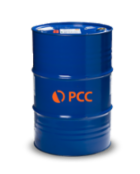
Mineral oils are mixtures of higher hydrocarbons, which are obtained mainly from the refining of crude oil. They are used as non-conducting cooling or thermal fluids in electrical components, for example, in transformers and high voltage switchgears. Mineral oil is also used as heating oil and hydraulic fluid due to its incompressible properties.

The second group is synthetic oils, consisting of long polymer chains and a number of additives modifying their properties. They are characterized by significantly better lubrication capabilities than mineral oils. They also show higher viscosity at low and high operating temperatures. In addition, they are resistant to oxidation, thermal decomposition and formation of carbon deposits, e.g. in engines. Unfortunately, they are definitely more expensive than mineral oils.

Polyalkylene glycols (PAG) are a great example of liquid synthetic lubricating oils. An important advantage of PAGs is their reduced tendency to form deposits and sediments (in comparison to mineral oils), which extends the service life of lubricated parts of machines and devices and facilitates their maintenance. Produced in the PCC Group, the Rokolub products belonging to the PAG group, can be used as components for the production of metalworking fluids and process fluids for metals in various industries. They are also used as finished products, e.g. hydraulic oils, lubricating oils for gas compressors and refrigeration compressors.

The PCC Group offer dedicated to use in industrial synthetic lubricants and functional fluids

The PCC Group, in order to meet client expectations, offers specialized base oils and functional fluids dedicated to various branches of industry. The PCC Groups’ portfolio of products dedicated to lubricants and functional fluids includes synthetic base oils and additives improving usable properties.

Base oils for synthetic lubricants

The Rokolub series products produced in the PCC Group are used, among others, as base oils for compressors, oils for industrial gears, hydraulic fluids or oils dedicated to the textile industry. They are also used as anti-adhesives, heat transfer fluids and as components of metal-working formulations.

The Rokolub product group includes:

  • polyalkylene glycols (PAG) soluble in water (Rokolub 50-B and 60-D series),
  • polyalkylene glycols (PAG) insoluble in water (Rokolub P-B and PO-D series),
  • phosphate esters (Rokolub FR I series and Rokolub FR T series). Rokolub FR series dedicated mainly as the base oils for non-flammable hydraulic fluids type HFDR.

AW/EP additives for the formulation of lubricating oils and metalworking fluids

These are, among others, the Rokolub AD series and the Chemfac PB series, i.e. AW / EP (Anti-Wear and Extreme Pressure) additives, dedicated for use in mineral and synthetic oils. Their main task is to improve the lubricating properties of the base oil.

Additives for the formulation of cutting lubricants

The PCC Group also offers a wide range of surfactants that can be used in metalworking fluid compositions and lubricants. The most comprehensive and the most important product group are non-ionic alcohol alkoxylates – the ROKAnol series.

Depending on the characteristics of the raw material used and the degree of alkoxylation, products with different application properties are obtained. For this reason, the ROKAnol GA, NL and DB series have better degreasing properties than the ROKAnol K and O series, which in turn are better emulsifiers for base oils. For formulations with a requirement of low-foaming capacity, specific surfactants with low-foaming properties are recommended – the ROKAnol LP series.

  • Wetting agents

ROKAnol ID series and ROKAnol IT series are excellent wetting agents. Their properties are of particular importance in detergents and in products intended for industrial and institutional cleaning. These products are characterized by a strong ability to remove dirt from various surfaces, both in the case of fabrics and hard surfaces. Some of these products, e.g. ROKAnol IT8, are excellent emulsifiers of silicone oil with which they form microemulsions. These compositions are used, among others, as softeners.

  • Emulsifiers

Oxytetyl fatty acids (ROKAcet series) are products often used in many industrial applications due to their good emulsifying properties and low foaming capacity. In comparison with other non-ionic surfactants, surfactants in this group have poor wetting properties. The most frequently chosen ROKAcet products in the industrial lubricants sector are ROKAcet RZ17 and ROKAcet O7. The application properties of these products depend on the length of the polyoxyethylene chain and on the structure of the hydrocarbon chain of the starting acid. The presence of various substituents in the hydrocarbon chain ensures adequate hydrophilicity or hydrophobicity of the chain depending on the polarity of the group.

Effective and versatile emulsifiers are also derivatives of sorbitan and fatty acids with the trade name ROKwin and their ethoxylated derivatives, i.e. ROKwinol. ROKwin 80 is mainly used as a water-in-oil (W/O) emulsifier, but can also be used as an oil co-emulsifier (O/W) in combination with ROKwinol products, e.g. ROKwinol 80. As an emulsifier, it can be used in emulsion explosives in the mining industry. Emulsifiable properties of ROKwin are used in metalworking fluids and anhydrous formulations.

The industrial lubricants sector also uses ethoxylated fatty amines (ROKAmin SR series). These products are characterized by excellent emulsifying properties. They also have anti-corrosive properties, especially in relation to ferrous metals, thanks to the ability to create a single layer (film) on the metal surface. In the lubricant industry, these products are used as ingredients in the formulation of cutting lubricants and flame-retardant hydraulic fluids. ROKAmin SR products also have detergent properties, thanks to which they are used as components of hard surface cleaning agents, industrial degreasers and metal cleaning agents.

  • Low-foaming and anti-foam additives

Non-ionic surfactants of block copolymers of ethylene oxide and propylene oxide (ROKAmer series) are high-molecular polymers with a specific, bifunctional structure that determines their properties. The ROKAmer series are products with low and anti-foaming properties, which is their main feature. The lubricant industry uses, among others, ROKAmer 2950, which is one of the waterborne coolants.

Where are the lubricants and functional fluids used and why are they worth using?

Lubricants and functional fluids are used, among others, in hydraulic and brake systems, in turbines, compressors, engines, refrigeration systems, transmissions and guides. They are used in the metallurgical industry, in the automotive industry, mining or aviation, where the devices work in very different, demanding conditions.

A wide spectrum of functional additives allows the development of compositions with properties tailored to the given application. Thanks to this, it is possible to effectively protect devices and their elements against corrosion, wear or the formation of sediments and carbon deposits.  For this reason, the use of lubricants and operating fluids, properly selected for the type of equipment and operating conditions, ensures their long, efficient and trouble-free operation. This translates directly into a reduction in the costs generated by repairs and related downtime, as well as ensuring the flow of many industrial processes.