PCC
RegisterLogin Page

Raw materials for detergent production

PCC Group’s product portfolio includes both finished products and surface active agents (surfactants) dedicated to detergent industry. Variable composition of these substances determines wide range of their functions and applications.

Okładka katalogu
Filters
Function
Composition
Segment
Manufacturer
of 25
Surmax® CS-727 Surmax®CS-727 is an alkaline stable surfactant that is freely soluble in 50% NaOH and 45%KOH. Surmax®CS-727 has relatively poor solubility in phosphates and silicates....
Composition
Mixtures
Surmax® CS-727
Surmax® CS-727MA Surmax® CS-727MA is an alkaline stable surfactant that is designed primarily for use in liquid formulations containing high levels of sodium hydroxide. It is freely...
Composition
Mixtures
Surmax® CS-727MA
Surmax® CS-8400 Surmax®CS-8400 is a low foaming alkaline stable surfactant which is designed for application temperatures above 60°C.
Composition
Mixtures
Surmax® CS-8400
TEQUAT®LC 90i (Tallow esterquat) Tequat LC90i is a cationic surfactant. It is obtained by the condensation reaction of fatty acids of animal origin and triethanolamine, and then quaternized. The...
Composition
Mixtures, Quaternary compounds
TEQUAT®LC 90i  (Tallow esterquat)
TEQUAT®E (Tallow esterquat) Tequat E is a cationic surfactant. It is obtained by condensation of fatty acids of animal origin and triethanolamine, and then quaternised. The commercial product...
Composition
Mixtures, Quaternary compounds
TEQUAT®E  (Tallow esterquat)
Rokopol Anti Virus Disinfectant Ready to use Rokopol Anti Virus is a ready-to-use preparation with a proven disinfecting effect for various types of surfaces. It provides virucidal, bactericidal and fungicidal...
Composition
Mixtures
Rokopol Anti Virus Disinfectant
Rokopol Anti Virus X Disinfectant Ready to use Rokopol Anti Virus X is a washing and disinfecting agent based on sodium hypochlorite. It is effective against viruses, bacteria and fungi. The product is dedicated...
Composition
Mixtures
Rokopol Anti Virus X Disinfectant
Caustic soda flakes Sodium hydroxide in solid form, also called caustic soda, is an inorganic chemical compound belonging to the strongest alkali. In solid form, it is a white substance...
Composition
Alkali
CAS No.
1310-73-2
Caustic soda flakes
Caustic soda lye 50% solution Sodium hydroxide is an inorganic chemical compound of the hydroxide group, belonging to the strongest alkali. In liquid form it is a colourless, odourless and non-flammable...
Composition
Alkali
CAS No.
1310-73-2
Caustic soda lye 50% solution
Hydrochloric acid 33% Hydrochloric acid 33% grade is a by-product of MCAA (monochloroacetic acid) production process. It is highly corrosive, has a pungent, irritating smell, transparent...
Composition
Non-organic acids
CAS No.
7647-01-0
Hydrochloric acid 33%
Hydrochloric acid for food grade industry 33% Hydrochloric acid food grade is a chemical compound that is an aqueous solution of hydrogen chloride gas. It has strong corrosive properties, a strong, irritating...
Composition
Non-organic acids
CAS No.
7647-01-0
Hydrochloric acid for food grade industry 33%
Caustic soda lye 25% solution Sodium hydroxide (25% solution) is an inorganic chemical compound of the hydroxide group, belonging to the strongest alkali. In liquid form it is a colourless, odourless...
Composition
Alkali
CAS No.
1310-73-2
Caustic soda lye 25% solution
Caustic soda lye 30% solution Sodium hydroxide (30% solution) is an inorganic chemical compound of the hydroxide group, belonging to the strongest alkali. In liquid form it is a colourless, odourless...
Composition
Alkali
CAS No.
1310-73-2
Caustic soda lye 30% solution
Caustic soda lye 35% solution Sodium hydroxide (35% solution) is an inorganic chemical compound of the hydroxide group, belonging to the strongest alkali. In liquid form it is a colourless, odourless...
Composition
Alkali
CAS No.
1310-73-2
Caustic soda lye 35% solution
Caustic soda lye 40% solution Sodium hydroxide (40% solution) is an inorganic chemical compound of the hydroxide group, belonging to the strongest alkali. In liquid form it is a colourless, odourless...
Composition
Alkali
CAS No.
1310-73-2
Caustic soda lye 40% solution
Caustic soda lye 45% solution Sodium hydroxide (45% solution) is an inorganic chemical compound of the hydroxide group, belonging to the strongest alkali. In liquid form it is a colourless, odourless...
Composition
Alkali
CAS No.
1310-73-2
Caustic soda lye 45% solution
POLIkol 4000 Ready to use POLIkol 4000 is a product from the polyoxyethylene glycol group (PEG with a mean molecular mass of 4000) with the INCI name: PEG-90. The commercial product is a...
Composition
Polyethylene glycols
CAS No.
25322-68-3
POLIkol 4000
POLIkol 4000 PILLS (PEG-90) Ready to use POLIkol 4000 PILLS is a product from the polyoxyethylene glycol group (PEG with a mean molecular mass of 4000) with the INCI name: PEG-90. The commercial product...
Composition
Polyethylene glycols
CAS No.
25322-68-3
POLIkol 4000 PILLS (PEG-90)
481 - 498 of 498 products
Items on page: 20

Detergents are compounds or their mixtures that constitute active components of cleaning supplies, such as washing up liquids, laundry liquids and powders, dishwasher tablets and other products with ability to remove dirt.
Sometimes detergents are understood as finished cleaning products. In the chemical industry, however, there is a clear distinction between ‘proper detergents’ – with reference to the first definition and other ingredients of cleaning products – including gloss-enhancing substances, artificial colouring, fragrance additives, nutrients, antistatic or bleach additives.
Surfactant producers’ focus on design and development of innovative products serving as a basis for a formulation or being separate active substances makes detergent industry’s growth possible. PCC Group, as a company focused on the implementation of innovations, expands its offer to include advanced substances and chemical formulations applicable to any sector of house¬hold chemicals. This includes household products, as well as specialised products intended for industrial washing and cleaning.
PCC Group’s product portfolio includes both finished products and surface active agents (surfactants) dedicated to the detergent industry. Variable composition of these substances determines a wide range of their functions and applications.
Surfactants (surface active agents)

The following substances are included in the group of surfactants used in production of household and industrial chemicals:

  • washing and cleaning agents
  • wetting agents
  • foaming agents
  • low and anti-foaming agents
  • emulsifiers
  • solubilizers
  • thickening agents
  • softening agents
  • pH-regulators
  • others

Surface active agents (surfactants) with properties mentioned above are components of products such as laundry liquids and powders, fabric softeners, dishwashing liquids, washing capsules, liquids and powders, floor and window cleaners, cleaning products for sanitary fittings, furniture cleaning products and many others.

Being aware of the nature of surfactants, we know that one compound is a combination of many features out of which only one determines the behaviour of a properly designed product. Research Divisions operating within PCC Group have developed a series of low foaming surfactants called Rokanol LP meeting the specific needs of formulations which do not require an intensive effect of foaming. Such formulations include among other things, automatic dishwasher detergent (ADWD) products. Furthermore, products from the series can be used as ingredients of industrial cleaning agents and glass surface cleaners, including mirrors.

Wetting agents should be considered when designing a cleaning formulation as their main task is to reduce the surface tension between the liq­uid phase and the cleaning surface. For such application, Group PCC recommends the series of Rokanol IT (ethoxylated synthetic alcohol C13 derivatives), Rokanol NL (ethoxylated synthetic alcohol C9-C11 derivatives) and Rokanol D (ethoxylated synthetic alcohol C6-C12 derivatives).

According to prevailing market trends, formulation with high viscosity are identified with a high-end product quality, therefore the varied product offer of PCC Exol includes substances that possess good thickening characteristics and thus allow for increased viscosity of final formula to be obtained. The most commonly used surfactants responsible for changes in rheology offered by PCC Group are products to which belong: Sodium Laureth Sulfate (SLES), Laureth – 4 (Rokanol L4), Laureth – 5 (Rokanol L5), Laureth -7 (Rokanol L7), Rokamid KAD (Cocamide DEA) and amphoteric surfactants (betaines) (Cocamidopropyl Betaine and Coco Betaine)

PCC Group extends and diversifies its product portfolio in order to target it better to the prevailing market trends. The company also offers preparation of finished blends tailored to meet clients’ specific needs..

Halogen Derivatives

Chemical substances such as liquid and solid sodium hydroxide, sodium hypochlorite and hydrochloric acid are widely used in the production of house­hold chemicals and industrial cleaning agents. PCC Group operates a modern membrane electrolysis plant producing sodium hydroxide of the highest quality. Sodium hypochlorite is a by-product of electrolysis occurring through saturation of sodium hydroxide with chlorine gas which is manufactured by PCC Group. In addition, owing to a modern synthesis plant, PCC produ­ces hydrochloric acid having a unique, at the European level, concentration and of exceptional purity.

Caustic soda and sodium hydroxide

Caustic soda and sodium hydroxide are used in the production of ionic surface active agents (surfactants) suitable for e.g. the manufacturing of washing powder and other laundry detergents. They are also widely used as cleaning and disinfection products ideal for disinfecting, unblocking and cleaning various types of surfaces and bathroom fittings.

Sodium hypochlorite

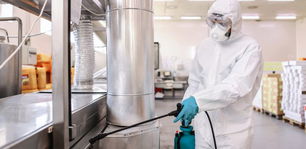
In the detergents’ industry, sodium hypochlorite is mainly used in the production of textile bleaching agents and in sanitation, degreasing and cleaning of various types of surfaces and bathroom fittings as disinfectant. It should be noted that it is forbidden to mix it with hydrochloric acid.

Synthetic hydrochloric acid and hydrochloric acid for food industry

Synthetic hydrochloric acid and hydrochloric acid for the food industry (HCL) is largely used in the manufacture of cleaning, descaling and derusting agents. It is forbidden to mix it with sodium hypochlorite.

Finished products

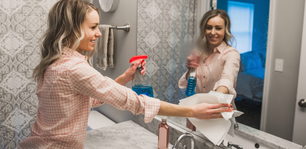
Apart from raw materials for the production of detergents, the wide offer of PCC Group includes also finished products in the form of professional cleaning agents intended for removing dirt of all kinds. These include technologically advanced cleaning agents, washing liquids and air-fresheners. Adoption of innovative technological solutions in these products enables a wide range of their uses. Owing to efficiency and universality, the products can also be used in machine cleaning. They are well suited to clean floors, glass surfaces and sanitary facilities, professionally clean kitchens and neutralize odours.

PCC Group’s broad product portfolio includes also cleaning, degreasing, descaling agents and disinfectants which are an excellent choice for cleaning and disinfecting kitchen, sanitary facilities and a variety of surfaces.