PCC
RegisterLogin Page

Water & Wastewater treatment

High water quality is obtained through purification processes, aimed at improving its parameters through various purification methods. The efficient performance of these processes requires the application of professional chemicals, especially in the purification stages applicable to biological and chemical contamination.

Filters
Function
Composition
Segment
Manufacturer
of 2
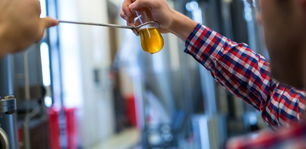
PCC Greenline® Chlorine GREENLINE Chlorine, which comes in liquid form is a pure, amber-coloured liquid, approximately 1.5 times heavier than water. It is one of basic raw materials used,...
Composition
Chlorine derivatives
CAS No.
7782-50-5
PCC Greenline® Chlorine
Chlorine Chlorine is a pure, amber liquid about 1.5 times heavier than water. Gas chlorine is greenish-yellow in colour. It is approximately 2.5 times heavier than air, which...
Composition
Chlorine derivatives
CAS No.
7782-50-5
Chlorine
PCC Greenline® Caustic Soda lye 50% Solution
GREENLINE Soda Lye (50% aqueous solution) belongs to inorganic chemical compounds from the hydroxide group. The product is manufactured in an environmentally friendly...
Composition
Alkali
CAS No.
1310-73-2
PCC Greenline® Caustic Soda lye 50% Solution<br>
PCC Greenline® Sodium Hypochlorite
Sodium hypochlorite GREENLINE, also called sodium chlorate or sodium hypochlorous acid, belongs to inorganic chemical compounds obtained by saturation with aqueous...
Composition
Alkali, Chlorine derivatives
CAS No.
7681-52-9
PCC Greenline® Sodium Hypochlorite <br>
PCC Greenline® Flaked Caustic Soda
GREENLINE caustic soda in flakes, is an inorganic chemical that belongs to the strongest bases. Energy used to produce GREENLINE Caustic Soda is covered by guarantees...
Composition
Alkali
CAS No.
1310-73-2
PCC Greenline® Flaked Caustic Soda<br>
Sodium Hypochlorite Sodium hypochlorite, also known as sodium chlorate (I) or sodium salt of hypochlorous acid, is an inorganic chemical compound that is obtained by saturating chlorine...
Composition
Alkali, Chlorine derivatives
CAS No.
7681-52-9
Sodium Hypochlorite
EXOantifoam S100 EXOantifoam S100 is a silicone emulsion with high anti-foaming properties. The product is designed for water systems, especially those containing surfactants, where...
Composition
Mixtures
EXOantifoam S100
EXOfos®PB-136K/90 (Phosphoric ester) EXOfos PB-136K/90 is an anionic surfactant classified as a phosphate ester. This ester is based on ethoxylated tridecyl alcohol, and it is offered neutralised as...
Composition
Phosphate esters
EXOfos®PB-136K/90 (Phosphoric ester)
EXOlat C40 (Sodium Polyacrylate) EXOlat C40 is an aqueous solution of polyacrylic acid sodium salt. At room temperature, the product has a form of a clear or slightly turbid liquid. It contains...
Composition
Acrylic acid derivatives, Mixtures
EXOlat C40 (Sodium Polyacrylate)
EXOlat C40A (Ammonium polyacrylate) EXOlat C40A is an aqueous solution of ammonium salt of polyacrylic acid. At room temperature, the product has a form of a clear or slightly turbid liquid. It contains...
Composition
Mixtures, Acrylic acid derivatives
EXOlat C40A  (Ammonium polyacrylate)
EXOlat ZA EXOlat ZA is an aqueous solution of acrylic acid and maleic acid copolymer sodium salt. At room temperature, the product is a clear or slightly turbid liquid, colourless...
Composition
Mixtures, Acrylic acid derivatives
EXOlat ZA
Hydrochloric acid min. 33%, synthetic Hydrochloric acid synthetic is a chemical compound which is an aqueous solution of hydrogen chloride gas. It has strong corrosive properties, a strong, irritating...
Composition
Non-organic acids
CAS No.
7647-01-0
Hydrochloric acid min. 33%, synthetic
ROKAmer®2330 (EO/PO block copolymer) ROKAmer 2330 belongs to the group of nonionic block copolymers of ethylene oxide and propylene oxide (ROKAmers). ROKAmer 2330 is one of the low-foaming and anti-foaming...
Composition
EO/PO block copolymers
CAS No.
9003-11-6
ROKAmer®2330 (EO/PO block copolymer)
ROKAmer®2600 (EO/PO block copolymer) ROKAmer 2600 belongs to the group of nonionic block copolymers of ethylene oxide and propylene oxide (ROKAmers). ROKAmer 2600 is among those products with anti-foaming...
Composition
EO/PO block copolymers
CAS No.
9003-11-6
ROKAmer®2600 (EO/PO block copolymer)
ROKAmer®2950 (EO/PO block copolymer) ROKAmer 2950 belongs to the group of nonionic block copolymers of ethylene oxide and propylene oxide (ROKAmers). ROKAmer 2950 is one of the products with low-foaming...
Composition
EO/PO block copolymers
CAS No.
9003-11-6
ROKAmer®2950 (EO/PO block copolymer)
ROKAmer®ED44 (EO/PO block copolymer based on ethylenediamine) ROKAmer ED44 is a non-ionic surfactant that belongs to the group of block copolymers of ethylene oxide and propylene oxide, based on alkoxylated ethylenediamine....
Composition
EO/PO block copolymers based on ethylenediamine
CAS No.
26316-40-5
ROKAmer®ED44  (EO/PO block copolymer based on ethylenediamine)
ROKAmer®ED57 (EO/PO block copolymer based on ethylenediamine) ROKAmer ED57 is a non-ionic surfactant that belongs to the group of block copolymers of ethylene oxide and propylene oxide, based on alkoxylated ethylenediamine....
Composition
EO/PO block copolymers based on ethylenediamine
CAS No.
26316-40-5
ROKAmer®ED57  (EO/PO block copolymer based on ethylenediamine)
ROKAmer®R2800 (EO/PO block copolymer) ROKAmer R2800 is a non-ionic surfactant belonging to the group of block copolymers of ethylene oxide and propylene oxide (ROKAmers). The product is a clear, colourless...
Composition
EO/PO block copolymers
CAS No.
9003-11-6
ROKAmer®R2800 (EO/PO block copolymer)
Rokrysol WF1 Rokrysol WF1 is an aqueous solution of polyacrylamide. The product is in the form of a colourless or light-coloured gel. The solids content is 5-7 % by mass. The...
Composition
Acrylic acid derivatives
CAS No.
9003-05-8
Rokrysol WF1
Rokrysol WF2 S Rokrysol WF2 S is an aqueous solution of partially hydrolysed polyacrylamide. The product is a colourless gel with a solid content of 5 to 7 % by mass. The product...
Composition
Acrylic acid derivatives
CAS No.
62649-23-4
Rokrysol WF2 S
1 - 20 of 37 products
Items on page: 20

PCC Group offers a wide range of products guaranteeing a higher quality, safety and efficiency of the water treatment processes and wastewater purification.
Water is one of the key elements of our everyday lives. It is vital for the functioning of a wide variety of living organisms on Earth. Continuous access to this resource is required for sanitary and existential purposes, in plant and food production or animal breeding, and it needs to satisfy specific quality requirements depending on its ultimate use. Without water, it would not be possible to carry out most of the technological processes in many industries.

Despite the renewable nature of water resources, which is closely linked with precipitation, the continual increase of pollution combined with the erratic location of its sources have led to a situation where certain areas of the world suffer from water shortages. What is more, the constant population growth produces an increasing water demand. Therefore, it is of great importance to continually improve water and wastewater purification technologies to enable the use of this natural resource in the most efficient way.

Types of contaminations and removal methods

Raw water (untreated) contains natural elements and different types of components introduced as a result of human activity, including in particular hazardous chemical substances such as fertilizers, pesticides, oil derivatives, or heavy metals. It may contain microbiological contamination as well as different types of both organic and inorganic compounds such as ions, sediments, colloids, and suspensions. High water quality is obtained through purification processes, aimed at improving its parameters through various purification methods. An inherent element of water use is wastewater (industrial, agricultural, domestic and municipal) deriving from a number of processes linked with human activity. Wastewater is highly harmful to the natural environment and therefore it is necessary to perform an adequate purification processes. This procedure ensures that it is no longer hazardous after disposal into appropriate tanks.

Nowadays, wastewater disposal and water purification are a great challenge faced by an increasing number of cities, factories, plants and households all over the world. Physical treatment methods including flocculation, filtration and adsorption are not always able to provide potable water of adequate quality, which must satisfy particularly restrictive requirements. Therefore, the efficient performance of these processes requires the application of professional chemicals, especially in the purification stages applicable to biological and chemical contamination.

Water disinfection

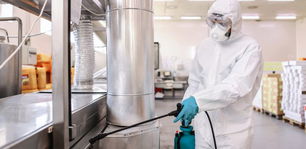
Chlorine, sodium hypochlorite and soda lye  (sodium hydroxide) are the key chemicals widely used in the disinfection of water intakes and installations. These substances work perfectly well in the purification of potable water mainly by removing microbiological contaminations. Depending on its use, water parameters are specified by relevant standards and regulations and therefore products dedicated to this market have the required certificates and PZH attestation.
Industrial water treatment

The product portfolio of the PCC Group also contains solutions intended for industrial water treatment. Phosphonates under the trade name of Roclean are dedicated particularly to this market. Due to a very high ability to ions complexation, these products are used to remove metal cations such as Ca, Mg, Fe, Cu, and Zn. What is more, they efficiently prevent corrosion and help to control sedimentation in water cooling systems, boilers and boiler water systems even at low concentrations. They are also successfully used in closed water circuits in oil fields. Another group of products offered by the PCC Group are specialist additives under the trade name of Rokrysol. Rokrysol WF1 is a synthetic flocculant of non-ionic nature accelerating sedimentation of water suspensions. Rokrysol WF2 S – a synthetic anion flocculant – supports the thickening and clarification processes of inorganic suspensions, especially those containing metal hydroxides and other positively charged particles.

Antifoaming preparations

During the industrial water treatment derived from processes requiring the application of foaming substances (pulp production, cosmetics, pharmaceuticals, food or metallurgical production), foam extinguishing is one of the purification stages. The anti-foaming agents based on silicon oils such as EXOantifoam S100 are used in the process. An alternative for the silicon-based formulas is Tensiantifoam – a carefully balanced mixture of low-foaming and antifoaming substances also intended to remove the foam generated in industrial processes. The product portfolio also contains the ROKAmer series – an ethylene and propylene oxide block copolymers of low foaming properties, which can be a component of foam extinguishing formulas intended to use in contact with food. These products meet the requirements of Food and Drug Administration (FDA) with respect to additives used in food processing.

Products for heating water circuits

Water is also a carrying medium in heating installations where safe and efficient use depends first and foremost on the quality of water supplying boilers (boiler feed water) and circulating in the heating circuits (heating water cycles). It must satisfy the requirements set forth by the boilers producers which are determined by the structure of the containers and pressure inside the circuit. Care of the installation and adequate chemical correction significantly reduce the heating network maintenance costs and losses derived from downtime. These precautions ensure continuity of energy supply through increased reliability of the system and limitation of repair expenses.

The key requirement referring to water in closed heating systems is a lack of corrosive action on installation elements or limescale occurrence. The basic corrosive factor is oxygen diluted in water and therefore it is important to apply correcting agents binding this component. The offer of the PCC Group includes carbohydrazine based products under the trade name of Tensamin CH6 and Tensamin CH11, which are responsible for the pH correction, deoxidation and passivation. These preparations provide safe, non-toxic substitutes for the generally applied hydrazine. An alternative for these products is Tensamin EC, which is a mixture of carefully selected alkaline surfactants. The preparation has anticorrosive, dispersing and limescale preventing properties. Therefore, it is widely applied in water-steam and heating water circuits. It is particularly dedicated and recommended for brand new heating installations.

A product recommended for the heating water correction is Tensamin PK containing diethylohydroxyloamine (DEHA). This compound has the ability to chemical binding of oxygen at relatively low temperatures (ca. 60°C), thus ensuring anticorrosive protection. Additionally, the DEHA solutions have the ability to create a film on surfaces what makes Tensamin PK a perfect anticorrosive agent for boiler maintenance during downtime. The Tensamine series also includes preparations preventing of limescale formation such as Tensical – an acid-based formula containing a corrosion inhibitor recommended for the limescale removal from pipelines, pumps and heat exchangers.