PCC
RegisterLogin Page

Emulsifiers

Emulsifiers are substances that enable the formation of emulsions and prevent the reaggregation of molecules.

Filters
Function
Composition
Segment
Manufacturer
of 26
Chemeen 18-6 Chemeen polyoxyethylated fatty amines are mildly cationic surfactants that become more nonionic in nature with increasing ethylene oxide content. These surfactants...
Composition
Alkoxylated fatty amines
CAS No.
26635-92-7
Chemeen 18-6
Chemeen 18-8 Chemeen polyoxyethylated fatty amines are mildly cationic surfactants that become more nonionic in nature with increasing ethylene oxide content. These surfactants...
Composition
Alkoxylated fatty amines
CAS No.
26635-92-7
Chemeen 18-8
Chemeen C-10 Chemeen polyoxyethylated fatty amines are mildly cationic surfactants that become more nonionic in nature with increasing ethylene oxide content. These surfactants...
Composition
Alkoxylated fatty amines
CAS No.
61791-14-8
Chemeen C-10
Chemeen C-12G Chemeen polyoxyethylated fatty amines are mildly cationic surfactants that become more nonionic in nature with increasing ethylene oxide content. These surfactants...
Composition
Alkoxylated fatty amines
CAS No.
61791-14-8
Chemeen C-12G
Chemeen C-15 Chemeen polyoxyethylated fatty amines are mildly cationic surfactants that become more nonionic in nature with increasing ethylene oxide content. These surfactants...
Composition
Alkoxylated fatty amines
CAS No.
61791-14-8
Chemeen C-15
Chemeen C-2 Chemeen polyoxyethylated fatty amines are mildly cationic surfactants that become more nonionic in nature with increasing ethylene oxide content. These surfactants...
Composition
Alkoxylated fatty amines
CAS No.
61791-31-9
Chemeen C-2
Chemeen C-5 Chemeen polyoxyethylated fatty amines are mildly cationic surfactants that become more nonionic in nature with increasing ethylene oxide content. These surfactants...
Composition
Alkoxylated fatty amines
CAS No.
61791-14-8
Chemeen C-5
Chemeen DT-15 Chemeen polyoxyethylated fatty amines are mildly cationic surfactants that become more nonionic in nature with increasing ethylene oxide content. These surfactants...
Composition
Alkoxylated fatty amines
CAS No.
61790-85-0
Chemeen DT-15
Chemeen HT Chemeen HT may be used as a raw material for the production of ethoxylated amines.
Composition
Oil derivatives
CAS No.
61788-45-2
Chemeen HT
Chemeen HT-5 Chemeen polyoxyethylated fatty amines are mildly cationic surfactants that become more nonionic in nature with increasing ethylene oxide content. These surfactants...
Composition
Alkoxylated fatty amines
CAS No.
61790-82-7
Chemeen HT-5
Chemeen HT-6 Chemeen polyoxyethylated fatty amines are mildly cationic surfactants that become more nonionic in nature with increasing ethylene oxide content. These surfactants...
Composition
Alkoxylated fatty amines
CAS No.
61790-82-7
Chemeen HT-6
Chemeen HT-8 Chemeen polyoxyethylated fatty amines are mildly cationic surfactants that become more nonionic in nature with increasing ethylene oxide content. These surfactants...
Composition
Alkoxylated fatty amines
CAS No.
61790-82-7
Chemeen HT-8
Chemeen O-30/80 Chemeen polyoxyethylated fatty amines are mildly cationic surfactants that become more nonionic in nature with increasing ethylene oxide content. These surfactants...
Composition
Alkoxylated fatty amines
Chemeen O-30/80
Chemeen T-15 Chemeen polyoxyethylated fatty amines are mildly cationic surfactants that become more nonionic in nature with increasing ethylene oxide content. These surfactants...
Composition
Alkoxylated fatty amines
CAS No.
61791-26-2
Chemeen T-15
Chemeen T-15LF Chemeen polyoxyethylated fatty amines are mildly cationic surfactants that become more nonionic in nature with increasing ethylene oxide content. These surfactants...
Composition
Alkoxylated fatty amines
CAS No.
68213-26-3
Chemeen T-15LF
Chemeen T-2 Chemeen polyoxyethylated fatty amines are mildly cationic surfactants that become more nonionic in nature with increasing ethylene oxide content. These surfactants...
Composition
Alkoxylated fatty amines
CAS No.
61791-26-2
Chemeen T-2
Chemeen T-5 Chemeen polyoxyethylated fatty amines are mildly cationic surfactants that become more nonionic in nature with increasing ethylene oxide content. These surfactants...
Composition
Alkoxylated fatty amines
CAS No.
61791-26-2
Chemeen T-5
Chemeen T-7 Chemeen polyoxyethylated fatty amines are mildly cationic surfactants that become more nonionic in nature with increasing ethylene oxide content. These surfactants...
Composition
Alkoxylated fatty amines
CAS No.
61791-26-2
Chemeen T-7
Chemeen T-8 Chemeen polyoxyethylated fatty amines are mildly cationic surfactants that become more nonionic in nature with increasing ethylene oxide content. These surfactants...
Composition
Alkoxylated fatty amines
CAS No.
61791-26-2
Chemeen T-8
Chemfac NB-041 Chemfac NB-041 is a 2-butoxyethanol phosphate in the free acid form. Chemfac NB-041 is a clear colorless to yellow viscous liquid at room temperature that is water...
Composition
Phosphate esters
CAS No.
14260-98-1
Chemfac NB-041
101 - 120 of 501 products
Items on page: 20

Emulsifiers are substances that enable the formation of emulsions and prevent the reaggregation of molecules.

An emulsion is a colloidal system consisting of at least two immiscible liquids, where one phase is dispersed in the other in the form of droplets.

Emulsifiers are chemical compounds of amphiphilic structure, which means that hydrophilic polar groups (called ‘head’) and hydrophobic non-polar groups (called ‘tail’) are present in their structure. The most common emulsifiers are surfactants. The emulsifier molecules adsorb at the phase boundary, reducing the interfacial tension. After reducing the tension, a spontaneous emulsification process takes place under the influence of the movement of particles. The resulting stable system is called an emulsion.

Two basic types of emulsions are distinguished:

  • oil in water (O/W) – formed as a result of dispersion of a non-polar oil phase droplet in the polar aqueous phase; in this system water is a continuous phase and oil is a dispersed phase,
  • water in oil (W/O) – formed as a result of water dispersion in the oil phase, where the water layer is a dispersed phase and the oil is a continuous phase.

There are two methods for obtaining emulsions:

  • mechanical shaking of immiscible liquids – using shakers or mixers,
  • the use of ultrasound – using an ultrasonic field with thousands of vibrations per second.

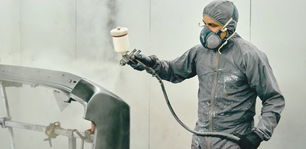
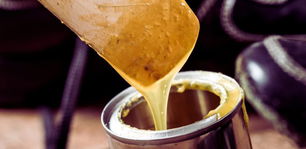
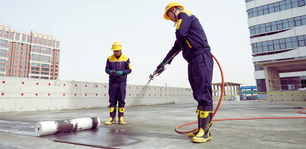
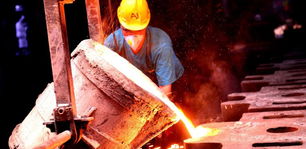
Emulsifiers are used in almost all branches of industry. Among others, they are used in the production of agrochemicals, detergents, paints, varnishes, food products, packaging, cosmetics; cleaning and industrial washing; in the construction, paper, metallurgy, pharmaceutical, fuel and textile industries.