PCC
RegisterLogin Page

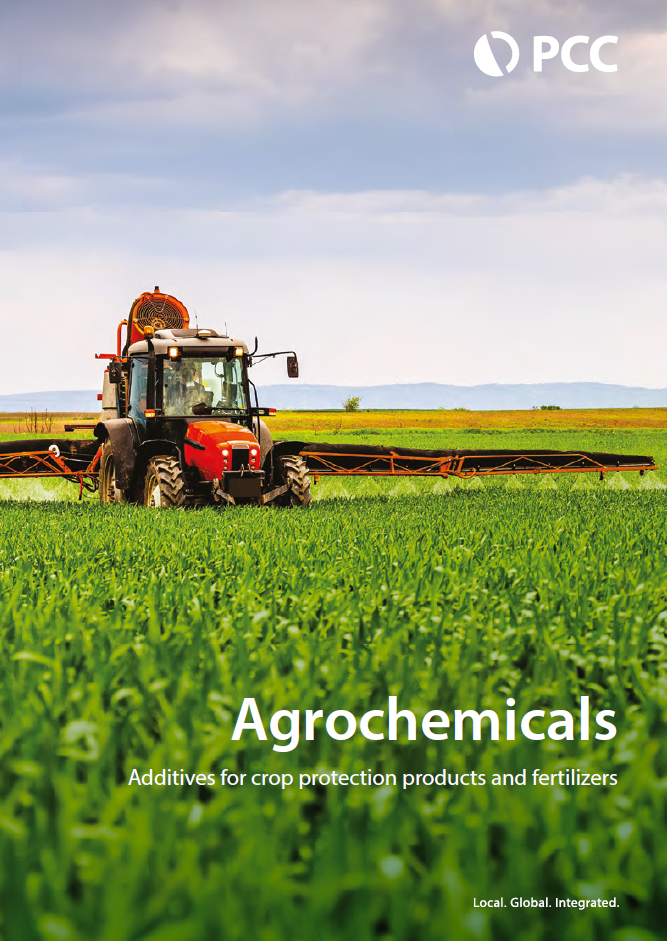
Agrochemicals

Agriculture is an extremely important sector of the economy, whose primary aim is food production. Furthermore, crop cultivation provides a variety of raw materials for the food, footwear, chemical, textile and many other industries.

Okładka katalogu
Filters
Function
Composition
Segment
Manufacturer
of 14
ROSULfan®C/PH MB (Sodium Coco Sulfate, SCS) ROSULfan C/PH MB is an alkyl sulphate belonging to the group of anionic surfactants, with the INCI name: Sodium Coco Sulfate, SCS. The production process is based...
Composition
Alkyl sulfates
CAS No.
68955-19-1
ROSULfan®C/PH MB  (Sodium Coco Sulfate, SCS)
Sulfobursztynian DOSS (Sulfosuccinate) DOSS SULFOSUCCINATE is an anionic surfactant with active substance content of 60% diluted in 2-ethylhexanol used as a solvent. It is a surfactant with a limited...
Composition
Sulfosuccinates
Sulfobursztynian DOSS  (Sulfosuccinate)
Sulfobursztynian DOSS70E (Sulfosuccinate) DOSS70E SULFOSUCCINATE is an anionic surfactant with a concentrated content of the active substance (70%) in ethyl alcohol, with the INCI name: Diethylhexyl Sodium...
Composition
Sulfosuccinates
Sulfobursztynian DOSS70E  (Sulfosuccinate)
SULFOROKAnol® L225/1 (Sodium C12-C14 Laureth Sulfate) SULFOROKAnol L225 / 1 is an anionic surfactant of the group of alkyl ether sulphates (INCI name: Sodium Laureth Sulphate). The product is available as an approximately...
Composition
Alkyl ether sulfates
CAS No.
68891-38-3
SULFOROKAnol® L225/1  (Sodium C12-C14 Laureth Sulfate)
SULFOROKAnol®L270/1 (Sodium C12-C14 Laureth Sulfate) SULFOROKAnol L270/1 is an anionic surfactant from the group of alkyl ether sulphates (INCI name: Sodium Laureth Sulphate). It is based mainly on raw material of...
Composition
Alkyl ether sulfates
CAS No.
68891-38-3
SULFOROKAnol®L270/1  (Sodium C12-C14 Laureth Sulfate)
SULFOROKAnol® L270/1A (Sodium Laureth Sulfate) SULFOROKAnol L270 / 1A is an anionic surfactant from the group of alkyl ether sulphates (INCI name: Sodium Laureth Sulphate). The product is based mainly on raw...
Composition
Alkyl ether sulfates
CAS No.
68891-38-3
SULFOROKAnol® L270/1A (Sodium Laureth Sulfate)
SULFOROKAnol®L327 (Sodium C12-15 Pareth Sulfate) SULFOROKAnol L327 is an anionic surfactant from the group of alkyl ether sulphates (INCI name: Sodium Pareth Sulphate), based on synthetic alcohol. The product comes...
Composition
Alkyl ether sulfates
CAS No.
125301-92-0
SULFOROKAnol®L327 (Sodium C12-15 Pareth Sulfate)
SULFOROKAnol® L370 (Sodium C12-C15 Pareth Sulfate) SULFOROKAnol L370 is an anionic surfactant from the group of alkyl ether sulfates, based on synthetic alcohol called INCI: Sodium Pareth Sulfate. The product has...
Composition
Alkyl ether sulfates
CAS No.
125301-92-0
SULFOROKAnol®<sup></sup> L370 (Sodium C12-C15 Pareth Sulfate)
SULFOROKAnol®L370/1 (Sodium C12-C14 Laureth Sulfate) SULFOROKAnol L370 / 1 is an anionic surfactant of the group of alkyl ether sulphates, based on natural alcohol (INCI name: Sodium Laureth Sulphate). The product...
Composition
Alkyl ether sulfates
CAS No.
68891-38-3
SULFOROKAnol®L370/1  (Sodium C12-C14 Laureth Sulfate)
SULFOROKAnol® L225/1 MB (Sodium C12-C14 Laureth Sulfate) SULFOROKAnol L225/1 MB is an anionic surfactant of the group of alkyl ether sulphates (INCI name: Sodium Laureth Sulphate). The product is available as an approximately...
Composition
Alkyl ether sulfates
CAS No.
68891-38-3
SULFOROKAnol® L225/1 MB  (Sodium C12-C14 Laureth Sulfate)
SULFOROKAnol® L270/1 MB (Sodium C12-C14 Laureth Sulfate) SULFOROKAnol L270/1 MB is an anionic surfactant from the group of alkyl ether sulphates (INCI name: Sodium Laureth Sulphate). It is based mainly on raw material...
Composition
Alkyl ether sulfates
CAS No.
68891-38-3
SULFOROKAnol® L270/1 MB  (Sodium C12-C14 Laureth Sulfate)
SULFOROKAnol® L270/1A MB (Sodium C12-C14 Laureth Sulfate) SULFOROKAnol L270/1A MB is an anionic surfactant from the group of alkyl ether sulphates (INCI name: Sodium Laureth Sulphate). It is based mainly on raw material...
Composition
Alkyl ether sulfates
CAS No.
68891-38-3
SULFOROKAnol® L270/1A MB   (Sodium C12-C14 Laureth Sulfate)
Sulfobursztynian DOSS70GP (Diethylhexyl Sodium Sulfosuccinate) SULFOSUCCINATE DOSS70GP is an anionic surfactant with a concentrated active substance content (70%) in propylene glycol (INCI name: Diethylhexyl Sodium Sulfosuccinate)....
Composition
Sulfosuccinates
CAS No.
577-11-7
Sulfobursztynian DOSS70GP (Diethylhexyl Sodium Sulfosuccinate)
Sulfobursztynian L3/40 (Disodium Laureth Sulfosuccinate) SULFOBURSZTYNAN L3/40 is an anionic surfactant (INCI name: Disodium Laureth Sulfosuccinate.) The product is a light yellow to yellow liquid and contains 40% active...
Composition
Sulfosuccinates
Sulfobursztynian L3/40 (Disodium Laureth Sulfosuccinate)
Fertilizer Lime 20W Ready to use Fertilizer lime is a professional product designed to improve soil quality and provide essential nutrients for plants. It is a mineral substance containing at least...
Composition
Mixtures
Fertilizer Lime 20W
Weiss Holz preparation for effective removal of wood blue stain Ready to use Weiss Holz - a professional preparation for removing blue stain, which does not damage the structure of wood and which successfully restores its natural colour....
Composition
Mixtures
CAS No.
7681-52-9
Weiss Holz preparation for effective removal of wood blue stain
Caustic soda flakes Sodium hydroxide in solid form, also called caustic soda, is an inorganic chemical compound belonging to the strongest alkali. In solid form, it is a white substance...
Composition
Alkali
CAS No.
1310-73-2
Caustic soda flakes
Caustic soda lye 50% solution Sodium hydroxide is an inorganic chemical compound of the hydroxide group, belonging to the strongest alkali. In liquid form it is a colourless, odourless and non-flammable...
Composition
Alkali
CAS No.
1310-73-2
Caustic soda lye 50% solution
Chlorobenzene Chlorobenzene, also known as monochlorobenzene (MCB), is a colourless, volatile, water-insoluble liquid with a light, pleasant almond fragrance. It belongs to the...
Composition
Chlorine derivatives
CAS No.
108-90-7
Chlorobenzene
Dichloropropane Dichloropropane (DCP) is a clear, colorless liquid with no mechanical impurities with a characteristic odor. Dichloropropane is obtained in the production of propylene...
Composition
Chlorine derivatives
CAS No.
78-87-5
Dichloropropane
241 - 260 of 272 products
Items on page: 20

The share of agriculture in the economies of individual countries varies greatly, and the level of employment in this sector ranges from a few per cent in highly developed countries to as much as several dozen per cent in countries with slower economic growth. As the world’s population grows, intensive agriculture, also known as industrial agriculture, is becoming increasingly popular. It is geared towards achieving maximum yields and profits through substantial financial investment and a high degree of chemicalisation and mechanisation of agricultural production. Achieving an adequate level of productivity in this sector is possible, among other things, through the use of appropriate chemical agents.

Agrochemicals used in agriculture

Agrochemicals include several groups of chemicals used in agriculture. These are plant protection products, growth regulators, adjuvants, mineral fertilisers (liquid and granular), as well as biostimulants. They perform a variety of functions, ranging from protecting crops against harmful organisms (plant protection products), through modifying the properties of the formulation and spray solution (adjuvants), to supporting plant growth (fertilisers, growth regulators and biostimulants).

Preparations intended for use on plants contain a range of different ingredients. In the case of pesticides, the most important are the active substances, which have a destructive effect on harmful organisms and undesirable plants; in the case of fertilisers, the macro- and micro-nutrients essential for plant growth; however, these are not the only ingredients affecting their effectiveness. Agrochemical preparations may contain numerous auxiliary components such as solvents, stabilisers and agents that improve performance. The latter include surfactants.

PCC Exol products for agrochemical applications

The PCC Group’s portfolio for the agrochemical industry primarily comprises a range of surfactants with varying chemical structures. Surfactants in agrochemical formulations can perform various functions (emulsifiers, wetting agents, dispersants, solubisers, rheology modifiers, anti-foaming agents, humectants); it is thanks to them that agrochemical formulations remain stable during storage and are highly effective. This makes it possible to reduce the amount of agrochemicals used and thus lower the costs associated with agricultural production, as well as to achieve environmental benefits.

  • Emulsifiers – emulsification is one of the most important functions of surfactants in agrochemical formulations. Some adjuvants and plant protection products contain oils and organic solvents. Their presence makes it difficult to mix the preparations with water. To facilitate this process, it is necessary to use emulsifiers which, thanks to their amphiphilic structure, enable the formation of emulsions by dispersing hydrophobic phase particles in water. The products offered by the PCC Group with emulsifying properties are primarily the EXOemul series, i.e. surfactant blends designed for emulsifiable formulations of plant protection products (EC, EW) and oil-based adjuvants. Also worth recommending are non-ionic surfactants, such as ethoxylated fatty acid derivatives (ROKAcety, and in particular the R series) and sorbitan derivatives (ROKwiny and ROKwinole). The mixing efficiency of the oil phase with the aqueous phase is also improved by anionic surfactants of the calcium salt type of alkylbenzenesulfonic acid (the EXOcal product group).
  • Wetting agents – these are substances that effectively reduce the surface tension of the spray liquid, thereby facilitating the spreading of droplets on the plant surface and ensuring their even application. These agents constitute an important group of ingredients in foliar fertilisers, liquid formulations (SL, SC, CS) (due to the hydrophilic nature of the solvents) and powder formulations (WP, WG, SP, SG) of plant protection products (due to the absence of solvents). The PCC Group’s range of wetting agents includes ready-made blends (EXOwet), non-ionic surfactants from the group of ethoxylated fatty alcohols (ROKAnol), comprising the NL, ID, IT, DB, L and GA series, as well as products from the SULFOROKAnol and ROKAmina (K30, K30B, K40HC).
  • Dispersants and co-dispersants – these ensure the even distribution of solid particles in agrochemical formulations, preventing agglomeration and sedimentation. They act as suspension stabilisers, improving product homogeneity and shelf life. The PCC Group’s portfolio includes many products that perform these functions in aqueous formulations (EXOfos PT and PB series, EXOdis PC40, PC540, EXOdis AG-137, ROKAmery G series and ROKAmery 6500 and 1010) and non-aqueous formulations (ROKAcety R series and ROKwinole).
  • Solubilisers – are designed to increase the solubility of active substances in water, enabling the formation of clear and stable solutions. This is possible due to the presence of both hydrophilic and hydrophobic parts within the molecule. The use of solubisers in formulations makes them more effective, as the active ingredients are more readily available to plants. POLIkole products with lower molecular weights (up to approx. 1000) can act as solubisers. Meanwhile, products from the ROKAmina group can assist in the solubilisation of certain salts.
  • Rheology modifiers – these influence the consistency and stability of formulations by controlling the viscosity and flow properties of agrochemicals. They facilitate mixing and application, and prevent sedimentation and separation, thereby ensuring consistent product performance. This role can be fulfilled by a wide range of products from the PCC Group’s portfolio, such as polyethylene glycols (POLIkole), betaines (ROKAmines), certain alkoxylated alcohols (ROKAnols of the LK and O series) and high-molecular-weight EO/PO copolymers (ROKAmers 6500 and 1010).
  • Defoamers and anti-foaming agents – possess good wetting and emulsifying properties, which is extremely important in agrochemical formulations where foaming is highly undesirable. The range of products on offer includes alkoxylated fatty alcohols, such as ROKAnol NL8P4 and the ROKAnol LP series. The PCC Group’s portfolio also includes block copolymers (including the ROKAmer G series and ROKAmer 2000 and 2100), which, thanks to their structure, prevent foaming in the system whilst providing dispersing and wetting properties.
  • Humectants – their role is to prevent droplets from drying too quickly on the leaf surface, thereby prolonging the duration of action of the active ingredient in the agrochemical formulation. As a result, humectants improve the penetration of agrochemicals into plant tissues, enhancing the effectiveness of the treatment. The aforementioned POLIkole products can also serve as

Raw materials and intermediates

The PCC Group’s range of products for the agrochemical industry is complemented by chemical raw materials and intermediates. These include, amongst others, high-purity phosphorus compounds in the form of phosphorus oxychloride (POCl₃) and phosphorus trichloride (PCl3 ), used as substrates for the synthesis of certain active substances (e.g. glyphosate). Monochloroacetic acid (MCAA) has a similar application, being used in the production of 2,4-­ D, a widely used herbicide from the group of growth regulators. Other products in the PCC Group’s range include benzene chlorides, such as paradichlorobenzene (PDCB). This compound sublimates on contact with air, releasing a strong odour, which is why it is used in insect repellents. The PCC Group is also a producer of chlorine – an important raw material in the industrial production of, amongst other things, insecticides – and sulphuric acid, which is used in the manufacture of artificial fertilisers.