PCC
RegisterLogin Page

Adjuvants

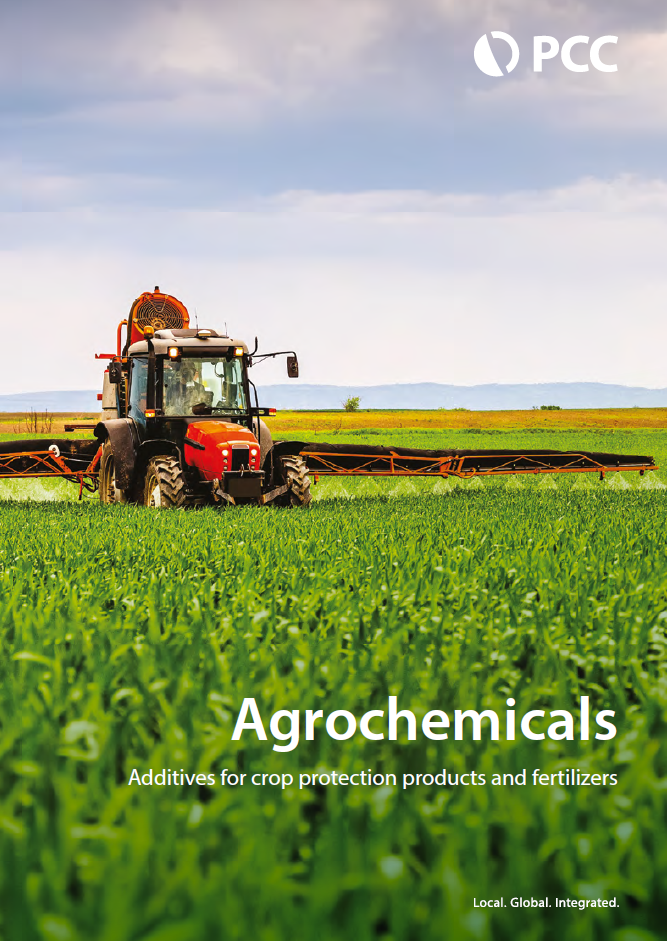
Adjuvants are a key support for modern agriculture. Thanks to precisely selected chemical raw materials, these preparations optimise the spraying process, reduce cultivation costs and increase the safety of the food produced.

Okładka katalogu
Filters
Function
Composition
Segment
Manufacturer
of 8
ROKAcet O7 (PEG-7 Oleate) ROKAcet O7 is a non-ionic surfactant belonging to the group of polyoxyethylene fatty acid esters (INCI name: PEG-7 Oleate). This surfactant is available in the form...
Composition
Alkoxylated fatty acids
CAS No.
9004-96-0
ROKAcet O7 (PEG-7 Oleate)
ROKAcet R40W (PEG-40 Castor oil) ROKAcet R40W is a non-ionic surfactant belonging to the group of polyoxyethylene fatty acid esters of castor oil (INCI name: PEG-40 Castor oil). This surfactant...
Composition
Alkoxylated fatty acids
CAS No.
61791-12-6
ROKAcet R40W  (PEG-40 Castor oil)
ROKAcet R36 (PEG-36 Castor Oil) ROKAcet R36 is a non-ionic surfactant with the INCI name:PEG-36 Castor Oil. It belongs to the group called polyoxyethylene castor oil fatty acid esters. This surfactant...
Composition
Alkoxylated fatty acids
CAS No.
61791-12-6
ROKAcet R36  (PEG-36 Castor Oil)
ROKAmer®1010 (EO/PO block copolymer) ROKAmer 1010 belongs to the group of non-ionic block copolymers of ethylene oxide and propylene oxide (ROKAmer series). The product concentration is about 100%....
Composition
EO/PO block copolymers
CAS No.
9003-11-6
ROKAmer®1010 (EO/PO block copolymer)
ROKAmer®1010/50 (EO/PO block copolymer) ROKAmer 1010/50 belongs to the group of non-ionic block copolymers of ethylene oxide and propylene oxide (ROKAmers). The product has a content of about 50% of the...
Composition
EO/PO block copolymers
CAS No.
9003-11-6
ROKAmer®1010/50 (EO/PO block copolymer)
ROKAmer®2000 (EO/PO block copolymer) ROKAmer 2000 belongs to the group of non-ionic block copolymers of ethylene oxide and propylene oxide (ROKAmers). The product is a clear, colourless liquid with...
Composition
EO/PO block copolymers
CAS No.
9003-11-6
ROKAmer®2000 (EO/PO block copolymer)
ROKAmer®2100 (EO/PO block copolymer) ROKAmer 2100 belongs to the group of nonionic block copolymers of ethylene oxide and propylene oxide (ROKAmers). ROKAmer 2100 is among products with low and anti-foaming...
Composition
EO/PO block copolymers
CAS No.
9003-11-6
ROKAmer®2100 (EO/PO block copolymer)
ROKAmer®2330 (EO/PO block copolymer) ROKAmer 2330 belongs to the group of nonionic block copolymers of ethylene oxide and propylene oxide (ROKAmers). ROKAmer 2330 is one of the low-foaming and anti-foaming...
Composition
EO/PO block copolymers
CAS No.
9003-11-6
ROKAmer®2330 (EO/PO block copolymer)
ROKAmer®2400 (EO/PO block copolymer) ROKAmer 2400 belongs to the group of non-ionic block copolymers of ethylene oxide and propylene oxide (ROKAmers). ROKAmer 2400 is among products with low-foaming...
Composition
EO/PO block copolymers
CAS No.
9003-11-6
ROKAmer®2400 (EO/PO block copolymer)
ROKAmer®1000 (EO/PO block copolymer) ROKAmer 1000 belongs to the group of non-ionic surfactants (block copolymers of ethylene oxide and propylene oxide, i.e. ROKAmers). The product is a polymer with...
Composition
EO/PO block copolymers
CAS No.
9003-11-6
ROKAmer®1000 (EO/PO block copolymer)
ROKAmer® 6500 ROKAmer 6500 belongs to the group of non-ionic surfactants of the ethylene oxide and propylene oxide block copolymer type (ROKAmers). ROKAmer 6500 is classified...
Composition
EO/PO block copolymers
CAS No.
9003-11-6
ROKAmer® 6500
Rokamer®6500W ROKAmer 6500W belongs to the group of non-ionic surfactants of the ethylene oxide and propylene oxide block copolymer type (ROKAmers). ROKAmer 6500W is classified...
Composition
EO/PO block copolymers
Rokamer®6500W
ROKAmer®G1000 (EO/PO block copolymer on glycerin) ROKAmer G1000 is a non-ionic surfactant, from the group of ethylene oxide and propylene oxide block copolymers utilizing glycerine as a starter. The product has...
Composition
EO/PO block copolymers based on glycerin
CAS No.
9082-00-2
ROKAmer®G1000 (EO/PO block copolymer on glycerin)
ROKAmer®G3400 (EO/PO block copolymer on glycerin) ROKAmer G3400 is a non-ionic surfactant being a type of ethylene oxide and propylene oxide block copolymer, using glycerine as a starter. The product is a clear,...
Composition
EO/PO block copolymers based on glycerin
CAS No.
9082-00-2
ROKAmer®G3400 (EO/PO block copolymer on glycerin)
ROKAmer®G3500 (EO/PO block copolymer on glycerin) ROKAmer G3500 is a non-ionic surfactant being a type of ethylene oxide and propylene oxide block copolymer, using glycerine as a starter. The product is a clear,...
Composition
EO/PO block copolymers based on glycerin
CAS No.
9082-00-2
ROKAmer®G3500 (EO/PO block copolymer on glycerin)
ROKAmer®G3800 (EO/PO block copolymer on glycerin) ROKAmer G3800 is a non-ionic surfactant that belongs to the group of block copolymers of ethylene oxide and propylene oxide (EO/PO) using glycerin as a starter....
Composition
EO/PO block copolymers based on glycerin
CAS No.
9082-00-2
ROKAmer®G3800 (EO/PO block copolymer on glycerin)
ROKAmer®G4300 (EO/PO block copolymer on glycerin) ROKAmer G4300 is a non-ionic surfactant that belongs to the group of block copolymers of ethylene oxide and propylene oxide (EO/PO) using glycerin as a starter....
Composition
EO/PO block copolymers based on glycerin
CAS No.
9082-00-2
ROKAmer®G4300 (EO/PO block copolymer on glycerin)
ROKAmer®PP450 (Polypropylene glycol) ROKAmer PP450 is a polyol (polyoxypropylene diol type) with an average molar mass of about 450 g/mol. The product is a polymer with a double-action structure, which...
Composition
Polyether polyols, Alkoxylated alcohols, Diols
CAS No.
25322-69-4
ROKAmer®PP450 (Polypropylene glycol)
ROKAmin K15 (PEG-15 Cocoamine) ROKAmin K15 is a non-ionic surfactant belonging to the group of ethoxylated coconut amines with an average degree of ethoxylation of 15 moles. It has the form of...
Composition
Alkoxylated fatty amines
CAS No.
61791-14-8
ROKAmin K15 (PEG-15 Cocoamine)
ROKAmin SR11 (C16-18 alkyl amine) ROKAmin SR11 is a non-ionic surfactant (INCI name: PEG-11 Hydrogenated Tallow Amine). It belongs to the group of ethoxylated fatty amines with an average ethoxylation...
Composition
Alkoxylated fatty amines
CAS No.
61791-26-2
ROKAmin SR11  (C16-18 alkyl amine)
21 - 40 of 153 products
Items on page: 20

The importance of adjuvants in agriculture

Adjuvants are substances added to plant protection products or agrochemicals to increase the effectiveness of active substances, deliver them more efficiently to plants, improve the overall performance of the product, and extend its spectrum of effectiveness.

These additives modify the properties of the spray solution, which improves the active substance’s ability to act, penetrate or protect the target organism. Adjuvants can be incorporated into the formulation (built-in adjuvant) or added separately to the spray tank along with other agrochemical products (tank mix adjuvant).

The use of adjuvants has many benefits, including:

  • increased efficiency of plant protection products,
  • reducing the environmental impact of chemicals,
  • cost reduction,
  • improved safety, e.g. of food, thanks to lower residue levels.

What role do raw materials play in the production of adjuvants?

Adjuvant formulations are specialised preparations composed of precisely selected ingredients. The raw materials used in the production process play a key role in modifying the physicochemical properties of the working fluid, which directly translates into increased biological effectiveness of agrochemical products.

The most important functions performed by these substances include:

  • emulsification – particularly in the agrochemical industry, the raw materials or active ingredients used differ in their affinity for the aqueous or oil phase. Their permanent combination is possible thanks to the use of an emulsifier in the formulation. Thanks to this, not only is a stable, homogeneous working liquid obtained, but its properties are also modified for optimal use,
  • wetting – the wetting properties of adjuvants are influenced by the wetting agents present. Their task is to improve the coverage of the plant surface during spraying, commonly referred to as “wetting”. Wetting agents are added to agrochemicals to reduce the surface tension that occurs, for example, on the surface of leaves during spraying. This prevents the accumulation of plant protection products.
  • dispersion – many active substances in agrochemicals often occur in the form of oily liquids or solid particles that are difficult to disperse evenly when added directly to water to form a stable suspension. This function is performed by dispersants. Thanks to their special molecular structure, they form a homogeneous emulsion, which translates into more effective coverage of crop surfaces.

Chemical raw materials for the production of adjuvants offered by the PCC Group

Surfactants play a fundamental role in the production of adjuvants. Thanks to their amphiphilic structure, they perform a number of key functions – they are responsible for emulsifying individual components, dispersing them evenly and modifying the rheology of finished preparations.

The PCC Group has a wide range of raw materials dedicated to the agrochemical industry in its portfolio.

Among the most important products in the range are non-ionic surfactants (ROKAnol, ROKAcet and ROKAmer series).  This is the largest group of raw materials, valued primarily for their stability and compatibility with other ingredients. They effectively reduce the surface tension of working liquids. They are ideal as emulsifiers, solubilisers and wetting agents.

Anionic surfactants, thanks to the negative charge present in the molecule, are effective, for example, in stabilising plant protection product suspensions. Representatives of this category are the SULFOROKAnol series and sulfosuccinates. The latter in particular are valuable ingredients in the agrochemical industry as wetting agents. In addition, their penetrating properties increase the rate of pesticide absorption by plants.

Products from the ROKAmina series, which are representatives of amphoteric surfactants, are also used as raw materials for the production of adjuvants. A major advantage of these compounds is their high compatibility with other ingredients in the formulation.

It is also worth noting the specialised additives for the production of adjuvants in the portfolio (mainly the EXO brand and selected products from the ROKAnol series). These are surfactants, which offer solutions that go beyond the standard functions of surface-active compounds.

PCC Group – a supplier of high-quality raw materials

The PCC Group’s portfolio includes a wide selection of chemical raw materials for the production of adjuvants dedicated to the agrochemical industry. The extensive product catalogue includes surfactants and specialised additives.

In the production of adjuvants for agrochemicals, great emphasis is placed on the use of raw materials that are safe for the environment. The PCC Group is committed to environmentally friendly solutions and has created the Greenline product line with environmental protection in mind.

In addition, selected raw materials in the range have the prestigious international ECOCERT label, which is the most important and recognised certificate of quality and environmental safety in Europe.