PCC
RegisterLogin Page

Dispersants

Dispersants are substances that cause larger particles to break down, preventing them from re-aggregating. A dispersion system consists of two immiscible phases – one is the continuous phase and the other is the dispersed phase. Additional mechanical energy is required to disperse a given substance, which causes the dispersant to mix with the phases that make up the system.

Filters
Function
Composition
Segment
Manufacturer
of 13
EXOlat C40 (Sodium Polyacrylate) EXOlat C40 is an aqueous solution of polyacrylic acid sodium salt. At room temperature, the product has a form of a clear or slightly turbid liquid. It contains...
Composition
Acrylic acid derivatives, Mixtures
EXOlat C40 (Sodium Polyacrylate)
EXOlat C40A (Ammonium polyacrylate) EXOlat C40A is an aqueous solution of ammonium salt of polyacrylic acid. At room temperature, the product has a form of a clear or slightly turbid liquid. It contains...
Composition
Mixtures, Acrylic acid derivatives
EXOlat C40A  (Ammonium polyacrylate)
EXOlat MC60 EXOlat MC60 is an aqueous solution of acrylic acid and maleic acid copolymer sodium salt. At room temperature, the product is a clear and viscous liquid with the...
Composition
Copolymers
EXOlat MC60
EXOlat ZA EXOlat ZA is an aqueous solution of acrylic acid and maleic acid copolymer sodium salt. At room temperature, the product is a clear or slightly turbid liquid, colourless...
Composition
Mixtures, Acrylic acid derivatives
EXOlat ZA
EXOsoft L3/40 (Disodium laureth sulfosuccinate) EXOsoft L3/40 is an anionic surfactant (INCI name: Disodium Laureth Sulfosuccinate.) The product is a light yellow to yellow liquid characterized by about 40% of...
Composition
Sulfosuccinates
CAS No.
39354-45-5
EXOsoft L3/40 (Disodium laureth sulfosuccinate)
EXOwet CB1 EXOwet CB1 is a concentrated mixture of non-ionic character with excellent wetting and dispersing properties. The product is produced in the form of a clear or slightly...
Composition
Mixtures
EXOwet CB1
EXOwet OS EXOwet OS is a mixture of chemical compounds which is an effective wettability enhancer for cement grains, used during the manufacture of cement mortars and concrete....
Composition
Mixtures
EXOwet OS
Maxomer® LUBE-E2SA-B Maxomer® Lube-E2SA-B is an effective lubricants, mold release agents and pigment dispersant. Maxomer® Lube-E2SA-B has US-Food and Drug Administration (US-FDA) approval...
Composition
Alkanoloamides
Maxomer® LUBE-E2SA-B
Maxomer® LUBE-EBO Maxomer® Lube- EBO is used as a slip agents in film manufacturing, and anti-block additive and raises melt flow in Polystyrene. Maxomer® Lube-EBO has US-Food and...
Composition
Alkanoloamides
CAS No.
110-31-6
Maxomer® LUBE-EBO
Maxsperse® 8900/100M Maxsperse® 8900/100M was developed as a dispersing agents for use in most polyolefins. It is most effective for white and black pigments. Maxsperse® 8900/100M is...
Composition
Alkanoloamides
CAS No.
123-26-2
Maxsperse® 8900/100M
Maxsperse® 8913 Maxsperse®8913 was developed primarily as a dispersant for organic pigments and otheadditives when compounding polyolefins. It works particularly well in carbon...
Composition
Alkanoloamides
CAS No.
106-15-0
Maxsperse® 8913
Maxsperse® 8913/PWDR Maxsperse®8913/PWDR is a hydroxy-stearamide wax developed primarily as a dispersant for pigments and other additives when compounding polyolefins. In addition to...
Composition
Alkanoloamides
CAS No.
106-15-0
Maxsperse® 8913/PWDR
Maxsperse® CO-30 Maxsperse® CO-30 was developed as a general use pigment dispersant for multiple applications requiring a liquid additive.
Composition
Alkoxylated fatty acids
CAS No.
61791-12-6
Maxsperse® CO-30
Maxsperse® E-400MO Maxsperse® E-400MO was developed as a general use pigment dispersant for multiple applications requiring a liquid additive.
Composition
Alkoxylated fatty acids
CAS No.
9004-96-0
Maxsperse® E-400MO
Maxsperse® W-3000 Maxsperse® W-3000 is a polyolefin wax developed for use in a pigment dispersant for use in manufacturing color concentrate masterbatches. Maxsperse® W-3000 is listed...
Composition
Alkoxylated alcohols
Maxsperse® W-3000
Maxsperse® W-85 The recommended use for Maxsperse®W-85 is 1-3% when used to disperse dyes or pigments in polyethylene, polypropylene or other plastics. This product is listed under...
Composition
Sulfosuccinates
CAS No.
577-11-7
Maxsperse® W-85
POLIkol 300 (PEG-6) POLIkol 300 belongs to the group of polyoxyethylene glycols (PEG with an average molecular weight of 300). INCI: PEG-6. The product is a colourless liquid well soluble...
Composition
Polyethylene glycols
CAS No.
25322-68-3
POLIkol 300 (PEG-6)
POLIkol 400 (PEG-8) POLIkol 400 belongs to the group of polyoxyethylene glycols (PEG with an average molecular weight of 400). INCI: PEG-8. The product is a colourless liquid, well...
Composition
Polyethylene glycols
CAS No.
25322-68-3
POLIkol 400 (PEG-8)
Rodys C Rodys C is supplied in the form of a 40% brown water solution. From a chemical point of view, it is a polymer of naphthalene sulfonic acids with formaldehyde. It...
Composition
Naphthalene derivatives
CAS No.
9084-06-4
Rodys C
Rodys L Rodys L is an aqueous solution of sodium salts of naphthalenesulfonic acid polycondensates with formaldehyde. The production technology of Rodys L allows obtaining...
Composition
Naphthalene derivatives
CAS No.
9084-06-4
Rodys L
61 - 80 of 257 products
Items on page: 20

Chemical nature of dispersants

Most often, dispersants are surfactants or mixtures thereof with different HLB values, which adsorb onto the surface of the dispersed phase particles, reducing the interfacial tension and improving their wettability by the continuous medium. Such adsorption reduces van der Waals interactions between fine particles and enhances repulsive interactions, which helps to keep them separate.

Mechanism of action of dispersants

The mechanism of action of dispersants is based on electrostatic and/or steric stabilisation. In the case of electrostatic stabilisation, ionic dispersants adsorb onto the surface of the particles, giving them a surface charge and forming a so-called double electric layer – the resulting charges cause particles of the same sign to repel each other, which prevents their coagulation.

Steric mechanism

In the steric mechanism, dispersants with a high molar mass (e.g. polymeric) form wide protective layers around the particles, whose spatial veil acts as a physical barrier, making it difficult for the particles to approach and recombine. Steric stabilisation is often less sensitive to the presence of electrolytes than electrostatic stabilisation.

Electro-steric stabilisation

In practice, many modern dispersants combine both mechanisms – so-called electro-steric stabilisation, where electrostatic repulsion and a polymer barrier are generated simultaneously, which increases the stability of the dispersion even under variable chemical conditions, such as pH or ionic strength of the environment.

Application of dispersants

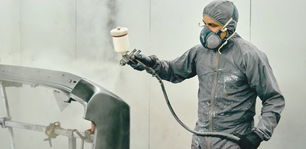
Dispersants are used in many applications, including in the automotive industry as additives to engine oils and in construction as additives to concrete. They can also be found in household and cosmetic chemicals. In the textile industry, they are used as additives to pigments. They are also used in petroleum processing.