PCC
RegisterLogin Page

Plant Protection Products

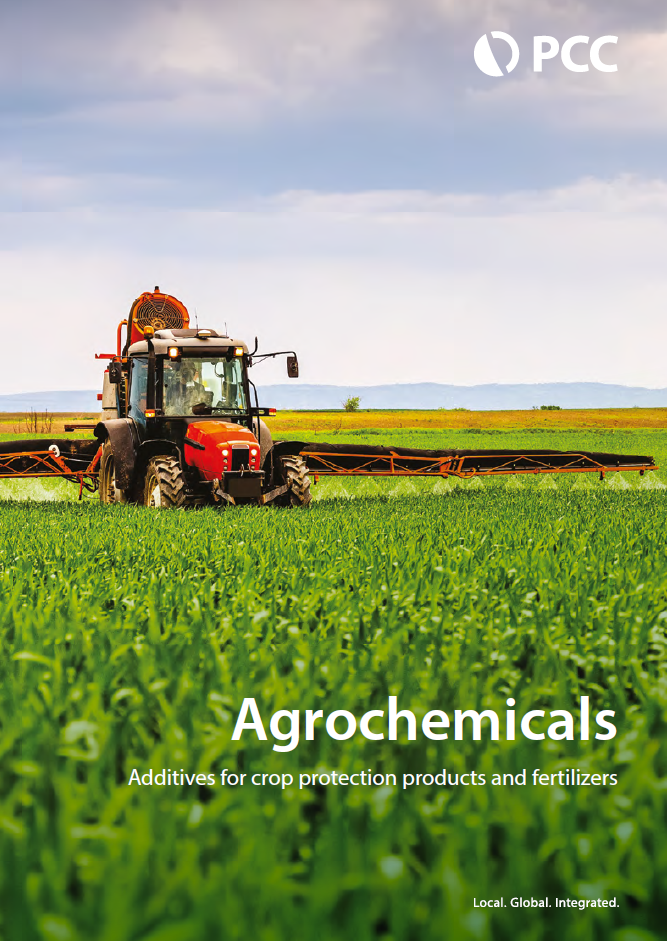
Effective crop protection is one of the cornerstones of food security, as it helps to reduce losses caused by weeds, diseases and pests. Plant protection products help farmers maintain healthy, robust crops by preventing the spread of harmful organisms and minimising the risk of reduced yields. Thanks to them, agricultural production is more stable and predictable, which benefits both producers and consumers.

Filters
Function
Composition
Segment
Manufacturer
of 13
ROKAnol®L10A (Laureth-10) ROKAnol L10A is a non-ionic surfactant, belonging to the group of ethoxylated fatty alcohols with the INCI name: Laureth-10. The product co-creates a group of surfactants...
Composition
Alkoxylated alcohols, Ethoxylated alcohols
CAS No.
68551-12-2
ROKAnol®L10A  (Laureth-10)
ROKAnol®LP2855 (C12-18 alcohol ethoxylated, propoxylated) ROKAnol® LP2855 is a non-ionic surfactant of the alkoxylated fatty alcohol type. This product is based on a raw material of natural origin. It has the form of a...
Composition
Alkoxylated alcohols
CAS No.
69227-21-0
ROKAnol®LP2855  (C12-18 alcohol ethoxylated, propoxylated)
ROKAnol® T20 PASTYLKI ROKAnol® T20 PILLS, identified by its INCI name Ceteareth-20, is a non-ionic surfactant. This commercial product is a white, waxy solid in pastille form, with a...
Composition
Alkoxylated alcohols, Ethoxylated alcohols
CAS No.
68439-49-6
ROKAnol® T20 PASTYLKI
ROKAnol® T25 PASTYLKI ROKAnol® T25 PILLS, identified by its INCI name Ceteareth-25, are solid, white pastilles with a waxy texture. This non-ionic surfactant is derived from renewable...
Composition
Alkoxylated alcohols, Ethoxylated alcohols
CAS No.
68439-49-6
ROKAnol® T25 PASTYLKI
ROKAnol®TSP16 (Ethoxylated tristyrylphenol) ROKAnol TSP16 is a non-ionic surfactant, which belongs to the group of ethoxylated polystyrenated phenols. It has the form of a viscous liquid with colour of max....
Composition
Alkoxylated alkylaryl phenols, Phenols, Styrenized phenols
CAS No.
99734-09-5
ROKAnol®TSP16  (Ethoxylated tristyrylphenol)
ROKAnol® D3 (Deceth-3) ROKAnol® D3 is a non-ionic surfactant belonging to the group of ethoxylated fatty alcohols (INCI name: Deceth-3). The product co-creates a group of surfactants based...
Composition
Alkoxylated alcohols, Ethoxylated alcohols
CAS No.
26183-52-8
ROKAnol® D3 (Deceth-3)
ROKAnol® D3W (Deceth-3) ROKAnol® D3W is a non-ionic surfactant belonging to the group of ethoxylated fatty alcohols (INCI name: Deceth-3). It is a clear liquid with a maximum colour of...
Composition
Alkoxylated alcohols, Ethoxylated alcohols
CAS No.
26183-52-8
ROKAnol® D3W (Deceth-3)
ROKAnol®GA3 (C10 alcohol, ethoxylated) ROKAnol® GA3 is a nonionic surfactant that belongs to the group of ethoxylated fatty alcohols. The product co-creates a group of surfactants based on C10 Guerbet...
Composition
Alkoxylated alcohols, Ethoxylated alcohols
CAS No.
160875-66-1
ROKAnol®GA3  (C10 alcohol, ethoxylated)
ROKAnol®GA5 (C10 alcohol, ethoxylated) ROKAnol GA5 belongs to nonionic surfactants of the type of ethoxylated fatty alcohols. The product co-creates a group of surfactants based on C10 Guerbet alcohol....
Composition
Alkoxylated alcohols, Ethoxylated alcohols
CAS No.
160875-66-1
ROKAnol®GA5  (C10 alcohol, ethoxylated)
ROKAnol®GA7 (C10 alcohol, ethoxylated) ROKAnol® GA7 is a nonionic surfactant that belongs to the group of ethoxylated fatty alcohols. The product co-creates a group of surfactants based on C10 Guerbet...
Composition
Alkoxylated alcohols, Ethoxylated alcohols
CAS No.
160875-66-1
ROKAnol®GA7  (C10 alcohol, ethoxylated)
ROKAnol® GA7LAW (PEG-7/PPG-2 Propylheptyl ether) ROKAnol® GA7LAW is a non-ionic surfactant from the group of ethoxylated fatty alcohols INCI PEG-7 / PPG-2 Propylheptyl ether. The product belongs to the group of...
Composition
Alkoxylated alcohols
ROKAnol® GA7LAW  (PEG-7/PPG-2 Propylheptyl ether)
ROKAnol®GA7W (C10 alcohol, ethoxylated) ROKAnol® GA7W is a nonionic surfactant that belongs to the group of ethoxylated fatty alcohols. The product co-creates a group of surfactants based on C10 Guerbet...
Composition
Alkoxylated alcohols, Ethoxylated alcohols
CAS No.
160875-66-1
ROKAnol®GA7W   (C10 alcohol, ethoxylated)
ROKAnol®GA8 (C10 alcohol, ethoxylated) ROKAnol® GA8 belongs to nonionic surfactants of the type of ethoxylated fatty alcohols. The product co-creates a group of surfactants based on C10 Guerbet alcohol....
Composition
Alkoxylated alcohols, Ethoxylated alcohols
CAS No.
160875-66-1
ROKAnol®GA8   (C10 alcohol, ethoxylated)
ROKAnol®GA8W (C10 alcohol, ethoxylated) ROKAnol® GA8W belongs to nonionic surfactants of the type of ethoxylated fatty alcohols. The product co-creates a group of surfactants based on C10 Guerbet alcohol....
Composition
Alkoxylated alcohols, Ethoxylated alcohols
CAS No.
160875-66-1
ROKAnol®GA8W  (C10 alcohol, ethoxylated)
ROKAnol®GA9 (C10 alcohol, ethoxylated) ROKAnol® GA9 is a nonionic surfactant that belongs to the group of ethoxylated fatty alcohols. The product co-creates a group of surfactants based on C10 Guerbet...
Composition
Alkoxylated alcohols, Ethoxylated alcohols
CAS No.
160875-66-1
ROKAnol®GA9   (C10 alcohol, ethoxylated)
ROKAnol®GA9W (C10 alcohol, ethoxylated) ROKAnol® GA9W is a nonionic surfactant that belongs to the group of ethoxylated fatty alcohols. The product co-creates a group of surfactants based on C10 Guerbet...
Composition
Alkoxylated alcohols, Ethoxylated alcohols
CAS No.
160875-66-1
ROKAnol®GA9W   (C10 alcohol, ethoxylated)
ROKAnol® L10 (Laureth-10) ROKAnol® L10 is a non-ionic surfactant belonging to the group of ethoxylated fatty alcohols (INCI name: Laureth-10.) The product co-creates a group of surfactants...
Composition
Alkoxylated alcohols, Ethoxylated alcohols
CAS No.
68439-50-9
ROKAnol® L10 (Laureth-10)
ROKAnol®LP3034 (Polyoxyalkylene glycol ether) ROKAnol® LP3034 is a non-ionic surfactant of the type of alkoxylated fatty alcohols. Products is a liquid with a low freezing point, i.e. below -20°C. The active...
Composition
Alkoxylated alcohols
CAS No.
120313-48-6
ROKAnol®LP3034  (Polyoxyalkylene glycol ether)
ROKAnol® T25 (Ceteareth-25) ROKAnol® T25 is a non-ionic surfactant (INCI: Ceteareth-25). The commercial product is a white solid with a waxy consistency. The solidification point of the product...
Composition
Alkoxylated alcohols, Ethoxylated alcohols
CAS No.
68439-49-6
ROKAnol® T25 (Ceteareth-25)
ROKAnol®T20 (Ceteareth-20) ROKAnol® T20 is a non-ionic surfactant (INCI: Ceteareth-20). The commercial product is a white solid with a waxy consistency. The solidification point of the product...
Composition
Alkoxylated alcohols, Ethoxylated alcohols
CAS No.
68439-49-6
ROKAnol®T20 (Ceteareth-20)
201 - 220 of 254 products
Items on page: 20

Classification of plant protection products
Plant protection products (PPPs) are preparations used in agriculture designed to protect crops from all harmful organisms or to prevent the action of such organisms, in order to ensure healthy plant growth and produce high-quality yields. In practice, plant protection products fall into three main groups, which can be categorised according to the type of threat they combat as follows:

  • Herbicides – phytotoxic chemical compounds used to control weeds. They eliminate unwanted vegetation, thereby reducing competition for water, sunlight and nutrients, thus increasing yields. Depending on their mode of action, herbicides are classified as selective or non-selective. Selective herbicides (e.g. MCPA, MCPP-P, 2,4-D) destroy only a specific group of weeds (in this case dicotyledons) without harming monocotyledons. Non-selective herbicides (e.g. glyphosate), on the other hand, destroy all plants they come into contact with.
  • Fungicides – used to prevent, control or eradicate diseases caused by fungi and fungus-like organisms. They work by inhibiting spore germination, hyphal growth or the life processes of pathogens. Their aim is to maintain plant health and protect crops from losses caused by fungal diseases. They may act by contact, i.e. remain on the plant’s surface and control fungi there (e.g. copper, sulphur), or systemically by penetrating plant tissues and destroying the mycelium inside the plant (e.g. triazoles).
  • Insecticides – are chemical substances designed to control insects at various stages of development (eggs, larvae, adults) that feed on crops. Insecticides can act in three ways:
    • contact – insects die upon direct contact with the active substance (e.g. deltamethrin),
    • gastrointestinal – the pests die as a result of consuming a part of the plant on which the active substance was present (e.g. spinosad),
    • systemically – the active ingredients circulate in the plant’s sap, killing insects feeding within the tissues (e.g. acetamiprid).

In addition, products are used to control other types of pests:

  • Molluscicides – designed to control snails. The most popular are metaldehyde and iron phosphate, which are scattered in granule form; these are readily eaten by snails and subsequently cause their death through dehydration and disruption of the nervous system.
  • Nematocides – designed to control nematodes, applied to the soil.
  • Acaricides – used to control mites.

Active ingredients in plant protection products

Active ingredients (active substances) form the foundation of effective plant protection. They are responsible for controlling pests, diseases and weeds, ensuring healthy plant growth and high yields. Plant protection products use active ingredients, which can be divided into synthetic and natural, reflecting both their source and how they act in the environment. Synthetic substances are chemical compounds designed in the laboratory, often with a precisely targeted mode of action, high efficacy and durability, making them the basis of many modern herbicides, fungicides and insecticides. Active ingredients of natural origin, on the other hand, are derived from living organisms or natural minerals – they include, among others, plant extracts, microorganisms and their metabolites, and mineral compounds. Active ingredients of natural origin are valued for their greater selectivity and lower environmental impact, which means they are increasingly becoming an alternative to synthetic products.

Chemical raw materials for the production of plant protection products in the PCC Group’s portfolio

The PCC Group’s range for use in plant protection products includes chemical raw materials and intermediates. These include, amongst others, high-purity phosphorus-based compounds in the form of phosphorus oxychloride (POCl3 ) and phosphorus trichloride (PCl3 ), used as substrates for the synthesis of certain active substances (e.g. glyphosate).

Monochloroacetic acid (MCAA) is an intermediate used in the manufacture of herbicides such as 2,4-­ -dichlorophenoxyacetic acid (2,4-­ D), 2,4,5-trichlorophenoxyacetic acid (2,4,5-­ T), phosphonates (e.g. glyphosate), 2-­ -methyl­ -4-­ -phenoxyacetic acid (MCPA) or intermediates for their production such as chloroacetyl chloride (CAC) and trichloroacetyl chloride (TCAC), or insecticides such as thiophosphoric acid esters (e.g. dimethoate).

The PCC Group also produces chlorine – an important raw material in the industrial manufacture of insecticides – and benzene chlorides, including paradichlorobenzene (PDCB). This compound sublimates on contact with air, releasing a strong odour, which is why it is used in insect repellents.

PCC Group surfactants in plant protection products

Alongside active substances, which provide biocidal activity against harmful organisms, co-formulants – including surfactants – are extremely important components of plant protection products, as they influence the performance properties of spray solutions. The PCC Group’s portfolio includes a wide range of surfactants, which can be successfully used in plant protection products as emulsifiers, wetting agents, dispersants or humectants.

Emulsification is one of the most important functions of surfactants in plant protection product formulations. Some plant protection products contain oils and organic solvents (formulations such as EC, OD, EW, SE and CS), the presence of which makes it difficult to mix the preparations with water. To facilitate this process, it is necessary to use emulsifiers which, thanks to their hydrophilic-hydrophobic structure, enable the spontaneous formation of emulsions during the preparation of the spray mixture by dispersing the hydrophobic phase particles in water. The emulsifying products offered by the PCC Group primarily comprise the EXOemul series, i.e. surfactant blends used, among other things, for emulsifying herbicide formulations (e.g. containing fluroxypyl), insecticides (e.g. containing abamectin) and fungicides (e.g. containing bromuconazole, tebuconazole) of the EC type: EXOemul A3, EXOemul EM260. Products from the non-ionic surfactant groups will also work well for this purpose: ROKAcety from the R series and ROKAnole, as well as anionic surfactants such as EXOfos (particularly for EC, EW, SE and CS formulations) or SULFOROKAnole for SE and EW formulations.

Wetting agents enhance the action of dispersants, facilitate the spreading of spray droplets across the plant surface and ensure even application. Their action is essential in both water-based formulations such as SL, SC and FS, and those based on water and organic solvents (SE, CS), as well as in powder formulations such as SP, SG, WP, WG and WS. Non-ionic surfactants are suitable as wetting agents: ethoxylated fatty alcohols from the ROKAnol group (D, DB, GA, ID, IT, K, L, LP, NL, O series), EO/PO copolymers from the ROKAmer group (including the G series) and specialised blends from the EXOwet series.

The role of dispersants and co-dispersants is to ensure the even distribution of solid particles in agrochemical formulations, preventing their agglomeration and sedimentation. They are used in SC, FS, OD, SE, CS, WP, WG and WS formulations. The PCC Group’s portfolio includes both steric dispersants, which stabilise formulations thanks to large, branched molecules that create a spatial barrier (ROKAcety R series, ROKwinole, ROKwiny and ROKAnole TSP), as well as electrosteric dispersants, which, in addition to steric interactions, cause electrostatic repulsion due to the surface charge present in the molecule (products from the SULFOROKAnol, EXOfos and Rodys groups).

The role of humectants is to retain moisture on the leaf surface and prevent droplets from drying out too quickly, which helps to increase the uptake of active ingredients. This allows the active ingredient to remain effective on the plant for a longer period. The presence of humectants is essential in SL, SC and CS formulations. The PCC Group’s portfolio includes POLIkole, a range of ethylene glycol polymers with varying molecular weights (POLIkole 200, 300, 400, 600, 800 and 1000), which are ideal for this purpose.