PCC
RegisterLogin Page

Cleaning products for installations in food industry
Cleaning and disinfecting products are essential in the food industry to ensure safety and hygiene in accordance with applicable legal requirements. Processing food under appropriate hygiene and sanitary conditions requires regular cleaning and disinfection using specialised chemicals.
Filters
Function
Composition
Segment
Manufacturer
of 2
PCC Greenline® Chlorine GREENLINE Chlorine, which comes in liquid form is a pure, amber-coloured liquid, approximately 1.5 times heavier than water. It is one of basic raw materials used,...
Composition
Chlorine derivatives
CAS No.
7782-50-5
PCC Greenline® Chlorine
PCC Greenline® Caustic Soda lye 50% Solution
GREENLINE Soda Lye (50% aqueous solution) belongs to inorganic chemical compounds from the hydroxide group. The product is manufactured in an environmentally friendly...
Composition
Alkali
CAS No.
1310-73-2
PCC Greenline® Caustic Soda lye 50% Solution<br>
PCC Greenline® Flaked Caustic Soda
GREENLINE caustic soda in flakes, is an inorganic chemical that belongs to the strongest bases. Energy used to produce GREENLINE Caustic Soda is covered by guarantees...
Composition
Alkali
CAS No.
1310-73-2
PCC Greenline® Flaked Caustic Soda<br>
Hydrochloric acid min. 33%, synthetic Hydrochloric acid synthetic is a chemical compound which is an aqueous solution of hydrogen chloride gas. It has strong corrosive properties, a strong, irritating...
Composition
Non-organic acids
CAS No.
7647-01-0
Hydrochloric acid min. 33%, synthetic
ROKAmer®3800 (EO/PO block copolymer) ROKAmer 3800 belongs to the group of non-ionic block copolymers of ethylene oxide and propylene oxide (ROKAmers). The product is a clear, colourless liquid with...
Composition
EO/PO block copolymers
CAS No.
9003-11-6
ROKAmer®3800 (EO/PO block copolymer)
ROKAmer®G3400 (EO/PO block copolymer on glycerin) ROKAmer G3400 is a non-ionic surfactant being a type of ethylene oxide and propylene oxide block copolymer, using glycerine as a starter. The product is a clear,...
Composition
EO/PO block copolymers based on glycerin
CAS No.
9082-00-2
ROKAmer®G3400 (EO/PO block copolymer on glycerin)
ROKAmer®G3500 (EO/PO block copolymer on glycerin) ROKAmer G3500 is a non-ionic surfactant being a type of ethylene oxide and propylene oxide block copolymer, using glycerine as a starter. The product is a clear,...
Composition
EO/PO block copolymers based on glycerin
CAS No.
9082-00-2
ROKAmer®G3500 (EO/PO block copolymer on glycerin)
ROKAmer®G3800 (EO/PO block copolymer on glycerin) ROKAmer G3800 is a non-ionic surfactant that belongs to the group of block copolymers of ethylene oxide and propylene oxide (EO/PO) using glycerin as a starter....
Composition
EO/PO block copolymers based on glycerin
CAS No.
9082-00-2
ROKAmer®G3800 (EO/PO block copolymer on glycerin)
ROKAmer®PP1000 (Polypropylene glycol) ROKAmer PP1000 is a polyoxypropylendiol-type polyol with an average mol mass of around 1000 g/mol. The product is a polymer with a dual-function structure, which...
Composition
Alkoxylated alcohols, Polyether polyols, Diols
CAS No.
25322-69-4
ROKAmer®PP1000 (Polypropylene glycol)
ROKAmer®PP2000 (Polypropylene glycol) ROKAmer PP2000 is a polyol (polyoxypropylene diol) with an average molar mass of about 2000 g/mol. INCI Name: PEG-34.The product is a polymer with a double-action...
Composition
Alkoxylated alcohols, Polyether polyols, Diols
CAS No.
25322-69-4
ROKAmer®PP2000 (Polypropylene glycol)
ROKAmer®PP4000 (Polypropylene glycol) ROKAmer PP4000 is a polyol (polyoxypropylene diol) with an average molar mass of about 4000 g/mol. The product is a polymer with a double-action structure, which...
Composition
Alkoxylated alcohols, Polyether polyols, Diols
CAS No.
25322-69-4
ROKAmer®PP4000 (Polypropylene glycol)
ROKAnol®LP180 ROKAnol LP180 belongs to the group of non-ionic surfactants of alkoxylated fatty alcohols. The product belongs to the ROKAnol LP series, forming a large group of...
Composition
Alkoxylated alcohols
CAS No.
9038-95-3
ROKAnol®LP180
Rokopol Anti Virus Disinfectant Ready to use Rokopol Anti Virus is a ready-to-use preparation with a proven disinfecting effect for various types of surfaces. It provides virucidal, bactericidal and fungicidal...
Composition
Mixtures
Rokopol Anti Virus Disinfectant
Rokopol Anti Virus X Disinfectant Ready to use Rokopol Anti Virus X is a washing and disinfecting agent based on sodium hypochlorite. It is effective against viruses, bacteria and fungi. The product is dedicated...
Composition
Mixtures
Rokopol Anti Virus X Disinfectant
Caustic soda flakes Sodium hydroxide in solid form, also called caustic soda, is an inorganic chemical compound belonging to the strongest alkali. In solid form, it is a white substance...
Composition
Alkali
CAS No.
1310-73-2
Caustic soda flakes
Caustic soda lye 50% solution Sodium hydroxide is an inorganic chemical compound of the hydroxide group, belonging to the strongest alkali. In liquid form it is a colourless, odourless and non-flammable...
Composition
Alkali
CAS No.
1310-73-2
Caustic soda lye 50% solution
Hydrochloric acid for food grade industry 33% Hydrochloric acid food grade is a chemical compound that is an aqueous solution of hydrogen chloride gas. It has strong corrosive properties, a strong, irritating...
Composition
Non-organic acids
CAS No.
7647-01-0
Hydrochloric acid for food grade industry 33%
Hydrochloric acid synthetic, min. 33% Hydrochloric acid synthetic is a chemical compound which is an aqueous solution of hydrogen chloride gas. It has strong corrosive properties, a strong, irritating...
Composition
Non-organic acids
CAS No.
7647-01-0
Hydrochloric acid synthetic, min. 33%
Caustic soda lye 25% solution Sodium hydroxide (25% solution) is an inorganic chemical compound of the hydroxide group, belonging to the strongest alkali. In liquid form it is a colourless, odourless...
Composition
Alkali
CAS No.
1310-73-2
Caustic soda lye 25% solution
Caustic soda lye 30% solution Sodium hydroxide (30% solution) is an inorganic chemical compound of the hydroxide group, belonging to the strongest alkali. In liquid form it is a colourless, odourless...
Composition
Alkali
CAS No.
1310-73-2
Caustic soda lye 30% solution
1 - 20 of 23 products
Items on page: 20

Food safety and quality

Maintaining food safety is crucial not only for the success of a manufacturing company, but also for the health of consumers. Cleanliness and hygiene are the foundation for ensuring food safety and high quality.

To achieve this, it is necessary to use professional cleaning and disinfecting agents. These types of products not only help to remove dirt, but above all, they combat pathogenic microorganisms such as bacteria, viruses and fungi that can lead to the development of dangerous diseases.

Cleaning of food industry installations

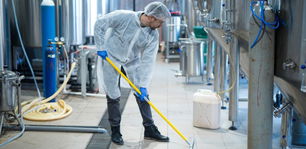
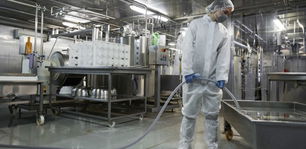
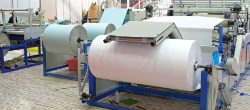
Maintaining the cleanliness of production installations is a complex process that requires strict adherence to specific procedures. The general approach involves preliminary rinsing and the use of detergents for cleaning, followed by disinfection in the final stage. Sterilisation is not always necessary, depending mainly on the specific nature of the processing. However, rinsing with water is carried out several times, usually before cleaning the installation and after each stage of cleaning.

Cleaning in Place (CIP) technology is most commonly used to clean industrial installations. It is an advanced system that allows equipment and machinery to be cleaned without dismantling them. This technology allows cleaning agents, water and other disinfectants to circulate in the equipment being cleaned on site, reaching hard-to-reach areas.

Cleaning agents for the food industry – a wide range of products

The right choice of cleaning agents for food industry installations and their use in accordance with procedures increases the safety level of manufactured products. The preparations available on the market are adapted to the specific nature of various food plants, including meat plants, fruit and vegetable processing plants and dairies.

The most important groups of products for cleaning industrial installations:

Detergents

1. Inorganic alkalis

Sodium hydroxide is a substance with excellent dissolving and saponifying properties, as well as good bactericidal action, which is why it is widely used for removing dirt. It acts on both proteins and fats. It causes magnesium and calcium salts to precipitate in water. Therefore, it should be used with soft or hard water to which softening or chelating compounds have been added.

Sodium metasilicate is another alkaline compound with less corrosive properties than sodium hydroxide. This compound also has good dispersing and emulsifying properties. It is easily rinsed off.

There are also other weaker bases that have some corrosive properties towards metals but weaker detergency properties towards fats and proteins. They are used to clean surfaces that are not very dirty.

2. Inorganic and organic acids

The use of certain strong inorganic acids, in particular nitric acid(V), but also hydrochloric acid and sulphuric acid(VI), is limited to certain situations, such as the dairy industry, where it is necessary to remove deposits formed during the production process (e.g. milk stone in pasteurisers). Where the problem of inorganic salt deposits is less significant, weaker acids that are less corrosive are used. In particular, phosphoric acid (V) can be combined with surfactants to remove all contaminants, including deposits, in a single step.

Organic acids are weaker and therefore less dangerous to use than inorganic acids, and also have a bacteriostatic effect. The most commonly used are gluconic acid, acetic acid, citric acid and tartaric acid.

3. Surfactants

They reduce the surface tension of water and promote effective removal of contaminants. Due to their electrical charge in solution, surfactants can be divided into:

  • Anionic detergents,
  • Cationic detergents,
  • Non-ionic detergents,
  • Amphoteric detergents.

They do not have corrosive or irritating properties. They can be easily removed from the cleaned surfaces. Anionic and non-ionic detergents do not have bactericidal properties, unlike cationic detergents. The latter can also be used as disinfectants.

Due to the chemical structure of surfactants, many of them produce significant amounts of foam, especially when the cleaning procedure requires agitation or pressure. Therefore, they are most often used in combination with anti-foaming agents.

4. Water conditioners

These substances are added to detergents to prevent or reduce the precipitation of magnesium and calcium salts in water and the subsequent formation of deposits. They can be organic or inorganic compounds. Among inorganic compounds, sodium polyphosphates are the most commonly used. They have good dissolving and dispersing properties and improve the rinsing properties of the detergents to which they are added.

The main organic water conditioners or chelating agents are EDTA (ethylenediaminetetraacetic acid) and NTA (nitrilotriacetic acid). They are widely used due to their high solubility in liquid detergents.

5. Disinfectants

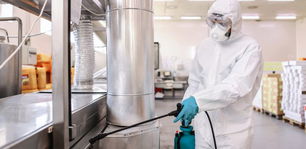
The most commonly used disinfectants in the food industry are halogens (hypochlorous acid, chlorine dioxide and iodine), peroxides (including hydrogen peroxide and peracetic acid) and surfactants, which include cationic surfactants with predominant disinfecting properties. Disinfectants must have a broad spectrum of activity. They must not be toxic to humans, should be stable under working conditions and dissolve well in water. The effectiveness of disinfectants can be influenced by various factors, such as temperature, pH, concentration and contact time, as well as the presence of organic and inorganic substances.