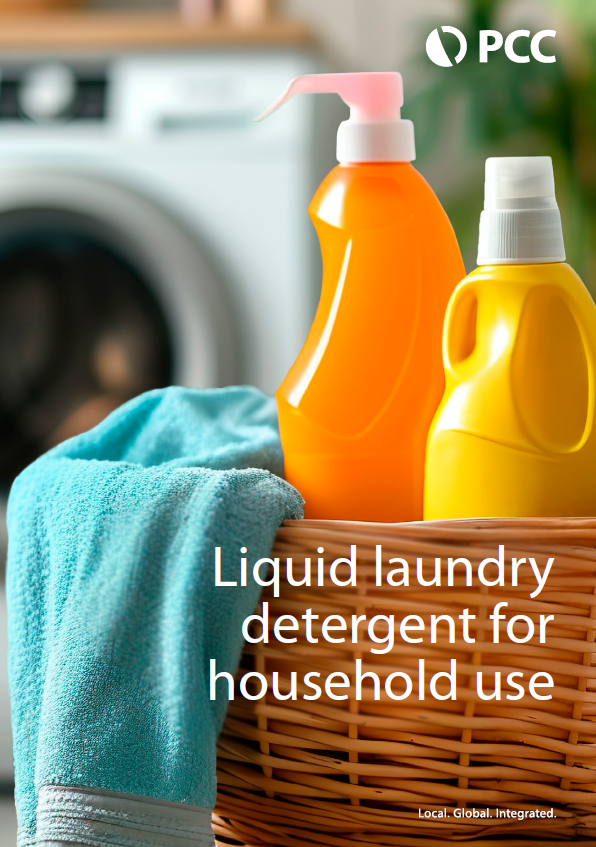
An effective laundry detergent is a product whose effectiveness is based on high-quality components that remain stable and retain their cleaning power even at low temperatures and in hard water. Surfactants play a leading role in such formulations.
Regular washing of clothes, household textiles and bedding is the foundation of hygiene, effectively removing dirt, bacteria and allergens. In sectors such as healthcare, hospitality and industry, maintaining fabric hygiene is essential to meet safety and well-being standards. Industrial laundries play a key role in this process, ensuring effective cleaning and disinfection of textiles on a large scale.
Choosing the right laundry detergent is extremely important. Consumers can choose from capsules, gels and powders. The effectiveness of each depends on a number of factors, including the type of fabric, water hardness and the type of dirt. When choosing a detergent, it is important to match its form to your needs, as they differ in their properties. However, it is the chemical raw materials used in the production stage that directly determine the effectiveness of the application and the functional properties of the detergent.
Surfactants play a fundamental role in the production of laundry detergents. These are surface-active compounds with a wide range of applications. Their main task is to reduce the surface tension of water, which facilitates the removal of dirt.
The following are most commonly used in the production of laundry detergents:
They have a negative charge, which helps the surfactant molecules lift and suspend dirt in micelles. They work very well in laundry detergents because they produce large amounts of foam. However, they can sometimes be irritating, so they are often combined with milder surfactants.
Non-ionic surfactants are electrically neutral. They emulsify oils very well and remove organic dirt more effectively than anionic surfactants. They are often used together to create multifunctional dual-action cleaning agents that not only lift and suspend molecular contaminants, but also emulsify oily dirt. Some non-ionic surfactants may exhibit low-foaming properties.
These substances have a positive charge or, in the case of amphoteric surfactants, both positive and negative charges (examples of amphoteric surfactants are betaine derivatives). Cationic surfactants are mainly used in antistatic products, such as fabric softeners, due to their limited foaming and cleaning properties. Amphoteric surfactants, on the other hand, have very good thickening properties.
In the detergent industry, high-quality raw materials for the production of laundry detergents are essential. Consumers and industrial customers expect products to be effective and have satisfactory cleaning power.
The PCC Group has an extensive portfolio of chemical raw materials. It offers high-quality products with proven technical parameters
It places equal emphasis on environmental protection. Most of the raw materials on offer are biodegradable products based on natural vegetable oils. They also meet the criteria of Regulation (EC) No 648/2004 on detergents.