PCC
RegisterLogin Page

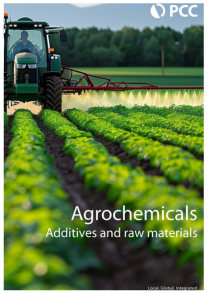
Agrochemicals

Agriculture is an extremely important part of the economy, whose aim has first and foremost been the production of food. Moreover, plant cultivation and animal husbandry provide various raw materials for the food, shoe, chemical, textile, and many other industries.

Okładka katalogu
Filters
Function
Composition
Segment
Manufacturer
of 8
EXOfos® PT-A (Phosphoric ester) EXOfos PT-A is an anionic surfactant that belongs to the group of phosphoric esters. This ester is based on alkylarylphenol ethoxylate (styrenated phenol type) and...
Composition
Phosphate esters
CAS No.
105362-40-1
EXOfos® PT-A  (Phosphoric ester)
EXOfos®PT-E (Phosphoric ester) EXOfos PT- E is anionic surfactant classified among phosphate esters. This ester is based on ethoxylated alkyl aryl phenol (styrenated phenol type), and is offered...
Composition
Phosphate esters
CAS No.
90093-37-1
EXOfos®PT-E (Phosphoric ester)
EXOwet D15 EXOwet D15 is an adjuvant that supports plant protection products. Due to its surface-active properties, the product effectively reduces the surface tension of the...
Composition
Mixtures
EXOwet D15
MCAA 80% Solution UP (Monochloroacetic acid) MCAA 80% Solution UP is a product of the highest purity available, in which the DCAA content does not exceed 90 ppm. It is intended for use primarily in pharmacy...
Composition
Chlorine derivatives
CAS No.
79-11-8
MCAA 80% Solution UP  (Monochloroacetic acid)
POLIkol 200 (PEG-4) POLIkol 200 belongs to the group of polyoxyethylene glycols (PEG with an average molecular weight of 200). INCI: PEG-4. The product is a colourless liquid well soluble...
Composition
Polyethylene glycols
CAS No.
25322-68-3
POLIkol 200 (PEG-4)
ROKAcet R11 (PEG-11 Castor Oil) ROKAcet R11 is a non-ionic surfactant belonging to the group of polyoxyethylene fatty acid esters of castor oil (INCI name: PEG-11 Castor oil). This surfactant is...
Composition
Alkoxylated fatty acids
CAS No.
61791-12-6
ROKAcet R11 (PEG-11 Castor Oil)
ROKAcet R26 (PEG-26 Castor Oil) ROKAcet R26 is a non-ionic surfactant belonging to the group of polyoxyethylene fatty acid esters of castor oil, INCI name: PEG-26 Castor oil. The surfactant is...
Composition
Alkoxylated fatty acids
CAS No.
61791-12-6
ROKAcet R26  (PEG-26 Castor Oil)
ROKAcet R40 (PEG-40 Castor oil) ROKAcet R40 is a non-ionic surfactant from the group of polyoxyethylene fatty acid esters of castor oil, INCI name: PEG-40 Castor oil. The surfactant is in the form...
Composition
Alkoxylated fatty acids
CAS No.
61791-12-6
ROKAcet R40  (PEG-40 Castor oil)
ROKAmin SR15 (C16-18 alkyl amine) ROKAmin SR15 is a non-ionic surfactant; INCI name: PEG-15 Hydrogenated Tallow Amine. It belongs to the group of ethoxylated fatty amines with an average degree of...
Composition
Alkoxylated fatty amines
CAS No.
61791-26-2
ROKAmin SR15  (C16-18 alkyl amine)
ROKAmina®K30B (Coco-betaine) ROKAmina K30B is a very high purity product from the group betaine, classified as amphoteric surfactants. The commercial product is a practically colourless aqueous...
Composition
Betaines
CAS No.
66455-29-6
ROKAmina®K30B (Coco-betaine)
ROKAnol®NL8P4 (C9-11 alcohol, ethoxylated, propoxylated) ROKAnol® NL8P4 belongs to non-ionic surfactants from the group of alkoxylated fatty alcohols. The product belongs to the group of low-foaming surfactants. High surface...
Composition
Alkoxylated alcohols
CAS No.
103818-93-5
ROKAnol®NL8P4  (C9-11 alcohol, ethoxylated, propoxylated)
ROKwin 80 (Sorbitan Oleate) ROKwin 80 is a non-ionic surfactant, a derivative of sorbitan and oleic acid. It is obtained in the condensation reaction of sorbitol with oleic acid. It is produced...
Composition
Sorbitan esters
CAS No.
1338-43-8
ROKwin 80 (Sorbitan Oleate)
ROKwinol 20 (Polysorbate 20) ROKwinol 20 is a non-ionic surfactant based on natural raw material. It is an ethoxylated sorbitan monolaurate derivative named INCI Polysorbate 20. The product...
Composition
Sorbitan esters
CAS No.
9005-64-5
ROKwinol 20 (Polysorbate 20)
PCC Greenline® Chlorine GREENLINE Chlorine, which comes in liquid form is a pure, amber-coloured liquid, approximately 1.5 times heavier than water. It is one of basic raw materials used,...
Composition
Chlorine derivatives
CAS No.
7782-50-5
PCC Greenline® Chlorine
Chlorine Chlorine is a pure, amber liquid about 1.5 times heavier than water. Gas chlorine is greenish-yellow in colour. It is approximately 2.5 times heavier than air, which...
Composition
Chlorine derivatives
CAS No.
7782-50-5
Chlorine
PCC Greenline® Caustic Soda lye 50% Solution
GREENLINE Soda Lye (50% aqueous solution) belongs to inorganic chemical compounds from the hydroxide group. The product is manufactured in an environmentally friendly...
Composition
Alkali
CAS No.
1310-73-2
PCC Greenline® Caustic Soda lye 50% Solution<br>
PCC Greenline® Flaked Caustic Soda
GREENLINE caustic soda in flakes, is an inorganic chemical that belongs to the strongest bases. Energy used to produce GREENLINE Caustic Soda is covered by guarantees...
Composition
Alkali
CAS No.
1310-73-2
PCC Greenline® Flaked Caustic Soda<br>
ABS Acid (Dodecylbenzenesulfonic Acid) ABS acid is an anionic surfactant of the alkylbenzene sulfonate group, in acid form. Due to its acidic form, the product is available with an active content of more...
Composition
Alkylbenzene sulphonates
CAS No.
85536-14-7
ABS Acid (Dodecylbenzenesulfonic Acid)
ABSNa 30 (Sodium Dodecylbenzenesulfonate) ABSNa 30 is 30% sodium alkylbenzenesulphonic acid salt and belongs to the group of anionic surfactants. This product is in the form of a clear or turbid liquid of...
Composition
Alkylbenzene sulphonates
CAS No.
68411-30-3
ABSNa 30 (Sodium Dodecylbenzenesulfonate)
ABSNa 50 (Sodium Dodecylbenzene Sulfonate) ABSNa 50 belongs to the group of anionic surfactants and is the sodium salt of alkyl benzene sulfonic acid with a concentration of 50%. The product is in the form...
Composition
Alkylbenzene sulphonates, Salts
CAS No.
68411-30-3
ABSNa 50 (Sodium Dodecylbenzene Sulfonate)
1 - 20 of 149 products
Items on page: 20

First line PCC Group portfolio for the agrochemical sector covers a variety of surface active agents of different chemical structures. Surfactants in plant protection products may play multiple roles which, in effect, increase the yield of working solutions. This allows for the reduction of the amounts of pesticides used and, therefore, lowering costs related to agricultural production, as well as obtaining environmental benefits.
The share of agriculture in the economy of individual countries varies considerably, and employment levels in this sector range from a few per cent in highly developed countries to as much as several dozen per cent in countries with slower economic growth. Intensive agriculture, also known as industrial agriculture, has become more and more popular as the world’s population increases. It is focused on maximum yield and profit, using considerable financial outlays and significant chemicalisation and mechanisation. Obtaining adequate productivity levels in the industry is possible, inter alia, due to the application of proper chemicals.

Agrochemicals in agriculture

Agrochemicals comprise all chemical compounds used in agriculture, including pesticides, adjuvants, growth regulators, mineral fertilizers, as well as feed additives in animal husbandry. Plant protection products contain various different ingredients. Active substances used to control detrimental organisms and unwanted plants are some of the most important. Besides, these preparations can contain oils and organic solvents, as well as numerous functional additives with emulsifying, wetting, anti-freezing, anti-scaling, dispersing or anti-foaming properties. Adjuvants are a particularly important group of products used in plant cultivation. Their significance and popularity are constantly increasing due to the numerous benefits of their use. They cover all the substances of plant protection products or ingredients added directly to the tank of the sprayer. They are aimed at improving biological activity and the physicochemical properties of the spraying solution. An important role of adjuvants is to decrease the surface tension of the working solution, as this facilitates and improves the effectiveness of plant treatment and perfoliant fertilization. Increased adhesion of the preparation and enhanced spreading on the surface is necessary when plant leaves are covered with waxes. This is also of utmost importance due to the variety of shells which protect pest organisms, and prevent the spraying solution from penetrating into the organisms.
The surfactants range

Wetting agents are substances which efficiently reduce the surface tension of spraying solutions, therefore enhancing the spread of droplets on the surface of plants, ensuring homogeneous application. The presence of such agents increases the absorption of the preparation, which results in enhanced resistance to washout by rain. These agents are an important group of ingredients in liquid foliar fertilizers. The PCC Group range includes specifically developed additives, i.e., the EXOwet family of products, and ethoxylated fatty alcohols with very good wetting properties, such as the ROKAnol IT series (based on C-13 alcohol), ROKAnol ID products (based on C6–C12 alcohol), or ROKAnol NL products (C9–C11 alcohol derivatives).

Some adjuvants and plant protection products contain oils and organic solvents, which reduce their miscibility with water. To facilitate this process, the use of emulsifiers is necessary. These compounds, thanks to their amphiphilic structure, promote formation of emulsion by dispersion of hydrophobic phase particles in water. The PCC Group products with emulsifying properties first of all comprise the EXOemul products, i.e., blends of surface active agents used for the preparation of adjuvants (tank-mixes) based on mineral and vegetable oils and their derivatives, as well as blends for the emulsification of herbicides (e.g., EXOemul A3). Enrichment of formulation with appropriate amounts of specific surfactants, such as ethoxylated derivatives of fatty alcohols (ROKAnol products) or fatty acids (ROKAcet products) is also effective in improving miscibility with water.

Foaming of agrochemical preparations is highly undesirable; therefore, low-foaming surfactants are widely used. These agents exhibit good wetting and emulsifying properties as well. Our product range includes alkoxylated fatty alcohols, such as the ROKAnol NL8P4 and ROKAnol LP series. The PCC Group portfolio also contains block co-polymers (ROKAmer series), which, thanks to their structure, prevent foam formation in the system, at the same time providing dispersing and wetting properties. Due to their high efficacy, they are utilised, for example, in the sugar beet washing process.

Raw and intermediate products

The PCC Group range for the agrochemical sector is complemented by raw and intermediate chemical products. These are, for example, high purity phosphorus derivatives, such as phosphorous oxychloride and phosphorus trichloride, used as substrates in synthesis of some active substances (e.g., glyphosate). Monochloroacetic acid is applied in a similar way to manufacture 2,4-D, which is a widespread herbicide belonging to the growth regulator class. The PCC Group range also includes chloro derivatives of benzene, such as para-dichlorobenzene (PDCB). Upon contact with air, this compound sublimates and releases a strong odour, therefore it is an ingredient of insect repellents. What is more, the PCC Group is a manufacturer of chlorine, which is an important raw material in the production of a variety of chemical products, including insecticides. Another product is sulphuric acid, used in formulation of chemical fertilizers.