PCC
RegisterLogin Page

Feed additives

Feed additives produced from high-quality chemical raw materials play a key role in modern animal nutrition. Contemporary feed additive production requires not only knowledge of animal nutrition, but also access to precisely selected chemical materials.

Okładka katalogu
Filters
Function
Composition
Segment
Manufacturer
PCC Greenline® Caustic Soda lye 50% Solution
GREENLINE Soda Lye (50% aqueous solution) belongs to inorganic chemical compounds from the hydroxide group. The product is manufactured in an environmentally friendly...
Composition
Alkali
CAS No.
1310-73-2
PCC Greenline® Caustic Soda lye 50% Solution<br>
ROKO PROFESSIONAL® CHLORINE Liquid for disinfecting rooms, surfaces and devices ROKO PROFESSIONAL® CHLORINE is a disinfectant for disinfecting rooms as well as surfaces and equipment in contact with food and animal feed in air-conditioning systems,...
Composition
Mixtures
ROKO PROFESSIONAL® CHLORINE Liquid for disinfecting rooms, surfaces and devices
Caustic soda lye 50% solution Sodium hydroxide is an inorganic chemical compound of the hydroxide group, belonging to the strongest alkali. In liquid form it is a colourless, odourless and non-flammable...
Composition
Alkali
CAS No.
1310-73-2
Caustic soda lye 50% solution
Hydrochloric acid technical grade CH, min.31% Purified hydrochloric acid is an aqueous solution of hydrogen chloride gas. It is a strongly corrosive liquid with a sharp, irritating odour and colour from colourless...
Composition
Non-organic acids
CAS No.
7647-01-0
Hydrochloric acid technical grade CH, min.31%
Hydrochloric acid technical grade purified, min. 28% Purified hydrochloric acid is an aqueous solution of hydrogen chloride gas. It is a strongly corrosive liquid with a sharp, irritating odour and colour from colourless...
Composition
Non-organic acids
CAS No.
7647-01-0
Hydrochloric acid technical grade purified, min. 28%
Caustic soda lye 25% solution Sodium hydroxide (25% solution) is an inorganic chemical compound of the hydroxide group, belonging to the strongest alkali. In liquid form it is a colourless, odourless...
Composition
Alkali
CAS No.
1310-73-2
Caustic soda lye 25% solution
Caustic soda lye 30% solution Sodium hydroxide (30% solution) is an inorganic chemical compound of the hydroxide group, belonging to the strongest alkali. In liquid form it is a colourless, odourless...
Composition
Alkali
CAS No.
1310-73-2
Caustic soda lye 30% solution
Caustic soda lye 35% solution Sodium hydroxide (35% solution) is an inorganic chemical compound of the hydroxide group, belonging to the strongest alkali. In liquid form it is a colourless, odourless...
Composition
Alkali
CAS No.
1310-73-2
Caustic soda lye 35% solution
Caustic soda lye 40% solution Sodium hydroxide (40% solution) is an inorganic chemical compound of the hydroxide group, belonging to the strongest alkali. In liquid form it is a colourless, odourless...
Composition
Alkali
CAS No.
1310-73-2
Caustic soda lye 40% solution
Caustic soda lye 45% solution Sodium hydroxide (45% solution) is an inorganic chemical compound of the hydroxide group, belonging to the strongest alkali. In liquid form it is a colourless, odourless...
Composition
Alkali
CAS No.
1310-73-2
Caustic soda lye 45% solution
1 - 10 of 10 products
Items on page: 20

Feed additives, such as pH regulators, preservatives, emulsifiers and substances that support the stability of mixtures, are largely based on chemical components whose quality has a direct impact on the class of the final product.

What characterises a good feed formulation?

The most important element in composing feed or feed additives is to precisely define the requirements and expected effects. First of all, it is necessary to consider several issues that affect the quality of the final product, namely:

  • a balanced composition, assuming an adequate supply of protein, fats, carbohydrates, as well as vitamins and minerals,
  • digestibility and easy digestibility,
  • adaptation to the animal’s stage of life and breeding objectives,
  • high quality of the final product, free from toxins and contaminants,
  • compliance of the raw materials used with applicable standards.

It is also worth considering the use of less obvious measures in the form of feed additives and appropriate substances that are functional chemical raw materials for feed production.

Functional feed additives

From a technological point of view, it is most important to find a wide range of ingredients and auxiliary substances that can be used at various stages of the feed production process in order to feed animals as effectively as possible.

Thanks to their functionality and compliance with standards, appropriately selected raw materials support the effective and safe production of industrial feed. They also directly affect its physicochemical properties, stability, homogeneity and the possibility of extended storage time. Commonly used chemical raw materials in the production of feed products include:
  • surfactants, including emulsifiers and dispersants,
  • preservatives,
  • anti-caking agents,
  • disinfectants.

Surfactants

Surfactants, i.e. surface-active compounds that contain both hydrophilic and hydrophobic parts in their structure, are an ideal raw material for feed production. Thanks to their structure, they reduce surface tension and facilitate the production of homogeneous mixtures. This translates into improved absorption and digestibility, as it facilitates the emulsification of fats and increases the activity of digestive enzymes.

Preservatives

Preservatives play an important role in the production of feed additives — they protect ready-made feed mixtures from the growth of microorganisms, premature chemical reactions or degradation of the main ingredients. Organic acids, such as propionic, formic, citric, sorbic and fumaric acids, as well as calcium and ammonium salts of organic acids and phosphoric acid, are commonly used as preservatives.

Anti-caking agents

In the production of feed additives and animal feed mixtures, the use of anti-caking agents is crucial to ensure the stability, homogeneity and ease of application of the final product. The use of anti-caking agents results in feed additives with better flowability and a more uniform granule or mixture structure, which in turn translates into better dose conversion per animal and less waste during the dosing process.

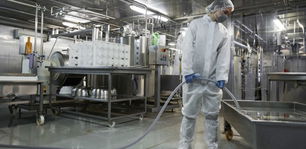
Disinfection during manufacturing processes

This category of chemical raw materials includes very pure inorganic acids, hydroxides, alkaline solutions such as caustic soda, and mixtures containing active chlorine. In practical application, these are disinfectants for equipment and surfaces that come into contact with feed. This gives feed additive manufacturers access to high-purity raw materials that can be used in the formulation of additives/preservatives or as technological support for the production process, e.g. pH regulation, production line disinfection, ingredient stabilisation.

The main objective of proper disinfection during feed production is technological stabilisation — pure chemical raw materials allow for predictable behaviour in the production process, e.g. ingredient reactions, interactions with carriers. The PCC Group offers a wide range of substances with disinfecting properties, in various concentrations.