PCC
RegisterLogin Page

All-Purpose Cleaners

Universal cleaning agents are extremely versatile – especially for everyday dirt. The PCC Group’s wide range of products provides manufacturers with access to innovative components that combine excellent application properties with high quality.

Okładka katalogu
Filters
Function
Composition
Segment
Manufacturer
of 8
ROKAmin SR22 (C16-18 alkyl amine) ROKAmin SR22 is a non-ionic surfactant (INCI name: PEG-22 Hydrogenated Tallow Amine). It belongs to the group of ethoxylated fatty amines with an average ethoxylation...
Composition
Alkoxylated fatty amines
CAS No.
61791-26-2
ROKAmin SR22  (C16-18 alkyl amine)
ROKAmina®K30B (Coco-betaine) ROKAmina K30B is a very high purity product from the group betaine, classified as amphoteric surfactants. The commercial product is a practically colourless aqueous...
Composition
Betaines
CAS No.
66455-29-6
ROKAmina®K30B (Coco-betaine)
ROKAmina®K40 MB (Cocamidopropyl Betaine) ROKAmina K40 belongs to the amphoteric surfactants of the betaine group. The commercial product is an aqueous solution with an active substance content of about...
Composition
Betaines
CAS No.
97862-59-4
ROKAmina®K40 MB (Cocamidopropyl Betaine)
ROKAnol®NL8P4 (C9-11 alcohol, ethoxylated, propoxylated) ROKAnol® NL8P4 belongs to non-ionic surfactants from the group of alkoxylated fatty alcohols. The product belongs to the group of low-foaming surfactants. High surface...
Composition
Alkoxylated alcohols
CAS No.
103818-93-5
ROKAnol®NL8P4  (C9-11 alcohol, ethoxylated, propoxylated)
ROKwinol 20 (Polysorbate 20) ROKwinol 20 is a non-ionic surfactant based on natural raw material. It is an ethoxylated sorbitan monolaurate derivative named INCI Polysorbate 20. The product...
Composition
Sorbitan esters
CAS No.
9005-64-5
ROKwinol 20 (Polysorbate 20)
ROSULfan®E (Sodium 2-ethylhexyl sulfate) ROSULfan E is an anionic, low-foaming surfactant of the alkyl sulphates group. The product is an aqueous solution of the sodium salt of 2-ethylhexyl sulphate. ROSULfan...
Composition
Alkyl sulfates
CAS No.
126-92-1
ROSULfan®E   (Sodium 2-ethylhexyl sulfate)
EXOsoft L3/40 (Disodium laureth sulfosuccinate) EXOsoft L3/40 is an anionic surfactant (INCI name: Disodium Laureth Sulfosuccinate.) The product is a light yellow to yellow liquid characterized by about 40% of...
Composition
Sulfosuccinates
CAS No.
39354-45-5
EXOsoft L3/40 (Disodium laureth sulfosuccinate)
EXOsoft PC35 (Potassium Cocoate) EXOsoft PC35 is an anionic surfactant which belongs to the group of soaps with the name defined by INCI as Potassium Cocoate. It is a natural product with 100% renewable...
Composition
Salts, Other
CAS No.
61789-30-8
EXOsoft PC35  (Potassium Cocoate)
EXOsoft PO30 (Potassium Oleate) EXOsoft PO30 is an anionic surfactant, based on a natural ingredient of plant origin, belonging to the group of soaps. Its INCI name is: Potassium Oleate. At the...
Composition
Salts, Other
CAS No.
143-18-0
EXOsoft PO30  (Potassium Oleate)
POLIkol 6000 (PEG-135) POLIkol 6000 is a product belonging to the group of polyoxyethylene glycols (PEG with an average molecular weight of 6000), INCI name: PEG-135. The commercial product...
Composition
Polyethylene glycols
CAS No.
25322-68-3
POLIkol 6000 (PEG-135)
POLIkol 6000 FLAKES (PEG-135) POLIkol 6000 Flakes is a product belonging to the group of polyoxyethylene glycols (PEG with an average molecular weight of 6000), INCI name: PEG-135. The commercial...
Composition
Polyethylene glycols
CAS No.
25322-68-3
POLIkol 6000 FLAKES (PEG-135)
POLIkol 6000 PASTYLKI POLIkol 6000 PILLS is a polyoxyethylene glycol (PEG) product with an average molecular weight of 6000, known by its INCI name PEG-135. It is commercially available...
Composition
Polyethylene glycols
CAS No.
25322-68-3
POLIkol 6000 PASTYLKI
ROKAcet HR40 (PEG-40 Hydrogenated Castor Oil) ROKAcet HR40 is a non-ionic surfactant, INCI name: PEG-40 Hydrogenated Castor Oil. This product is a surfactant based on renewable vegetable raw materials. The active...
Composition
Alkoxylated fatty acids
CAS No.
61788-85-0
ROKAcet HR40 (PEG-40 Hydrogenated Castor Oil)
ROKAcet HR40W (PEG-40 Hydrogenated Castor Oil) ROKAcet HR40W is a non-ionic surfactant called INCI: PEG-40 Hydrogenated Castor Oil. It is based on renewable vegetable raw materials. This product, unlike ROKAcet...
Composition
Alkoxylated fatty acids
CAS No.
61788-85-0
ROKAcet HR40W (PEG-40 Hydrogenated Castor Oil)
ROKAcet K7 (PEG-7 Cocoate) ROKAcet K7 is a non-ionic surfactant belonging to the group of polyoxyethylene fatty acid esters (INCI name: PEG-7 cocoate). This surfactant occurs in the form of...
Composition
Alkoxylated fatty acids
CAS No.
61791-29-5
ROKAcet K7 (PEG-7 Cocoate)
ROKAcet K10 ROKAcet K10 is a non-ionic surfactant from the group of the polyoxyalkylene esters of fatty acids. This surfactant has the form of a clear or slightly cloudy liquid,...
Composition
Alkoxylated fatty acids
CAS No.
61791-29-5
ROKAcet K10
ROKAcet KO400G (PEG-6 Glyceryl Cocoate) ROKAcet KO400G is a non-ionic surfactant under the INCI name: PEG-6 Glyceryl Cocoate, having its main use in detergent applications.It is a derivative based on renewable...
Composition
Alkoxylated fatty acids, Glycerides
CAS No.
68201-46-7
ROKAcet KO400G (PEG-6 Glyceryl Cocoate)
ROKAmer®2330 (EO/PO block copolymer) ROKAmer 2330 belongs to the group of nonionic block copolymers of ethylene oxide and propylene oxide (ROKAmers). ROKAmer 2330 is one of the low-foaming and anti-foaming...
Composition
EO/PO block copolymers
CAS No.
9003-11-6
ROKAmer®2330 (EO/PO block copolymer)
ROKAmid MRZ17 (PEG 17-Rapeseedamide) ROKAmid MRZ17 is a non-ionic surfactant from the group of ethoxylated alkanolamides (INCI name: PEG-17 Rapeseedamide). The product is in the form of a liquid or...
Composition
Alkoxylated amides
CAS No.
221045-17-6
ROKAmid MRZ17 (PEG 17-Rapeseedamide)
ROKAmid RAD (Rapamide DEA) ROKAmid RAD is a non-ionic surfactant of the alkanolamide group (INCI name: Rapamide DEA). The product is a clear or slightly turbid liquid with a light yellow to...
Composition
Alkanoloamides
CAS No.
68603-38-3
ROKAmid RAD (Rapamide DEA)
1 - 20 of 143 products
Items on page: 20

Universal cleaning agents

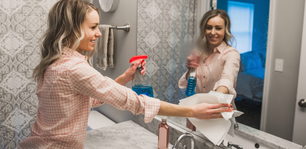
All-purpose cleaners (APC) are preparations designed for cleaning and caring for various surfaces – from countertops and appliances to bathroom tiles and lacquered floors. Their task is to remove dirt, grease and dust using a single, simple preparation.

The choice of the right cleaning agent should be dictated primarily by the type of surface being cleaned. Since different materials require different care, it is essential to familiarise yourself with the composition of the preparation and the instructions for its use. The selection of raw materials used in the production of universal cleaning agents is of fundamental importance here – some substances effectively remove grease and oil, while others are excellent at dealing with mineral deposits. It is also worth paying attention to the form of the finished product.

Why can “universal” be effective?

The effectiveness of universal cleaning products results from the precise selection of ingredients in the finished products. The basic raw materials include, above all:
  • Surfactants

These are the most important ingredients in universal cleaning agents. They are responsible for the effective removal of dirt, improved wettability and the stabilisation of the finished cleaning formulations. A mixture of different surfactants is most often used in a single product. The combination of two or more ingredients gives better results due to the synergistic effect. In the production of universal cleaning agents, anionic (with high detergency properties) and non-ionic (effective in removing grease, among other things) surface compounds are most often used.

  • Chelates

Substances such as sodium citrate or EDTA are added to the formulation for more effective removal of mineral deposits. They are highly effective, even in hard water.

  • pH regulators

The addition of pH regulators to finished products contributes to increased cleaning effectiveness. In addition, they protect the surfaces being cleaned – too high or too low a pH can be aggressive to delicate materials. Cleaning agents with a balanced pH (usually 6-8) are safe for most surfaces.

  • Fragrances

These are used for their sensory qualities. The addition of fragrances makes cleaning more pleasant.

Chemical raw materials for the production of universal cleaning agents offered by the PCC Group

The use of proven components is key in the production of universal cleaning agents. The PCC Group offers a wide portfolio of raw materials dedicated to this industry, among which surface-active compounds, i.e. surfactants, play a key role. In ready-made formulations, they perform a number of important functions: from effective cleaning and degreasing, through emulsifying ingredients and wetting surfaces, to controlling foam levels.

The ROKAnol series is particularly well suited to the cleaning detergent industry. In particular, the ROKAnol LP series (which comprises a large group of low-foaming raw materials) is characterised by its pronounced surface activity, which allows it to be used as a cleaning detergent. Products such as ROKAnol NL8P4, ROKAnol IT8 and ROKAnol L2 are highly effective. They ensure excellent wetting of the cleaned surface and good detergency properties in combination with other surfactants.

SULFOROKAnols constitute a broad group of anionic surfactants produced by the PCC Group, including, for example, SULFOROKAnol L390/1M, SULFOROKAnol L327 and SULFOROKAnol L385/1T. They are effective emulsifiers and cleaning agents. They also have very good foaming properties, creating a soft, stable, dense and creamy foam. These products are ideal for use in all-purpose cleaner formulations.

The ROSULfan and ROKAmina series of raw materials are also worth noting. ROSULfans (e.g. ROSULfan M, ROSULfan A70) in particular combine mild action with excellent application properties. They interact very well with other anionic, non-ionic and amphoteric surfactants.

Why choose products from the PCC Group?

  • The raw materials in the range meet high quality requirements, confirmed by international certificates.
  • The components supplied are highly biodegradable, which allows manufacturers to create cleaning products that are in line with the “Green Chemistry” trend and Ecolabel requirements.
  • The products are highly efficient.
  • A partnership with the PCC Group also offers technological support for the products offered.