PCC
RegisterLogin Page

Plastics

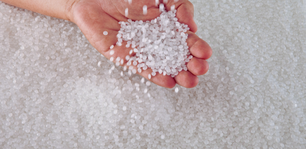
Plastics are materials that consist of synthetic or semi-synthetic organic compounds that can be formed into objects of various shapes. They are usually high molecular weight organic polymers containing a number of other substances called additives that are designed to change the processing and performance properties.

Okładka katalogu
Filters
Function
Composition
Segment
Manufacturer
of 10
ROKAmin K15K (PEG-15 cocomonium methosulfate) ROKAmin K15K is a specialized cationic surfactant, INCI name: PEG-15 Cocomonium methosulfate. The product is in the form of a clear liquid and Hazen-scale colour...
Composition
Alkoxylated fatty amines, Quaternary compounds
CAS No.
68989-03-7
ROKAmin K15K (PEG-15 cocomonium methosulfate)
ROKAmin SRK8 (Fatty amine) ROKAmin SRK8 is a specialist cationic surfactant. The product is a quaternized and oxyethylenated fatty amine. It is a clear, viscous liquid with max. colour. 190...
Composition
Quaternary compounds, Alkoxylated fatty amines
CAS No.
73138-81-5
ROKAmin SRK8 (Fatty amine)
ROKAnol® IT10 (Isotrideceth-10) ROKAnol® IT10 is a non-ionic surfactant of the group of ethoxylated fatty alcohols (INCI name: Isotrideceth-10). The product belongs to a large group of surfactants...
Composition
Alkoxylated alcohols, Ethoxylated alcohols
CAS No.
69011-36-5
ROKAnol® IT10 (Isotrideceth-10)
ROKAnol®IT12 (Isotrideceth-12) ROKAnol IT12 belongs to non-ionic surfactants from the group of ethoxylated fatty alcohols (INCI name: Isotrideceth-12). The product belongs to ROKAnol IT series,...
Composition
Alkoxylated alcohols, Ethoxylated alcohols
CAS No.
69011-36-5
ROKAnol®IT12  (Isotrideceth-12)
ROKAnol®IT13 (C13 alcohol, ethoxylated) ROKAnol® IT13 is a non-ionic surfactant of the group of ethoxylated fatty alcohols (INCI: Isotrideceth-13). The product belongs to the ROKAnol® IT series which is...
Composition
Alkoxylated alcohols, Ethoxylated alcohols
CAS No.
69011-36-5
ROKAnol®IT13  (C13 alcohol, ethoxylated)
ROKAnol® IT8 (Isotrideceth-8) ROKAnol® IT8 is a non-ionic surfactant from the group of ethoxylated fatty alcohols, INCI name: Isotrideceth-8. It belongs to the group of surface active products...
Composition
Alkoxylated alcohols, Ethoxylated alcohols
CAS No.
69011-36-5
ROKAnol® IT8 (Isotrideceth-8)
ROKAnol®K18 (Cetoleth-18) ROKAnol® K18 is a non-ionic surfactant that belongs to the group of ethoxylated fatty alcohols. The product is manufactured on the basis of natural raw materials....
Composition
Alkoxylated alcohols
CAS No.
68920-66-1
ROKAnol®K18  (Cetoleth-18)
ROKAnol® T18 (Ceteareth-18) ROKAnol® T18 belongs to non-ionic surfactants from the group of ethoxylated fatty alcohols, INCI name: Ceteareth-18. The product is based on high molecular alcohol...
Composition
Alkoxylated alcohols
CAS No.
68439-49-6
ROKAnol® T18 (Ceteareth-18)
ROKAnol®IT100/35 (C13 alcohol, ethoxylated) ROKAnol® IT100/35 is a non-ionic surfactant with a wide application range in the coating material industry. This product is a highly ethoxylated (100 EO) isotridecyl...
Composition
Alkoxylated alcohols, Ethoxylated alcohols
CAS No.
69011-36-5
ROKAnol®IT100/35  (C13 alcohol, ethoxylated)
ROKAnol® IT10W (Isotrideceth-10) ROKAnol IT10W belongs to non-ionic surfactants in the group of ethoxylated fatty alcohols (INCI Isotrideceth-10). The product adds to the large group of surfactants...
Composition
Alkoxylated alcohols, Ethoxylated alcohols
CAS No.
69011-36-5
ROKAnol® IT10W   (Isotrideceth-10)
ROKAnol® IT20 (Isotrideceth-20) ROKAnol® IT20 is a non-ionic surfactant with a wide application range. The product belongs to the non-ionic surfactants from the group of ethoxylated fatty alcohols...
Composition
Alkoxylated alcohols, Ethoxylated alcohols
CAS No.
69011-36-5
ROKAnol® IT20 (Isotrideceth-20)
ROKAnol®IT40/70 (C13 alcohol, ethoxylated) ROKAnol® IT40/70 is a non-ionic surfactant, which belongs to the group of ethoxylated alcohols. This product is used as an effective and efficient emulsifier in...
Composition
Alkoxylated alcohols, Ethoxylated alcohols
CAS No.
69011-36-5
ROKAnol®IT40/70  (C13 alcohol, ethoxylated)
ROKAnol®UD28/70 ROKAnol® UD28/70 is a non-ionic surfactant, which belongs to the group of ethoxylated synthetic alcohols. The product is a high molecular derivative of undecyl alcohol...
Composition
Alkoxylated alcohols, Ethoxylated alcohols
CAS No.
127036-24-2
ROKAnol®UD28/70
ROKAnol®UD40/70 (C11 alcohol, ethoxylated) ROKAnol® UD40/70 is a non-ionic surfactant, which belongs to the group of ethoxylated synthetic alcohols. The product is a high molecular derivative of undecyl alcohol...
Composition
Alkoxylated alcohols, Ethoxylated alcohols
CAS No.
127036-24-2
ROKAnol®UD40/70  (C11 alcohol, ethoxylated)
ROKAnol®L30 ROKAnol® L30 is a non-ionic surfactant used mainly as an emulsifier in the emulsion polymerization process. The product comes in the form of white wax with a solidification...
Composition
Alkoxylated alcohols
CAS No.
68439-50-9
ROKAnol®L30
ROKAnol®L30/65 ROKAnol® L30/65 is a product used as an emulsifier in the emulsion polymerization process. It is a mixture of non-ionic surfactants, with ROKAnol® L30 playing the...
Composition
Alkoxylated alcohols
ROKAnol®L30/65
Rokopol® 50-B-1000 Ready to use Rokopol® 50-B-1000 is a reactive plasticiser, a hydrophobic polyol, PO. It exists in the form of homogeneous, colourless to yellow liquid. It contains antioxidants...
Composition
Butanol, PAG , Polyether polyols, Partially water soluble PAG, Monols
CAS No.
9038-95-3
Rokopol® 50-B-1000
Rokopol® 50-B-120 Ready to use Rokopol® 50-B-120 is a reactive plasticiser, a hydrophobic polyol, PO. It exists in the form of homogeneous, colourless to yellow liquid. It contains antioxidants...
Composition
Butanol, PAG , Polyether polyols, Partially water soluble PAG, Monols
CAS No.
9038-95-3
Rokopol® 50-B-120
Rokopol® 50-B-150 Ready to use Rokopol® 50-B-150 is a reactive plasticiser, a hydrophobic polyol, PO. It exists in the form of homogeneous, colourless to yellow liquid. It contains antioxidants...
Composition
Butanol, PAG , Polyether polyols, Partially water soluble PAG, Monols
CAS No.
9038-95-3
Rokopol® 50-B-150
Rokopol® 50-B-32 Ready to use Rokopol® P-B-32 is a reactive plasticiser, a hydrophobic polyol, PO. It exists in the form of homogeneous, colourless to yellow liquid. It contains antioxidants...
Composition
PAG , Polyether polyols, Butanol, Partially water soluble PAG, Monols
CAS No.
9038-95-3
Rokopol® 50-B-32
141 - 160 of 199 products
Items on page: 20

Plastics are a large group of materials applicable in every area of our lives. Due to their properties, they can replace most natural materials, such as wood, stone, leather, glass, metal or ceramics. In addition, their features and functions can be designed depending on the application.

Polymer additives – why do we use them?

The industry uses many types of polymer additives that can be divided into four main groups:

Processing stabilizers

  • Thermal stabilizersthey are used in the case of polymers that tend to decompose at processing temperatures.
  • Process antioxidantsthey are used to prevent the oxidation of polymers, as well as the formation of post-transformation (e.g. branching) during processing.

The PCC Group’s offer includes a number of such substances in the form of products from the Rostabil series, which as additives have a wide range of applications in the plastics industry. These products have antioxidant properties, they can also act as thermal stabilizers, preventing degradation of plastics during processing. They are also used as process stabilizers. The Rostabil series has high hydrolytic stability, does not adversely affect the mechanical properties of materials and prevents degradation during thermal processes.
Processing modifiers

  • Lubricants, dispersing and anti-adhesivesthey reduce internal and external friction, which increases the plasticity of polymers. They also prevent adhesion of plastics to metal parts of forming devices. The Chemstat and Maxomer series is a group of professional additives that very well improve lubricating, antistatic and dispersing properties in the production of plastics. The PCC Group also offers a number of dispersants Dyspergator series (R, RP, SBRP) – that allow the formation of latex dispersions that are stable during polymerization. These products are mainly used as auxiliary agents in the production of styrene-butadiene rubber (SBR) by emulsion polymerization. Dyspergator series of products (R, RP, SBRP) are compatible with other additives used in this process (e.g. emulsifiers and stabilizers), providing very good dispersion of the resulting latex particles in the aqueous phase. Another group of products are anti-adhesives, such as Chemax X-997 and Chemstat X-9910, which can also act as lubricants during the production of plastics.
  • Corrosion inhibitors – additives that, even if used in small amounts, effectively reduce the corrosion rate of metals. The products Chemstat Cl-1020 and Chemstat Cl1020 / 60DC have been specially designed to prevent corrosion in the production of plastics, e.g. polyolefin granulates. The PCC Group’s offer includes both a powder product (Chemstat Cl1020 / 60DC) and a liquid (Chemstat Cl1020), due to which it can be used in many processes during the manufacture of such materials as Polypropylene and Polyethylene (HDPE and LLDPE).
  • Fluidizing additives – they reduce the softening and flowing temperature of polymers. In contrast to greases, they have a low viscosity. Rodys series products (C, L, LP, O) are polymers of naphthalene sulfonic acid with formaldehyde, which thanks to their unique structure act as both emulsifiers and dispersants. Emulsifiers have a huge impact on the rheological properties of polymers, greatly improving them, which allows the reduction in the cost of production.
  • Thixotroping agents – these additives are intended to increase or decrease the viscosity under the influence of plastic deformation. Plastics that have thixotropic properties under static conditions will be more sticky, resembling a solid (or vice versa, they will be in a liquid state). On the other hand, subjected to the process of mixing, shaking or other stress, they begin to “flow”, drastically reducing their viscosity (or become denser). Then after a set time they return to their original state. Typically, thixotropes include, but are not limited to, active silica, talc, ground glass.

Property modifiers

  • Modifiers of optical properties – these are mainly colouring agents (dyes and pigments), brightening and matting agents.
  • Flammability modifiers – these are flame retardants and anti-smokers. The products from the Roflam series are effective flame retardants and have a very weak influence on the physico-mechanical properties of polyurethane flexible foams. They are also characterized by low emission of volatile organic compounds. These products can be used in the furniture industry, for example for the production of armchairs, sofas, mattresses and pillows. Thanks to the content of phosphorus, they form a protective layer on the surface of the polymer, preventing the oxygen from reaching the flame and spreading it. The use of products from the Roflam series allows to obtain a good fire classification of building materials.
  • Mechanical properties modifiers – they are plasticizers, impact modifiers, foaming agents and cross-linking agents. This product group includes the Roflex series, i.e. professional high viscosity plasticizers that are compatible with flame retardants from the Roflam They have many times better migration resistance compared to standard plasticizers based on traditional PVC formulations. Accessories from the Roflex series are widely used in construction (technical films, coverings), electronics (cable insulation), furniture (projection screens, artificial leather), automotive (car upholstery), as well as transport (conveyor belts and tarpaulins).
  • Surface property modifiers – these are anti-statics, lubricants and anti-fogging agents, such as, for example, Chemstat® AF-322 and Chemstat® AF-687. Both products prevent steam formation and can be intended for indirect food contact according to the definition and limits set by the US Food and Drug Administration (FDA) – 21 CFR 178.3400 list. They have a wide range of applications in the packaging industry, food industry and plastics. Antistatic agents can be applied both internally (they are then connected to the polymer matrix) and externally to the surface of the polymer. The PCC Group offers a wide range of high-quality antistatic additives. Chemstat products can be used as anti-electrostatic in the production of many plastics, and thanks to their presence in various forms (solid, liquid or granulate) they are convenient in application.

Property stabilizers

  • Metal deactivators – they prevent the oxidation of metal ions which occur in plastics at several degrees of oxidation.
  • Stabilizers – they delay the degradation processes occurring in polymers, caused for example by the destructive effects of oxygen, temperature, ozone or other catalytic reactions leading to the disruption of the polymer chain. These changes have a direct impact on the processing and the appearance of finished products, e.g. changes in colour, gloss, shade of plastic. The PCC Group, in order to meet the customers’ expectations, offers a series of Rostabil products that can be used both as process and thermal stabilizers. They eliminate the effect of yellowing of materials during processing, enhance the colour stability of polymeric materials containing pigments and ensure transparency in non-pigmented materials.

The observed trends in the plastics industry

The plastics industry has undergone numerous changes in recent years. It is a huge sector, very fragmented (according to CSO research, it shows that in Poland over 2.8 thousand companies generate about 50% of revenues) and with great potential. In the plastics sector, a number of trends have been observed for several years.

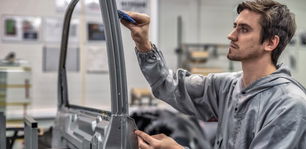
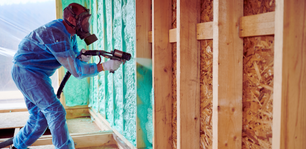
The first one is based on material weight reduction, which is particularly evident in the automotive and construction industries. Plastics, thanks to their low weight and high strength, displace the steel elements used in the production of cars. In addition, thanks to the possibility of polymer modification using various additions, engineers can create specialized products dedicated to appropriate applications. A similar trend is occurring in the construction industry, where elements made of plastics replace traditional building materials, such as wood, steel or concrete, as well as in the construction of bridges, buildings and railway lines.

Another trend in the plastics sector is the use of biological and biodegradable polymers as an alternative to plastics produced from petroleum compounds. This is due to the fact that thermoset plastics, often used, for example, in cars, are very difficult to recycle. Of course, this directly affects the environment in a negative way. Currently, many companies are focusing on searching for alternative biological solutions that will be able to replace a number of hard-to-recycle petroleum materials. A recent example of this is a fully biodegradable material made of chitin.