PCC
RegisterLogin Page

Liquid soaps

Liquid soaps are mixtures with fluid consistency, which remove grease and dirt from surfaces.


Filters
Function
Composition
Segment
Manufacturer
of 3
ROKAmid MRZ17 (PEG 17-Rapeseedamide) ROKAmid MRZ17 is a non-ionic surfactant from the group of ethoxylated alkanolamides (INCI name: PEG-17 Rapeseedamide). The product is in the form of a liquid or...
Composition
Alkoxylated amides
CAS No.
221045-17-6
ROKAmid MRZ17 (PEG 17-Rapeseedamide)
ROKAmid RAD (Rapamide DEA) ROKAmid RAD is a non-ionic surfactant of the alkanolamide group (INCI name: Rapamide DEA). The product is a clear or slightly turbid liquid with a light yellow to...
Composition
Alkanoloamides
CAS No.
68603-38-3
ROKAmid RAD (Rapamide DEA)
ROKAmid KAD/2A (Cocamide DEA) ROKAmid KAD/2A is a non-ionic surfactant with the INCI name ‘Cocamide DEA’. It is based on natural vegetable oils. It has a form of a clear or slightly turbid light-yellow...
Composition
Alkanoloamides
CAS No.
68155-07-7
ROKAmid KAD/2A  (Cocamide DEA)
ROKAmid KAD MB (Cocamide DEA) ROKAmid KAD MB is a nonionic surfactant called INCI Cocamide DEA. It is produced on the basis of natural vegetable oils. It has the form of a clear or slightly turbid...
Composition
Alkanoloamides
CAS No.
68155-07-7
ROKAmid KAD MB (Cocamide DEA)
ROKAmid MRZ4 (PEG-4 Rapeseedamide) ROKAmid MRZ4 is a non-ionic surfactant, part of the group of ethoxylated alkanolamides, under the INCI name PEG-4 Rapeseedamide. The product has the form of a liquid...
Composition
Alkoxylated amides
CAS No.
85536-23-8
ROKAmid MRZ4 (PEG-4 Rapeseedamide)
ROKAmina®K30 (Cocamidopropyl Betaine) ROKAmina K30 belongs to the amphoteric surfactants from the betaine group. The commercial product is an aqueous solution with an active content of about 30% and...
Composition
Betaines
CAS No.
97862-59-4
ROKAmina®K30 (Cocamidopropyl Betaine)
ROKAmina®K40 (Cocamidopropyl Betaine) ROKAmina K40 belongs to the amphoteric surfactants of the betaine group. The commercial product is an aqueous solution with an active substance content of about...
Composition
Betaines
CAS No.
97862-59-4
ROKAmina®K40 (Cocamidopropyl Betaine)
ROKAmina®K40HC (Cocamidopropyl Betaine) ROKAmina K40HC is a very high purity amphoteric surfactant from the betaine group. The commercial product is an aqueous solution with an active substance content...
Composition
Betaines
CAS No.
61789-40-0
ROKAmina®K40HC (Cocamidopropyl Betaine)
ROKAmina®K30 MB (Cocamidopropyl Betaine) ROKAmina K30 MB belongs to the amphoteric surfactants from the betaine group. The commercial product is an aqueous solution with an active content of about 30% and...
Composition
Betaines
CAS No.
97862-59-4
ROKAmina®K30 MB (Cocamidopropyl Betaine)
ROKAmina®K30B MB (Coco-betaine) ROKAmina K30B MB is a very high purity product from the group betaine, classified as amphoteric surfactants. The commercial product is a practically colourless aqueous...
Composition
Betaines
CAS No.
66455-29-6
ROKAmina®K30B MB (Coco-betaine)
ROKAmina®K30K (Cocamidopropyl Betaine) ROKAmina K30K is classified as an amphoteric surfactants from the betaines group. The commercial product is a light yellow aqueous solution containing 29 to 32%...
Composition
Betaines
CAS No.
97862-59-4
ROKAmina®K30K (Cocamidopropyl Betaine)
ROKAmina®K40HC MB (Cocamidopropyl Betaine) ROKAmina K40HC MB is a very high purity amphoteric surfactant from the betaine group. The commercial product is an aqueous solution with an active substance content...
Composition
Betaines
CAS No.
97862-59-4
ROKAmina®K40HC MB (Cocamidopropyl Betaine)
ROKAnol® IT3 (Isotrideceth-3) ROKAnol® IT3 is a non-ionic surfactant from the group of ethoxylated fatty alcohols (INCI name: Isotrideceth-3). The product belongs to the ROKAnol® IT series, a...
Composition
Alkoxylated alcohols
CAS No.
69011-36-5
ROKAnol® IT3 (Isotrideceth-3)
ROKAnol® L3A (Laureth-3) ROKAnol® L3A is a non-ionic surfactant belonging to the group of ethoxylated fatty alcohols (INCI name: Laureth-3). The product co-creates a group of surfactants...
Composition
Alkoxylated alcohols, Ethoxylated alcohols
CAS No.
68551-12-2
ROKAnol® L3A (Laureth-3)
ROKAnol® L4 (Laureth-4) ROKAnol® L4 is a non-ionic surfactant belonging to the group of ethoxylated fatty alcohols called INCI: Laureth-4. The product is part of a group of surfactants...
Composition
Alkoxylated alcohols, Ethoxylated alcohols
CAS No.
68439-50-9
ROKAnol® L4 (Laureth-4)
ROKAnol® L7 (Laureth-7) ROKAnol® L7 is a non-ionic surfactant that belongs to the group of ethoxylated fatty alcohols; INCI name: Laureth-7. The product is part of a group of surfactants...
Composition
Alkoxylated alcohols, Ethoxylated alcohols
CAS No.
68439-50-9
ROKAnol® L7 (Laureth-7)
ROKAnol® GA4LA (Polyoxyalkylene glycol) ROKAnol® GA4LA is a non-ionic surfactant that belongs to the group of alkoxylated fatty alcohols based on C10- Guerbet alcohol. The commercial product is provided...
Composition
Alkoxylated alcohols
CAS No.
166736-08-9
ROKAnol® GA4LA  (Polyoxyalkylene glycol)
ROKAnol® L2 (Laureth-2) ROKAnol® L2 is a non-ionic surfactant (ethoxylated fatty alcohols, INCI name: Laureth-2). The product belongs to the group of surfactants based on lauryl alcohol....
Composition
Alkoxylated alcohols, Ethoxylated alcohols
CAS No.
68439-50-9
ROKAnol® L2  (Laureth-2)
ROKAnol® L2 MB (Laureth-2) ROKAnol L2 MB is a non-ionic surfactant used as an emulsifier and dispersant in personal hygiene products. Product exhibits properties of viscosity adjusting of...
Composition
Alkoxylated alcohols, Ethoxylated alcohols
CAS No.
68439-50-9
ROKAnol® L2 MB (Laureth-2)
ROKAnol® L23 (Laureth-23) ROKAnol L23 is a non-ionic surfactant called INCI: Laureth-23. The commercial product is in the form of a white, waxy solid with a solidification point of about...
Composition
Alkoxylated alcohols, Ethoxylated alcohols
CAS No.
68439-50-9
ROKAnol® L23  (Laureth-23)
21 - 40 of 58 products
Items on page: 20

Liquid soaps are mixtures with fluid consistency, which remove grease and dirt from surfaces.


Like solid soaps, they contain the same active washing ingredients. However, they differ in their lower fat content and thickeners as well as a higher amount of water. Soaps are surfactants that reduce the surface tension at the phase boundary.

The main task of soaps is dissolving and removing dirt from the skin and hair. Thanks to the amphiphilic (hydrophilic-hydrophobic) structure of soaps, they are able to disperse greasy dirt and clean the surface of the epidermis.

Liquid soap – properties and application

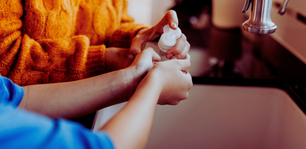
Washing hands is an activity which on the one hand removes dirt from the surface of the skin and on the other hand neutralises harmful bacteria, viruses and other microorganisms. Unlike a traditional solid product, liquid soaps are a much higher yield agent. A small dose of the product allows the formation of enough foam to effectively cleanse the epidermis. Liquid soap also makes daily hand disinfection much more hygienic than using bars of soap touched by different people, which increases the risk of germ transmission. Liquid soap therefore finds numerous applications, among others, in healthcare facilities, office facilities, public toilets and everywhere where tens, hundreds, and often even thousands of people use one cleaning agent.

Professional antibacterial soaps – effective and safe for the skin

In addition to the effective neutralisation of pathogens, liquid antibacterial soaps must meet strict safety standards. Both the chemical composition and the manufacturing process of such agents are subject to stringent sanitary, industrial and dermatological standards. Products dedicated to people with sensitive skin are free of allergens, such as some dyes or fragrances. In times of global pandemics, when frequent hand washing is becoming one of the most effective ways of protecting against viruses, the safety of soaps and disinfectants is of particular importance. This is why we will find antibacterial soaps in the extensive product catalogue of the PCC Group, which, in addition to excellent washing properties and confirmed biocidal efficacy, are characterised by a safe and environmentally friendly chemical composition.

PCC Group liquid soap manufacturer

As a liquid soap manufacturer, the PCC Group offers a wide range of available cleaning preparations, both in the form of ready-to-use mixtures and surfactants. Surfactants can be used in the production of cosmetics for washing and care of the skin, hair styling, perfumes or intimate hygiene products. The wide range of available products includes:
• ROKO Professional liquid soaps, designed for hand washing,
• ROKAcet nonionic surfactants from the group of alkoxylated fatty acids,
• antibacterial liquid soaps for foam dispensers,
• high quality liquid soaps for daily care and hand washing,
• ready Savanti liquid soaps for daily washing and care of hands with the scent of lime, peach, aloe vera and rose
• delicate Brilless hand soap with an energising citrus scent.

Liquid soap production process

In the process of formulating liquid soap , it is crucial to choose the right ingredients, which determine the effectiveness and safety of its use and neutralise a given group of microorganisms. Equally important is the time after which the product takes effect. The best liquid soaps – those with an antibacterial effect and products for professional disinfection used in medical or catering facilities – destroy bacteria, viruses and other microorganisms just a few seconds after application. Other important aspects that should be taken into account by a company producing liquid soaps include the degree of foaming, the speed of foam formation and the ability to rinse it. The effects of the product’s ingredients on the skin must also be taken into account. It is important that they do not cause dryness or irritation. Aesthetic values will also be important for soap users – especially the scent, colour and texture of the soap.

In order to ensure that the prepared mixture complies with the standards and requirements laid down by law, it is necessary to subject the formulation and substances contained in the finished product to rigorous testing. It determines the stability of the formula, as well as the invariability of its aesthetic and disinfecting properties. Liquid soap is also tested for its physical properties such as viscosity or pH and for its antibacterial effectiveness.

Liquid soap from the PCC Group

All products from the PCC Group meet current standards set out in national and European Union legislation. Contractual production of liquid soap guarantees effectiveness and safety, as well as the highest quality, both at home and during use in public facilities or health care facilities. We invite you to read our offer and submit inquiries. We will be happy to prepare a dedicated offer of cooperation for you, while providing professional product advice.

As a manufacturer of antibacterial soap, we strive to ensure the highest quality of our products. Antibacterial soap is available in 5 litre containers. These canisters are milky white and slightly transparent. We have a wide range of antibacterial soap variants as a Manufacturer.