PCC
RegisterLogin Page

Foliar Fertilizers

Foliar fertiliser is a chemical or natural substance applied directly to the leaves of a plant to improve its condition. This approach ensures quick results, as the nutrients are absorbed directly by the leaf tissue.

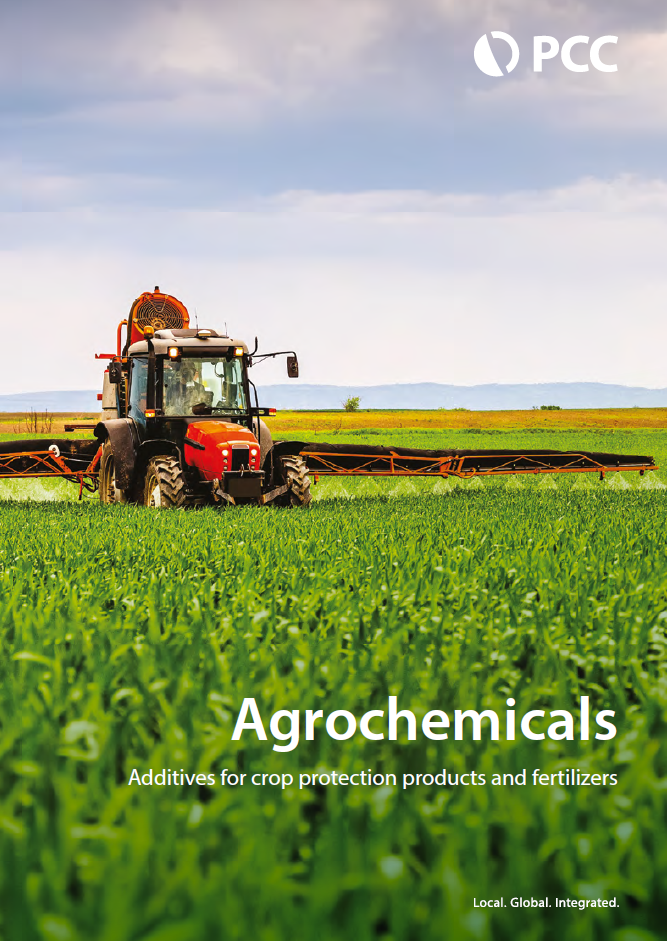
Okładka katalogu
Filters
Function
Composition
Segment
Manufacturer
of 7
ROKAnol®GT5 (C9-16 alcohol ethoxylated) ROKAnol® GT5 belongs to the group of ethoxylated fatty alcohol surfactants. The product belongs to the group of surfactants based on C9-C16 alcohol. Due to its special...
Composition
Alkoxylated alcohols, Ethoxylated alcohols
CAS No.
97043-91-9
ROKAnol®GT5 (C9-16 alcohol ethoxylated)
ROKAnol®GT6 (C9-16 alcohol ethoxylated) ROKAnol® GT6 is a non-ionic surfactant. It belongs to the group of ethoxylated fatty alcohols. The product is part of a series of surfactants based on C9-C16 alcohol....
Composition
Alkoxylated alcohols, Ethoxylated alcohols
CAS No.
97043-91-9
ROKAnol®GT6  (C9-16 alcohol ethoxylated)
ROKAnol®GT6R (C9-16 alcohol ethoxylated) ROKAnol® GT6R belongs to non-ionic surfactants from the group of ethoxylated fatty alcohols with a C9 - C16 chain length. The product belongs to the ROKAnol® GT...
Composition
Alkoxylated alcohols, Ethoxylated alcohols
CAS No.
97043-91-9
ROKAnol®GT6R  (C9-16 alcohol ethoxylated)
ROKAnol®GT7 (C9-16 alcohol ethoxylated) ROKAnol® GT7 belongs to non-ionic surfactants from the group of ethoxylated fatty alcohols with a C9 - C16. chain length. The product belongs to the ROKAnol GT®...
Composition
Alkoxylated alcohols, Ethoxylated alcohols
CAS No.
97043-91-9
ROKAnol®GT7  (C9-16 alcohol ethoxylated)
ROKAnol®GT8 (C9-16 alcohol ethoxylated) ROKAnol® GT8 is a non-ionic surfactant from the group of ethoxylated fatty alcohols with a chain length of C9 - C16. The product belongs to the ROKAnol® GT series....
Composition
Alkoxylated alcohols, Ethoxylated alcohols
CAS No.
97043-91-9
ROKAnol®GT8  (C9-16 alcohol ethoxylated)
ROKAnol®GT9 (C9-16 alcohol ethoxylated) ROKAnol® GT9 belongs to non-ionic surfactants (ethoxylated fatty alcohols with a chain length C9-C16, of the ROKAnol® GT series). ROKAnol® GT9 contains about 100%...
Composition
Alkoxylated alcohols, Ethoxylated alcohols
CAS No.
97043-91-9
ROKAnol®GT9   (C9-16 alcohol ethoxylated)
ROKAnol®GT9W (C9-16 alcohol ethoxylated) ROKAnol GT9W is a non-ionic surfactant from the group of ethoxylated fatty alcohols, with a chain length of C9–C16. The product belongs to the ROKAnol GT line. It...
Composition
Alkoxylated alcohols, Ethoxylated alcohols
CAS No.
97043-91-9
ROKAnol®GT9W  (C9-16 alcohol ethoxylated)
ROKAnol®ID6 ((Alcohol C9-11 ethoxylated, C10) ROKAnol® ID6 belongs to non-ionic surfactants (ethoxylated fatty alcohols, INCI name: Isodeceth-6). The product belongs to the ROKAnol® ID series based on isodecyl...
Composition
Alkoxylated alcohols, Ethoxylated alcohols
CAS No.
78330-20-8
ROKAnol®ID6  ((Alcohol C9-11 ethoxylated, C10)
ROKAnol® IT10W (Isotrideceth-10) ROKAnol IT10W belongs to non-ionic surfactants in the group of ethoxylated fatty alcohols (INCI Isotrideceth-10). The product adds to the large group of surfactants...
Composition
Alkoxylated alcohols, Ethoxylated alcohols
CAS No.
69011-36-5
ROKAnol® IT10W   (Isotrideceth-10)
ROKAnol®L10A (Laureth-10) ROKAnol L10A is a non-ionic surfactant, belonging to the group of ethoxylated fatty alcohols with the INCI name: Laureth-10. The product co-creates a group of surfactants...
Composition
Alkoxylated alcohols, Ethoxylated alcohols
CAS No.
68551-12-2
ROKAnol®L10A  (Laureth-10)
ROKAnol®LP2855 (C12-18 alcohol ethoxylated, propoxylated) ROKAnol® LP2855 is a non-ionic surfactant of the alkoxylated fatty alcohol type. This product is based on a raw material of natural origin. It has the form of a...
Composition
Alkoxylated alcohols
CAS No.
69227-21-0
ROKAnol®LP2855  (C12-18 alcohol ethoxylated, propoxylated)
ROKAnol®GA3 (C10 alcohol, ethoxylated) ROKAnol® GA3 is a nonionic surfactant that belongs to the group of ethoxylated fatty alcohols. The product co-creates a group of surfactants based on C10 Guerbet...
Composition
Alkoxylated alcohols, Ethoxylated alcohols
CAS No.
160875-66-1
ROKAnol®GA3  (C10 alcohol, ethoxylated)
ROKAnol®GA5 (C10 alcohol, ethoxylated) ROKAnol GA5 belongs to nonionic surfactants of the type of ethoxylated fatty alcohols. The product co-creates a group of surfactants based on C10 Guerbet alcohol....
Composition
Alkoxylated alcohols, Ethoxylated alcohols
CAS No.
160875-66-1
ROKAnol®GA5  (C10 alcohol, ethoxylated)
ROKAnol®GA7 (C10 alcohol, ethoxylated) ROKAnol® GA7 is a nonionic surfactant that belongs to the group of ethoxylated fatty alcohols. The product co-creates a group of surfactants based on C10 Guerbet...
Composition
Alkoxylated alcohols, Ethoxylated alcohols
CAS No.
160875-66-1
ROKAnol®GA7  (C10 alcohol, ethoxylated)
ROKAnol® GA7LAW (PEG-7/PPG-2 Propylheptyl ether) ROKAnol® GA7LAW is a non-ionic surfactant from the group of ethoxylated fatty alcohols INCI PEG-7 / PPG-2 Propylheptyl ether. The product belongs to the group of...
Composition
Alkoxylated alcohols
ROKAnol® GA7LAW  (PEG-7/PPG-2 Propylheptyl ether)
ROKAnol®GA7W (C10 alcohol, ethoxylated) ROKAnol® GA7W is a nonionic surfactant that belongs to the group of ethoxylated fatty alcohols. The product co-creates a group of surfactants based on C10 Guerbet...
Composition
Alkoxylated alcohols, Ethoxylated alcohols
CAS No.
160875-66-1
ROKAnol®GA7W   (C10 alcohol, ethoxylated)
ROKAnol®GA8 (C10 alcohol, ethoxylated) ROKAnol® GA8 belongs to nonionic surfactants of the type of ethoxylated fatty alcohols. The product co-creates a group of surfactants based on C10 Guerbet alcohol....
Composition
Alkoxylated alcohols, Ethoxylated alcohols
CAS No.
160875-66-1
ROKAnol®GA8   (C10 alcohol, ethoxylated)
ROKAnol®GA8W (C10 alcohol, ethoxylated) ROKAnol® GA8W belongs to nonionic surfactants of the type of ethoxylated fatty alcohols. The product co-creates a group of surfactants based on C10 Guerbet alcohol....
Composition
Alkoxylated alcohols, Ethoxylated alcohols
CAS No.
160875-66-1
ROKAnol®GA8W  (C10 alcohol, ethoxylated)
ROKAnol®GA9 (C10 alcohol, ethoxylated) ROKAnol® GA9 is a nonionic surfactant that belongs to the group of ethoxylated fatty alcohols. The product co-creates a group of surfactants based on C10 Guerbet...
Composition
Alkoxylated alcohols, Ethoxylated alcohols
CAS No.
160875-66-1
ROKAnol®GA9   (C10 alcohol, ethoxylated)
ROKAnol®GA9W (C10 alcohol, ethoxylated) ROKAnol® GA9W is a nonionic surfactant that belongs to the group of ethoxylated fatty alcohols. The product co-creates a group of surfactants based on C10 Guerbet...
Composition
Alkoxylated alcohols, Ethoxylated alcohols
CAS No.
160875-66-1
ROKAnol®GA9W   (C10 alcohol, ethoxylated)
101 - 120 of 123 products
Items on page: 20

Why is foliar fertilisation so important?

Foliar fertilisation is crucial in modern agriculture due to its speed of action, high efficiency and the possibility of intervention at critical moments in plant development. Application to the leaves stimulates plant activity. It has a beneficial effect on water management (including water uptake from the soil by the plant), which in turn stimulates root growth. As a result, foliar fertilisers accelerate nutrient uptake.

Foliar fertilisers work best when used in conjunction with soil fertiliser, rather than as a substitute, to increase productivity and improve plant health.

In industrial agriculture, foliar fertilisers are a very important tool. Used at key stages of growth, especially in cereal cultivation, they play a crucial role in optimising yields and quality. Foliar fertilisers for cereals are designed to quickly and precisely deliver nutrients at the right stage of development, thus compensating for deficiencies or increasing plant resistance to stress.

Raw materials for the production of foliar fertilisers

When looking for a foliar fertiliser for plants, it is extremely important to pay attention to a number of properties that ensure the desired effectiveness, and these largely depend on the raw materials used in its production.

Foliar fertiliser is a mixture of macro- and microelements. It is applied to plants in liquid form, which is why the high solubility of individual components in water is extremely important. Only nutrients in ionic form are effectively absorbed by the leaves. In addition, the homogeneity of the fertiliser ensures trouble-free application, e.g. it reduces clogging of spray nozzles.

When looking for the optimal foliar fertiliser, it is worth paying attention to its salt index – those with excessively high values can have a negative effect on the plant and weaken its growth.

It is worth remembering that the composition of foliar fertilisers is variable and depends on their intended use. Often, a product intended for one crop species will not be suitable for another. When choosing a foliar fertiliser for specific crops, pay attention to the concentration of individual components and the physical and chemical properties of the fertiliser. Fertilisers must be manufactured from high-quality raw materials and meet quality control standards. The most important groups of raw materials include mineral salts, chelates and adjuvants.

Mineral salts as a source of easily absorbable components

Mineral salts are a fundamental group of raw materials in the production of foliar fertilisers. The most commonly used are sulphates, nitrates and phosphates. The choice is dictated by the type of macronutrient required: most often nitrogen, phosphorus or potassium.

Sources of nitrogen

Urea is the most suitable source of nitrogen for foliar application due to its low salt index and high solubility compared to other nitrogen sources. It stimulates the absorption of other nutrients by increasing the permeability of leaf tissue. However, urea used in foliar sprays should have a low biuret content to minimise the side effects of leaf burn. Other sources of nitrogen can be obtained from ammonium polyphosphates, ammonium thiosulphate and liquid ammonium sulphate.

Sources of phosphorus

Water-soluble raw materials such as ammonium phosphate and potassium phosphate are used in the production of foliar fertilisers. In addition, it is beneficial to combine polyphosphates and orthophosphates – lower risk of leaf burn and more effective absorption.

Sources of potassium

Depending on availability, potassium polyphosphates are an excellent source of potassium with a low salt index and high solubility. Potassium sulphate is also suitable for the production of foliar fertilisers, despite its lower solubility.

Chelates

Chelates are compounds in which a metal ion is bound to an organic molecule by a coordination bond. Chelated micronutrients, thanks to their unique chelate ring structure, provide a higher level of complex stability. This makes them more resistant to chemical decomposition or precipitation, ensuring the effective delivery of essential metal ions to plants. Microelements (copper, zinc, manganese, iron) used in foliar fertilisers in chelated forms are characterised by very good water solubility and stability.

Surfactants

In order to create an effective foliar fertiliser formulation, it is important to include, in addition to the active ingredients, substances that improve the fertiliser’s performance and increase its bioavailability. These are primarily growth regulators, emulsifiers, surface tension reducers (increasing wettability), and even substances that loosen the outer cell layers of leaves.

Due to their properties, surface-active substances, known as surfactants, are commonly used in the agrochemical industry. Thanks to their amphiphilic chemical structure, they stabilise the finished formulation and improve its application properties. They play a key role in increasing the wettability of finished preparations. Foliar fertilisers are administered in the form of aqueous solutions, where high surface tension can hinder the distribution of nutrients. Surfactants effectively overcome this obstacle, allowing water droplets to spread perfectly over the leaf surface.