PCC
RegisterLogin Page

Non-ionic surfactants

Non-ionic surfactants are the most diverse group of compounds in terms of chemical structure. They are characterised by the absence of electrical charge on the hydrophilic group. This neutrality gives them unique application properties.

Okładka katalogu
Filters
Function
Composition
Segment
Manufacturer
of 22
ROKAnol® L80/50W ROKAnol® L80/50W belongs to the group of non-ionic surfactants of alkoxylated fatty alcohols. The product contains about 50% of the active substance. At room temperature...
Composition
Alkoxylated alcohols
CAS No.
68439-51-0
ROKAnol® L80/50W
ROKAnol®LP3034 (Polyoxyalkylene glycol ether) ROKAnol® LP3034 is a non-ionic surfactant of the type of alkoxylated fatty alcohols. Products is a liquid with a low freezing point, i.e. below -20°C. The active...
Composition
Alkoxylated alcohols
CAS No.
120313-48-6
ROKAnol®LP3034  (Polyoxyalkylene glycol ether)
ROKAnol®LP600 (Polyoxyalkylene glycol ether) ROKAnol® LP600 belongs to the group of non-ionic surfactants (alkoxylated fatty alcohols). The product belongs to the ROKAnol® LP series, forming a large group of...
Composition
Alkoxylated alcohols
CAS No.
130454-91-0
ROKAnol®LP600  (Polyoxyalkylene glycol ether)
ROKAnol® T20 Flakes (Ceteareth-20) ROKAnol® T20 flakes is a non-ionic surfactant (INCI: Ceteareth-20). The commercial product is a white solid available in the form of flakes with a waxy consistency....
Composition
Alkoxylated alcohols, Ethoxylated alcohols
CAS No.
68439-49-6
ROKAnol® T20 Flakes (Ceteareth-20)
ROKAnol® T25 (Ceteareth-25) ROKAnol® T25 is a non-ionic surfactant (INCI: Ceteareth-25). The commercial product is a white solid with a waxy consistency. The solidification point of the product...
Composition
Alkoxylated alcohols, Ethoxylated alcohols
CAS No.
68439-49-6
ROKAnol® T25 (Ceteareth-25)
ROKAnol® T25 FLAKES (Ceteareth-25) ROKAnol® T25 flakes is a non-ionic surfactant (INCI: Ceteareth-25). The commercial product is a white solid available in the form of flakes with a waxy consistency....
Composition
Alkoxylated alcohols, Ethoxylated alcohols
CAS No.
68439-49-6
ROKAnol® T25 FLAKES (Ceteareth-25)
ROKAnol®T20 (Ceteareth-20) ROKAnol® T20 is a non-ionic surfactant (INCI: Ceteareth-20). The commercial product is a white solid with a waxy consistency. The solidification point of the product...
Composition
Alkoxylated alcohols, Ethoxylated alcohols
CAS No.
68439-49-6
ROKAnol®T20 (Ceteareth-20)
ROKem Rokem is a detergent product with very good cleaning and washing properties. It is a mixture of non-ionic surfactants, inorganic salts and water. At room temperature,...
Composition
Mixtures
ROKem
ROKwinol 60 (Polysorbate 60) ROKwinol 60 is a nonionic surfactant based on natural raw material. It is an ethoxylated sorbitan monostearate derivative called INCI Polysorbate 60. The product...
Composition
Sorbitan esters
CAS No.
9005-67-8
ROKwinol 60 (Polysorbate 60)
ROKwinol 80 (Polysorbate 80) ROKwinol 80 is a nonionic surfactant based on natural raw material. It is an ethoxylated sorbitan monooleate derivative called INCI Polysorbate 80. The product can...
Composition
Sorbitan esters
CAS No.
9005-65-6
ROKwinol 80 (Polysorbate 80)
Sorbax HO-50 Sorbax HO-50 polyoxyethylated sorbitan esters are used as emulsifiers and solubilizers. These surfactants are used in combination with lower HLB surfactants, particularly...
Composition
Alkoxylated fatty acids
CAS No.
57171-56-9
Sorbax HO-50
Sorbax PML-20 Sorbax PML-20 polyoxyethylated sorbitan esters are used as emulsifiers and solubilizers. These surfactants are used in combination with lower HLB surfactants, particularly...
Composition
Sorbitan esters
CAS No.
9005-64-5
Sorbax PML-20
Sorbax PMO-20 Sorbax PMO-20 polyoxyethylated sorbitan esters are used as emulsifiers and solubilizers. These surfactants are used in combination with lower HLB surfactants, particularly...
Composition
Sorbitan esters
CAS No.
9005-65-6
Sorbax PMO-20
Sorbax PMO-5 Sorbax PMO-5 polyoxyethylated sorbitan esters are used as emulsifiers and solubilizers. These surfactants are used in combination with lower HLB surfactants, particularly...
Composition
Sorbitan esters
CAS No.
9005-65-6
Sorbax PMO-5
Sorbax PTO-20 Sorbax PTO-20 polyoxyethylated sorbitan esters are used as emulsifiers and solubilizers. These surfactants are used in combination with lower HLB surfactants, particularly...
Composition
Sorbitan esters
CAS No.
9005-70-3
Sorbax PTO-20
Sorbax SMO Sorbax SMO sorbitan esters are oil soluble surfactants that are used to prepare stable water in oil emulsions. They are also used in combination with higher HLB...
Composition
Sorbitan esters
CAS No.
1338-43-8
Sorbax SMO
421 - 436 of 436 products
Items on page: 20

Non-ionic surfactants – characteristics and properties

Non-ionic surfactants are part of a large group of surface-active compounds called surfactants. They are characterised by a unique amphiphilic structure, which determines all their properties and applications. Non-ionic surfactants include a large number of synthetic chemicals of various types and structures. They do not dissociate when dissolved in water and are characterised by the widest range of properties, depending on the hydrophilic-lipophilic balance (HLB) ratio.

Properties of non-ionic surfactants:

  • Good emulsifying properties,
  • Ability to modify rheology,
  • High solubility in water,
  • Mostly biodegradable,
  • Compatible with other surface-active compounds,
  • High chemical stability.

Key areas of application for non-ionic surfactants

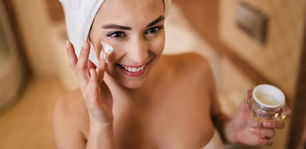
Cosmetic products
Non-ionic surfactants are widely used in the cosmetics industry for the production of ready-made formulations. They have good cleaning properties and are gentle on the skin. They are important ingredients in the production of skin care and cleansing cosmetics. They most often act as emulsifiers. They help to mix substances that are insoluble in water, such as oils and fats. This allows for a smooth, homogeneous consistency of the final product. Selected non-ionic surfactants act as conditioning agents and emollients in cleansing and skincare cosmetics.

Perfumes

Solubilisers, such as non-ionic surfactants, can be ingredients in perfumes. Solubilisation allows substances that are insoluble or difficult to dissolve in water, such as fragrances, plant extracts, vitamins and other oily substances, to be introduced into aqueous and water-alcohol solutions. The solubilising properties of non-ionic surfactants are used not only in perfumes, but also in some cosmetics.

Mining industry

This group of surface compounds can be included in the composition of flame-retardant HFA hydraulic fluids. They are also used in machining fluids and serve as lubricity improvers.

Plant protection products
The excellent emulsifying properties of non-ionic surfactants determine their use in pesticide formulations. They support their formation and maintain the stability of the finished product. The addition of non-ionic surfactants to plant protection products improves their application properties – adhesion and wettability of plant surfaces.

Tanning industry

Some non-ionic surfactants are additives in tanning processes. They provide a softening effect and also improve the processing values and strength of the raw material. They are ideal as washing agents. In addition, they have a high ability to penetrate various fibres.

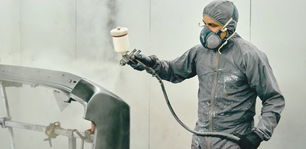
Paint production

Non-ionic surfactants are used in the paint and varnish industry due to their very good emulsifying properties. They support the formation of stable emulsions and aid in the dispersion of dyes. Some non-ionic surfactants have the ability to extend the open time of paints. They also affect the behaviour of the paint during application, facilitating its application and improving its spreadability.

Chemical industry

Raw materials in the form of non-ionic surfactants can be used as intermediates for chemical synthesis. Due to the alkaline nature of selected compounds, they are used to neutralise acidic substances and as a pH regulator. This property is used, among other things, in the production of metalworking fluids, detergents, washing agents, cleaning agents and automotive chemicals.