PCC
RegisterLogin Page

Emulsifiers

Emulsifiers are substances that enable the formation of emulsions and prevent the reaggregation of molecules.

Filters
Function
Composition
Segment
Manufacturer
of 25
EXOfos® PT-A (Phosphoric ester) EXOfos PT-A is an anionic surfactant that belongs to the group of phosphoric esters. This ester is based on alkylarylphenol ethoxylate (styrenated phenol type) and...
Composition
Phosphate esters
CAS No.
105362-40-1
EXOfos® PT-A  (Phosphoric ester)
EXOfos®PT-E (Phosphoric ester) EXOfos PT- E is anionic surfactant classified among phosphate esters. This ester is based on ethoxylated alkyl aryl phenol (styrenated phenol type), and is offered...
Composition
Phosphate esters
CAS No.
90093-37-1
EXOfos®PT-E (Phosphoric ester)
EXOsoft PC35 MB (Potassium Cocoate) EXOsoft PC35 is an anionic surfactant which belongs to the group of soaps with the name defined by INCI as Potassium Cocoate. It is a natural product with 100% renewable...
Composition
Other, Salts
CAS No.
61789-30-8
EXOsoft PC35 MB  (Potassium Cocoate)
POLIkol 1500 FLAKES (PEG-32) POLIkol 1500 Flakes is a product belonging to the polyoxyethylene-glycol group - PEG with an average molecular weight of 1500 (INCI name: PEG-32). The commercial...
Composition
Polyethylene glycols
CAS No.
25322-68-3
POLIkol 1500 FLAKES (PEG-32)
POLIkol 200 (PEG-4) POLIkol 200 belongs to the group of polyoxyethylene glycols (PEG with an average molecular weight of 200). INCI: PEG-4. The product is a colourless liquid well soluble...
Composition
Polyethylene glycols
CAS No.
25322-68-3
POLIkol 200 (PEG-4)
POLIkol 4500 FLAKES (PEG-100) POLIkol 4500 Flakes is a product belonging to the group of polyoxyethylene glycols (PEG with an average molecular weight of 4500), INCI name: PEG-100. The commercial...
Composition
Polyethylene glycols
CAS No.
25322-68-3
POLIkol 4500 FLAKES (PEG-100)
ROKAcet R11 (PEG-11 Castor Oil) ROKAcet R11 is a non-ionic surfactant belonging to the group of polyoxyethylene fatty acid esters of castor oil (INCI name: PEG-11 Castor oil). This surfactant is...
Composition
Alkoxylated fatty acids
CAS No.
61791-12-6
ROKAcet R11 (PEG-11 Castor Oil)
ROKAcet R26 (PEG-26 Castor Oil) ROKAcet R26 is a non-ionic surfactant belonging to the group of polyoxyethylene fatty acid esters of castor oil, INCI name: PEG-26 Castor oil. The surfactant is...
Composition
Alkoxylated fatty acids
CAS No.
61791-12-6
ROKAcet R26  (PEG-26 Castor Oil)
ROKAcet R40 (PEG-40 Castor oil) ROKAcet R40 is a non-ionic surfactant from the group of polyoxyethylene fatty acid esters of castor oil, INCI name: PEG-40 Castor oil. The surfactant is in the form...
Composition
Alkoxylated fatty acids
CAS No.
61791-12-6
ROKAcet R40  (PEG-40 Castor oil)
ROKAmin SR15 (C16-18 alkyl amine) ROKAmin SR15 is a non-ionic surfactant; INCI name: PEG-15 Hydrogenated Tallow Amine. It belongs to the group of ethoxylated fatty amines with an average degree of...
Composition
Alkoxylated fatty amines
CAS No.
61791-26-2
ROKAmin SR15  (C16-18 alkyl amine)
ROKAmin SR22 (C16-18 alkyl amine) ROKAmin SR22 is a non-ionic surfactant (INCI name: PEG-22 Hydrogenated Tallow Amine). It belongs to the group of ethoxylated fatty amines with an average ethoxylation...
Composition
Alkoxylated fatty amines
CAS No.
61791-26-2
ROKAmin SR22  (C16-18 alkyl amine)
ROKAmina®K40 MB (Cocamidopropyl Betaine) ROKAmina K40 belongs to the amphoteric surfactants of the betaine group. The commercial product is an aqueous solution with an active substance content of about...
Composition
Betaines
CAS No.
97862-59-4
ROKAmina®K40 MB (Cocamidopropyl Betaine)
ROKwin 80 (Sorbitan Oleate) ROKwin 80 is a non-ionic surfactant, a derivative of sorbitan and oleic acid. It is obtained in the condensation reaction of sorbitol with oleic acid. It is produced...
Composition
Sorbitan esters
CAS No.
1338-43-8
ROKwin 80 (Sorbitan Oleate)
ROKwinol 20 (Polysorbate 20) ROKwinol 20 is a non-ionic surfactant based on natural raw material. It is an ethoxylated sorbitan monolaurate derivative named INCI Polysorbate 20. The product...
Composition
Sorbitan esters
CAS No.
9005-64-5
ROKwinol 20 (Polysorbate 20)
SULFOROKAnol®L1230/1 (Sodium C12-C14 Laureth Sulfate) SULFOROKAnol L1230/1 is an anionic surface active agent based on ethoxylated lauryl alcohol. The commercial product has the form of a transparent solution with a...
Composition
Alkyl ether sulfates
CAS No.
68891-38-3
SULFOROKAnol®L1230/1 (Sodium C12-C14 Laureth Sulfate)
ABS Acid (Dodecylbenzenesulfonic Acid) ABS acid is an anionic surfactant of the alkylbenzene sulfonate group, in acid form. Due to its acidic form, the product is available with an active content of more...
Composition
Alkylbenzene sulphonates
CAS No.
85536-14-7
ABS Acid (Dodecylbenzenesulfonic Acid)
ABS Acid/1 (Dodecylbenzenesulfonic Acid) ABS/1 is a product of the alkylbenzene sulfonates group, belonging to the group of anionic surfactants. In chemical terms, it is a product very similar to ABS Acid,...
Composition
Alkylbenzene sulphonates
CAS No.
85536-14-7
ABS Acid/1 (Dodecylbenzenesulfonic Acid)
ABSNa 30 (Sodium Dodecylbenzenesulfonate) ABSNa 30 is 30% sodium alkylbenzenesulphonic acid salt and belongs to the group of anionic surfactants. This product is in the form of a clear or turbid liquid of...
Composition
Alkylbenzene sulphonates
CAS No.
68411-30-3
ABSNa 30 (Sodium Dodecylbenzenesulfonate)
ABSNa 50 (Sodium Dodecylbenzene Sulfonate) ABSNa 50 belongs to the group of anionic surfactants and is the sodium salt of alkyl benzene sulfonic acid with a concentration of 50%. The product is in the form...
Composition
Alkylbenzene sulphonates, Salts
CAS No.
68411-30-3
ABSNa 50 (Sodium Dodecylbenzene Sulfonate)
ABSNa 25 (Sodium Dodecylbenzenesulfonate) ABSNa 25 is a sodium salt of alkylbenzene sulfonic acid with the INCI name: Sodium dodecylbenzenesulfonate. It belongs to the group of anionic surfactants. The active...
Composition
Alkylbenzene sulphonates
CAS No.
68411-30-3
ABSNa 25 (Sodium Dodecylbenzenesulfonate)
1 - 20 of 498 products
Items on page: 20

Emulsifiers are substances that enable the formation of emulsions and prevent the reaggregation of molecules.

An emulsion is a colloidal system consisting of at least two immiscible liquids, where one phase is dispersed in the other in the form of droplets.

Emulsifiers are chemical compounds of amphiphilic structure, which means that hydrophilic polar groups (called ‘head’) and hydrophobic non-polar groups (called ‘tail’) are present in their structure. The most common emulsifiers are surfactants. The emulsifier molecules adsorb at the phase boundary, reducing the interfacial tension. After reducing the tension, a spontaneous emulsification process takes place under the influence of the movement of particles. The resulting stable system is called an emulsion.

Two basic types of emulsions are distinguished:

  • oil in water (O/W) – formed as a result of dispersion of a non-polar oil phase droplet in the polar aqueous phase; in this system water is a continuous phase and oil is a dispersed phase,
  • water in oil (W/O) – formed as a result of water dispersion in the oil phase, where the water layer is a dispersed phase and the oil is a continuous phase.

There are two methods for obtaining emulsions:

  • mechanical shaking of immiscible liquids – using shakers or mixers,
  • the use of ultrasound – using an ultrasonic field with thousands of vibrations per second.

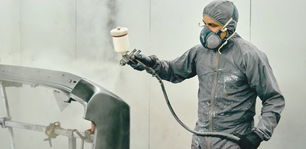
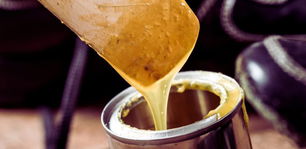
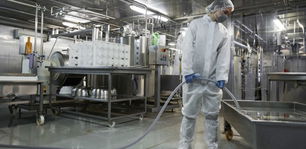
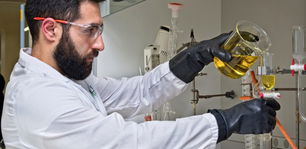
Emulsifiers are used in almost all branches of industry. Among others, they are used in the production of agrochemicals, detergents, paints, varnishes, food products, packaging, cosmetics; cleaning and industrial washing; in the construction, paper, metallurgy, pharmaceutical, fuel and textile industries.