PCC
RegisterLogin Page

Hair Care

Effective hair care is based on the appropriate selection of chemical raw materials that affect both the performance of the cosmetic and the comfort of its use. Raw materials for the production of hair care cosmetics enable the creation of products tailored to various needs – from daily washing, through regeneration, to protection and styling.
Okładka katalogu
Filters
Function
Composition
Segment
Manufacturer
of 5
ROKAmid KAD/2A MB (Cocamide DEA) ROKAmid KAD/2A MB is a non-ionic surfactant with the INCI name ‘Cocamide DEA’. It is based on natural vegetable oils. It has a form of a clear or slightly turbid...
Composition
Alkanoloamides
CAS No.
68155-07-7
ROKAmid KAD/2A MB (Cocamide DEA)
ROKAmid KAD MB (Cocamide DEA) ROKAmid KAD MB is a nonionic surfactant called INCI Cocamide DEA. It is produced on the basis of natural vegetable oils. It has the form of a clear or slightly turbid...
Composition
Alkanoloamides
CAS No.
68155-07-7
ROKAmid KAD MB (Cocamide DEA)
ROKAmid MRZ4 (PEG-4 Rapeseedamide) ROKAmid MRZ4 is a non-ionic surfactant, part of the group of ethoxylated alkanolamides, under the INCI name PEG-4 Rapeseedamide. The product has the form of a liquid...
Composition
Alkoxylated amides
CAS No.
85536-23-8
ROKAmid MRZ4 (PEG-4 Rapeseedamide)
ROKAmin K15 (PEG-15 Cocoamine) ROKAmin K15 is a non-ionic surfactant belonging to the group of ethoxylated coconut amines with an average degree of ethoxylation of 15 moles. It has the form of...
Composition
Alkoxylated fatty amines
CAS No.
61791-14-8
ROKAmin K15 (PEG-15 Cocoamine)
ROKAmina®K30 (Cocamidopropyl Betaine) ROKAmina K30 belongs to the amphoteric surfactants from the betaine group. The commercial product is an aqueous solution with an active content of about 30% and...
Composition
Betaines
CAS No.
97862-59-4
ROKAmina®K30 (Cocamidopropyl Betaine)
ROKAmina®K40 (Cocamidopropyl Betaine) ROKAmina K40 belongs to the amphoteric surfactants of the betaine group. The commercial product is an aqueous solution with an active substance content of about...
Composition
Betaines
CAS No.
97862-59-4
ROKAmina®K40 (Cocamidopropyl Betaine)
ROKAmina®K40HC (Cocamidopropyl Betaine) ROKAmina K40HC is a very high purity amphoteric surfactant from the betaine group. The commercial product is an aqueous solution with an active substance content...
Composition
Betaines
CAS No.
61789-40-0
ROKAmina®K40HC (Cocamidopropyl Betaine)
ROKAmina®K45HC (Cocamidopropyl Betaine) ROKAmina K45HC is a very high purity amphoteric surfactant from the betaine group. Its INCI name is: Cocamidopropyl Betaine. At room temperature it is a pale yellow...
Composition
Betaines
CAS No.
97862-59-4
ROKAmina®K45HC (Cocamidopropyl Betaine)
ROKAmina®K30 MB (Cocamidopropyl Betaine) ROKAmina K30 MB belongs to the amphoteric surfactants from the betaine group. The commercial product is an aqueous solution with an active content of about 30% and...
Composition
Betaines
CAS No.
97862-59-4
ROKAmina®K30 MB (Cocamidopropyl Betaine)
ROKAmina®K30B MB (Coco-betaine) ROKAmina K30B MB is a very high purity product from the group betaine, classified as amphoteric surfactants. The commercial product is a practically colourless aqueous...
Composition
Betaines
CAS No.
66455-29-6
ROKAmina®K30B MB (Coco-betaine)
ROKAmina®K30K (Cocamidopropyl Betaine) ROKAmina K30K is classified as an amphoteric surfactants from the betaines group. The commercial product is a light yellow aqueous solution containing 29 to 32%...
Composition
Betaines
CAS No.
97862-59-4
ROKAmina®K30K (Cocamidopropyl Betaine)
ROKAmina®K40HC MB (Cocamidopropyl Betaine) ROKAmina K40HC MB is a very high purity amphoteric surfactant from the betaine group. The commercial product is an aqueous solution with an active substance content...
Composition
Betaines
CAS No.
97862-59-4
ROKAmina®K40HC MB (Cocamidopropyl Betaine)
ROKAmina®L30B (Lauryl betaine) ROKAmina L30B is a very high-purity product from the betaine group, classified as an amphoteric surfactant. The commercial product is a virtually colourless aqueous...
Composition
Betaines
CAS No.
66455-29-6
ROKAmina®L30B (Lauryl betaine)
ROKAmina®L30B MB (Lauryl betaine) ROKAmina L30B MB is a very high-purity product from the betaine group, classified as an amphoteric surfactant. The raw material included in ROKAmina L30B MB is a...
Composition
Betaines
CAS No.
66455-29-6
ROKAmina®L30B MB (Lauryl betaine)
ROKAnol®K14 (Cetoleth-14) ROKAnol® K14 is a non-ionic surfactant belonging to the group of ethoxylated fatty alcohols (INCI name: Cetoleth–14). The product is manufactured from raw materials...
Composition
Alkoxylated alcohols, Ethoxylated alcohols
CAS No.
68920-66-1
ROKAnol®K14  (Cetoleth-14)
ROKAnol®K18 (Cetoleth-18) ROKAnol® K18 is a non-ionic surfactant that belongs to the group of ethoxylated fatty alcohols. The product is manufactured on the basis of natural raw materials....
Composition
Alkoxylated alcohols, Ethoxylated alcohols
CAS No.
68920-66-1
ROKAnol®K18  (Cetoleth-18)
ROKAnol®K3 (Cetoleth-3) ROKAnol® K3 is a non-ionic surfactant belonging to the group of ethoxylated fatty alcohols (INCI name: Cetoleth-3). The product is manufactured from raw materials...
Composition
Alkoxylated alcohols, Ethoxylated alcohols
CAS No.
68920-66-1
ROKAnol®K3  (Cetoleth-3)
ROKAnol® LN75/50 (PEG-75 Lanolin) ROKAnol LN75 / 50 is a non-ionic surfactant called INCI: PEG-75 Lanolin, which is an ethoxylated derivative of lanolin, used mainly in cosmetic applications. The...
Composition
Alkoxylated alcohols, Ethoxylated alcohols
ROKAnol® LN75/50 (PEG-75 Lanolin)
ROKAnol® LN75K (PEG-75 Lanolin) ROKAnol® LN75K is a non-ionic surfactant (INCI name: PEG-75 Lanolin), an ethoxylated derivative of lanolin, used mainly in cosmetic applications. This surfactant...
Composition
Alkoxylated alcohols, Ethoxylated alcohols
CAS No.
61790-81-6
ROKAnol® LN75K (PEG-75 Lanolin)
ROKAnol®O10 (Oleth-10) ROKAnol® O10 belongs to non-ionic surfactants from the group of ethoxylated fatty alcohols (INCI name: Oleth-10) of hydrophilic character. At room temperature it...
Composition
Alkoxylated alcohols
CAS No.
9004-98-3
ROKAnol®O10  (Oleth-10)
21 - 40 of 85 products
Items on page: 20

The role of raw materials in the production of hair care cosmetics

In the hair care production process, raw materials are selected in such a way as to ensure:

  • effective yet gentle cleansing of the scalp,
  • conditioning and smoothing the hair fibre,
  • stability of the cosmetic’s consistency,
  • adequate foaming and ease of rinsing,
  • protecting the hair from dryness and damage.

Examples of hair care cosmetics

Chemical raw materials used in the production of hair care cosmetics are used in a wide range of products, such as:

  • Shampoos,
  • Conditioners,
  • Masks,
  • Leave-in products, e.g. conditioners and heat protection products,
  • Oils,
  • Serums,
  • 2-in-1 cosmetics.

Raw materials used in the production of hair care cosmetics

Raw materials used in the production of hair care cosmetics are divided into several key groups of ingredients, which together determine the effectiveness, stability and comfort of use of the finished products. These include:

  • Surfactants,
  • Emulsifiers and solubilisers,
  • Emollients and humectants,
  • Rheology modifiers,
  • Stabilisers,
  • Excipients.

Surfactants – the basis of cleansing

Surfactants are a key group of chemical raw materials used in the production of shampoos and cleansing products. They are responsible for removing impurities, sebum and styling residues. Depending on the formulation requirements, anionic, non-ionic and amphoteric surfactants are used to achieve the right balance between cleansing effectiveness and gentleness.

Emulsifiers and solubilisers – formulation homogeneity

Hair care cosmetics often contain oil-based ingredients, fragrances or conditioning components that require a stable combination with the aqueous phase. Emulsifiers and solubilisers enable the creation of homogeneous, stable formulations without the risk of product separation.

Conditioning and softening agents

Raw materials that improve the properties of the hair fibre play an important role in the production of hair care cosmetics. These ingredients help to smooth, reduce frizz and improve the elasticity of the hair. In addition, they improve the comfort of use of the cosmetic, giving the hair softness and shine.

Rheology modifiers

Thickeners and consistency stabilisers allow you to achieve the desired texture of shampoos, masks and conditioners. These raw materials affect the viscosity of the product, its stability over time and ease of dosing, which is important both technologically and in terms of use.

Functional additives – sensory properties and comfort of use

This group includes substances that improve the user experience or supplementary properties of formulations, e.g. increase foaming, improve smoothness, affect fragrance or pH stability. The PCC Group’s offer includes, for example:

  • High-foaming agents that affect foam quality, most commonly used in shampoos and shower gels. These include products from the ROKAmina® and SULFOROKAnol® series.
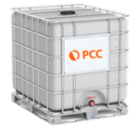
  • Pearling agents, i.e. EXOpearl N and EXOpearl SF, are chemical raw materials which, when combined with water, form a milky dispersion with a pearl effect, giving a visual pearl shine.

Benefits, safety and compliance with European regulations

Chemical raw materials for the production of hair care cosmetics must meet the requirements of the European market in terms of quality and safety. Their use is based on compliance with applicable regulations, in particular Regulation (EC) No 1223/2009 on cosmetic products and REACH regulations. The availability of technical documentation, the assessment of physicochemical properties and the predictability of performance in finished formulations are also of key importance.