Crossin® Soft Plus is a two-component polyurethane system designed for applying interior thermal and acoustic insulation using the spray application method. The system produces an open-cell, rigid polyurethane foam with self-extinguishing properties, characterized by a thermal conductivity coefficient of λD = 0.036 W/(m·K) and a fire reaction class of E.
The system does not contain ozone-depleting blowing agents.
Crossin® Soft Plus consists of the polyol component Crossin® Soft Plus Poly and the isocyanate component ISO Component B. The components are mixed in a 100:100 volume ratio using specialized foaming units equipped with a spray head.
The system is used for insulating roofs, attics, canopies, ceilings, and walls. It can be applied to wooden, masonry, concrete, steel, and frame structures.
Crossin® Soft Plus is used in residential, industrial, and public buildings.
Main application advantages of the product:
Application of interior thermal and acoustic insulation using spray technology;
Suitable for roofs, attics, canopies, ceilings, and walls;
Production of open-cell foam—the closed-cell content is less than 10%;
Low thermal conductivity: λmean,i = 0.0344 W/(m·K) and λD accounting for aging = 0.036 W/(m·K);
Suitable for use in wooden, masonry, concrete, steel, and frame structures;
Confirmed fire reaction class E;
Low short-term water absorption under partial immersion: Wp ≤ 0.89 kg/m² and water vapor diffusion resistance factor μ = 6;
Suitable for use in residential, industrial, and public buildings;
Contains no ozone-depleting blowing agents.
Mechanical properties of polyurethane foam produced using the Crossin® Soft Plus system:
Core density: ≥ 6.5 kg/m³;
Fire reaction classification: E;
Short-term water absorption under partial immersion: Wp ≤ 0.89 kg/m²;
Compressive stress at 10% relative deformation: σ10 ≥ 5 kPa;
Water vapor diffusion resistance factor: μ = 6;
Dimensional stability at 70°C and 90% relative humidity after 48 h: DS(70,90)4;
Dimensional stability at −20°C after 48 h: DS(−20,−)4;
Foam adhesion perpendicular to the substrate / tensile strength: ≥ 6 kPa;
Closed-cell content: < 10%.
The foam achieves its full mechanical properties after 48 hours of curing.
To ensure that the sprayed foam retains all its properties, it is absolutely essential to do the following before starting work:
Prepare the substrate by removing dust, oil, loose particles, and other contaminants that reduce adhesion. The moisture content of porous substrates should not exceed 15%, and non-porous substrates should be dry. Adjacent surfaces, floors, and equipment should be protected from accidental contamination with foam.
Both components should be heated to a temperature of 30–40°C. The POLY component requires thorough mixing approximately one hour before application begins, followed by continued mixing during spraying. The ISO component does not require mixing. The volume ratio of POLY to ISO is 100:100.
The recommended heating temperature for the components and hoses is 50–60°C, and the component pressure is 80–110 bar. The pressure settings for both components should be the same. The recommended ambient temperature is 15–35°C, the substrate temperature is 15–50°C, and the relative ambient humidity should not exceed 70%.
According to the technical data sheet, spraying should be performed to achieve the thickest possible layers, exceeding 100 mm. The next layer may be applied once the foam has stabilized and its temperature has dropped below 30°C. All insulation layers should be applied within a single day.
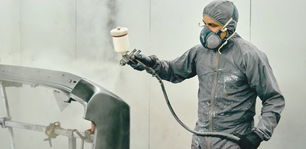
After application, ventilate the room until the odor dissipates. If ventilation is insufficient, use forced air circulation. Foam exposed to direct UV radiation must be protected. During application, follow the equipment manufacturer’s instructions and the information provided in the safety data sheets for both components.
Properties and applications
Production of rigid open-cell polyurethane foam;
Production of insulation foam with a λD value of 0.036 W/(m·K);
Installation of interior thermal and acoustic insulation using the spray application method;
Production of foam with fire reaction class E and low water absorption;
Insulation of roofs, attics, canopies, ceilings, and walls;
Application in residential, industrial, and public buildings;
Use in wooden, masonry, concrete, steel, and frame structures;
Production of foam with a closed-cell content below 10% and a water vapor diffusion resistance coefficient of μ = 6.
PCC Prodex Sp. z o.o. is a long-term manufacturer of one and two-component polyurethane systems used, for example to produce rigid and semi-rigid insulation materials, insulating spray foams or various types of glue.
All the above information related to the product are provided according to the best knowledge of the manufacturer and published in good faith. However, the manufacturer does not guarantee the information and contents of this document are complete and accurate, and shall not be liable for the results of using them. The user is obliged to verify and confirm the information and contents of this documentation on his/her own. The manufacturer reserves the right to change the content of this document at any time without stating reasons of such changes.