PCC
RegisterLogin Page

Rheology modifiers

Rheology modifiers are a group of chemical additives used to regulate the flow properties of materials. They work by controlling the viscosity, consistency and stability of liquid and semi-liquid systems. Due to their ability to precisely shape rheological parameters, these modifiers are an important element in the design of modern formulation systems.

Filters
Function
Composition
Segment
Manufacturer
of 4
ROKAmina®K30 MB (Cocamidopropyl Betaine) ROKAmina K30 MB belongs to the amphoteric surfactants from the betaine group. The commercial product is an aqueous solution with an active content of about 30% and...
Composition
Betaines
CAS No.
97862-59-4
ROKAmina®K30 MB (Cocamidopropyl Betaine)
ROKAmina®K30B MB (Coco-betaine) ROKAmina K30B MB is a very high purity product from the group betaine, classified as amphoteric surfactants. The commercial product is a practically colourless aqueous...
Composition
Betaines
CAS No.
66455-29-6
ROKAmina®K30B MB (Coco-betaine)
ROKAmina®K30K (Cocamidopropyl Betaine) ROKAmina K30K is classified as an amphoteric surfactants from the betaines group. The commercial product is a light yellow aqueous solution containing 29 to 32%...
Composition
Betaines
CAS No.
97862-59-4
ROKAmina®K30K (Cocamidopropyl Betaine)
ROKAmina®K40HC MB (Cocamidopropyl Betaine) ROKAmina K40HC MB is a very high purity amphoteric surfactant from the betaine group. The commercial product is an aqueous solution with an active substance content...
Composition
Betaines
CAS No.
97862-59-4
ROKAmina®K40HC MB (Cocamidopropyl Betaine)
ROKAmina®L30B (Lauryl betaine) ROKAmina L30B is a very high-purity product from the betaine group, classified as an amphoteric surfactant. The commercial product is a virtually colourless aqueous...
Composition
Betaines
CAS No.
66455-29-6
ROKAmina®L30B (Lauryl betaine)
ROKAmina®L30B MB (Lauryl betaine) ROKAmina L30B MB is a very high-purity product from the betaine group, classified as an amphoteric surfactant. The raw material included in ROKAmina L30B MB is a...
Composition
Betaines
CAS No.
66455-29-6
ROKAmina®L30B MB (Lauryl betaine)
ROKAnol® L3A (Laureth-3) ROKAnol® L3A is a non-ionic surfactant belonging to the group of ethoxylated fatty alcohols (INCI name: Laureth-3). The product co-creates a group of surfactants...
Composition
Alkoxylated alcohols, Ethoxylated alcohols
CAS No.
68551-12-2
ROKAnol® L3A (Laureth-3)
ROKAnol® LK2 (Laureth-2) ROKAnol® LK2 is a non-ionic surfactant belonging to the group of ethoxylated fatty alcohols (INCI name: Laureth-2.) The product is part of a group of surfactants...
Composition
Alkoxylated alcohols, Ethoxylated alcohols
CAS No.
68439-50-9
ROKAnol® LK2 (Laureth-2)
ROKAnol® LK3 (Laureth-3) ROKAnol® LK3 is a non-ionic surfactant belonging to the group of ethoxylated fatty alcohols called INCI: Laureth-3. The product is part of a group of surfactants...
Composition
Alkoxylated alcohols, Ethoxylated alcohols
CAS No.
68439-50-9
ROKAnol® LK3 (Laureth-3)
ROKAnol® LN75/50 (PEG-75 Lanolin) ROKAnol LN75 / 50 is a non-ionic surfactant called INCI: PEG-75 Lanolin, which is an ethoxylated derivative of lanolin, used mainly in cosmetic applications. The...
Composition
Alkoxylated alcohols, Ethoxylated alcohols
ROKAnol® LN75/50 (PEG-75 Lanolin)
ROKAnol® LN75K (PEG-75 Lanolin) ROKAnol® LN75K is a non-ionic surfactant (INCI name: PEG-75 Lanolin), an ethoxylated derivative of lanolin, used mainly in cosmetic applications. This surfactant...
Composition
Alkoxylated alcohols, Ethoxylated alcohols
CAS No.
61790-81-6
ROKAnol® LN75K (PEG-75 Lanolin)
ROKAnol®O3 (Oleth-3) ROKAnol® O3 belongs to non-ionic surfactants from the group of ethoxylated fatty alcohols (INCI name: Oleth-3) of a moderately lipophilic character. It is produced...
Composition
Alkoxylated alcohols
CAS No.
9004-98-2
ROKAnol®O3 (Oleth-3)
ROKAnol® O5 (Oleth-5) ROKAnol® O5 belongs to non-ionic surfactants from the group of ethoxylated fatty alcohols (INCI name: Oleth-5). The product is available in the form of a straw to...
Composition
Alkoxylated alcohols
CAS No.
9004-98-2
ROKAnol® O5 (Oleth-5)
ROKAnol®T6 (Ceteareth-6) ROKAnol® T6 is a non-ionic surfactant belonging to the group of ethoxylated fatty alcohols (INCI name: Ceteareth-6). The product is of natural origin, based on linear...
Composition
Alkoxylated alcohols, Ethoxylated alcohols
CAS No.
68439-49-6
ROKAnol®T6 (Ceteareth-6)
ROKAnol®D3W MB (Deceth-3) ROKAnol D3W MB is a non-ionic surfactant belonging to the group of ethoxylated fatty alcohols (INCI name: Deceth-3). It is a clear liquid with a maximum colour of...
Composition
Alkoxylated alcohols, Ethoxylated alcohols
CAS No.
26183-52-8
ROKAnol®D3W MB (Deceth-3)
ROKAnol®G12 (GLYCERETH-12) ROKAnol G12 belongs to non-ionic surfactants from the group of ethoxylated glycerins with an average degree of ethoxylation of about 12 moles. The product is a clear,...
Composition
Alkoxylated alcohols, Ethoxylated polyhydric alcohols
CAS No.
31694-55-0
ROKAnol®G12  (GLYCERETH-12)
ROKAnol®G15 (Ethoxylated glycerin) ROKAnol G15 belongs to non-ionic surfactants of the ethoxylated glycerine type with an average degree of ethoxidation of about 15 moles. The product is a clear,...
Composition
Alkoxylated alcohols, Ethoxylated polyhydric alcohols
CAS No.
31694-55-0
ROKAnol®G15  (Ethoxylated glycerin)
ROKAnol® L2 (Laureth-2) ROKAnol® L2 is a non-ionic surfactant (ethoxylated fatty alcohols, INCI name: Laureth-2). The product belongs to the group of surfactants based on lauryl alcohol....
Composition
Alkoxylated alcohols, Ethoxylated alcohols
CAS No.
68439-50-9
ROKAnol® L2  (Laureth-2)
ROKAnol® L2 MB (Laureth-2) ROKAnol L2 MB is a non-ionic surfactant used as an emulsifier and dispersant in personal hygiene products. Product exhibits properties of viscosity adjusting of...
Composition
Alkoxylated alcohols, Ethoxylated alcohols
CAS No.
68439-50-9
ROKAnol® L2 MB (Laureth-2)
ROKAnol® LK2 MB (Laureth-2) ROKAnol LK2 MB is a non-ionic surfactant belonging to the group of ethoxylated fatty alcohols (INCI name: Laureth-2.) The product is part of a group of surfactants...
Composition
Alkoxylated alcohols, Ethoxylated alcohols
CAS No.
68439-50-9
ROKAnol® LK2 MB (Laureth-2)
41 - 60 of 73 products
Items on page: 20

Chemical basis of rheology and modifiers

Rheology describes the behaviour of materials under the influence of external forces, in particular their susceptibility to flow and deformation. The standard parameter is viscosity (η), i.e. the ratio of shear stress to deformation rate.

Materials can exhibit Newtonian behaviour, in which viscosity remains constant at a given temperature and is independent of the shear rate, which is characteristic of water and simple solvents, among others. In the case of non-Newtonian behaviour, viscosity changes under mechanical load – it may decrease with increasing shear rate, increase or change over time at constant shear, as is the case in thixotropic systems.

Mechanism of network structure formation in the continuous phase

Many rheology modifiers work by forming dynamic, microscopic network structures in the continuous phase as a result of reversible physicochemical interactions, such as hydrogen bonding, electrostatic interactions and hydrophobic associations. The formed three-dimensional network increases flow resistance at low shear rates, stabilising dispersions and limiting sedimentation. Under shear, this structure undergoes temporary destruction or reorganisation, which reduces viscosity, and after the load ceases, it rebuilds, restoring the original rheological properties of the system.

Cross-linking by hydrodynamic interactions

High molecular weight polymers introduced as modifiers, e.g. HEUR – urethane viscosity modifiers, can bind to resin or polymer chains in the system, leading to molecular association. These interactions of mutual swelling and binding contribute to the increase in viscosity and the formation of a rheological structure effective at low shear rates.

Mineral and network mechanisms

Some inorganic modifiers, e.g. bentonites, organophilic clays, form dense structures in the presence of a medium, often water, which effectively increase viscosity and resistance to particle sedimentation. Such mechanisms are used in paints and coatings to stabilise pigments and prevent the solid phase from settling.

Rheological effects in practice

Viscosity control

The main function is to adjust the viscosity to the application process: the product must be fluid enough to allow mixing, pumping or spraying, and at the same time viscous enough to prevent running and stabilise pigment suspensions or other solid phases.

Liquid memory

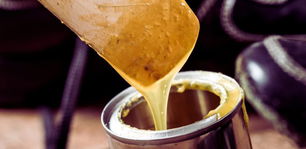
In many formulations, thixotropy is desirable, i.e. a phenomenon in which viscosity decreases under shear, e.g. mixing or brush application, and rebuilds after the force ceases, which stabilises the product at rest.

Dispersion stabilisation

Rheology modifiers increase the stability of pigment and particle suspensions, reducing their tendency to sediment during storage. By interacting with the continuous phase and particles, the change in the rheological profile counteracts phase separation.

Examples of rheology modifiers

Water-based polymer modifiers

Products in this group are mainly polyethylene glycols (PEG) of various molecular weights, which affect the viscosity and flow behaviour of systems by changing molecular interactions in the continuous phase. They act, among other things, as solubilisers and humectants, which, by binding water and forming hydration layers, can affect the viscosity and stability of dispersions.

Specific surfactants

This group includes surfactants which, in addition to their typical functions, can affect rheological properties, thicken, change consistency and stabilise continuous phase structures. Their action is often associative, involving the formation of micelles or aggregates that interact with macromolecules or other components of the system.

Alkanolamides

Alkanolamides appear as surfactants with thickening and rheological properties, especially in the presence of other surfactants, e.g. anionic ones.

Products with specific rheological effects in construction / cement dispersions

Not all products in this category are surfactants or PEGs. There are also polymeric functional additives used in construction that improve the rheological properties of concrete mixes through polymer-particle surface interaction mechanisms. An example of such a substance is a 50% aqueous solution of polycarboxylate copolymer.
Summary of the importance of rheology modifiers in industrial formulations

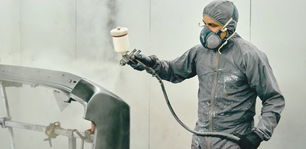
In many industries, rheology modifiers are crucial for controlling the production process, application and performance properties. In paints and coatings, they determine:

  • resistance to sagging after application,
  • pigment and additive stability,
  • ease of pumping and application,
  • formation of a coating film of the desired thickness,
  • thixotropic profile at varying shear rates.

In cosmetic and household chemical products, modifiers also affect texture and consistency, which translates into sensory sensations and application comfort, although the molecular mechanisms of interaction remain similar.