PCC
RegisterLogin Page

Plant Protection Products

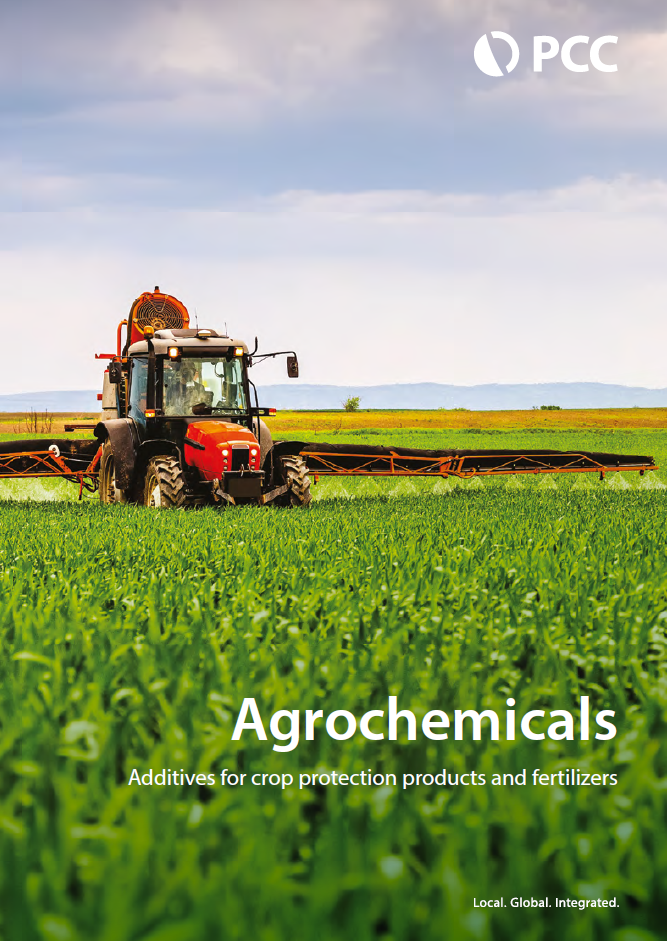
Effective crop protection is crucial to ensuring food security. Plant protection products are used in agriculture to prevent the growth and destruction of weeds and pests. They play an important role in the lives of individuals and communities, bringing many benefits to both producers and consumers.
Okładka katalogu
Filters
Function
Composition
Segment
Manufacturer
of 7
SULFOROKAnol® L225/1 MB (Sodium C12-C14 Laureth Sulfate) SULFOROKAnol L225/1 MB is an anionic surfactant of the group of alkyl ether sulphates (INCI name: Sodium Laureth Sulphate). The product is available as an approximately...
Composition
Alkyl ether sulfates
CAS No.
68891-38-3
SULFOROKAnol® L225/1 MB  (Sodium C12-C14 Laureth Sulfate)
SULFOROKAnol® L270/1 MB (Sodium C12-C14 Laureth Sulfate) SULFOROKAnol L270/1 MB is an anionic surfactant from the group of alkyl ether sulphates (INCI name: Sodium Laureth Sulphate). It is based mainly on raw material...
Composition
Alkyl ether sulfates
CAS No.
68891-38-3
SULFOROKAnol® L270/1 MB  (Sodium C12-C14 Laureth Sulfate)
SULFOROKAnol® L270/1A MB (Sodium C12-C14 Laureth Sulfate) SULFOROKAnol L270/1A MB is an anionic surfactant from the group of alkyl ether sulphates (INCI name: Sodium Laureth Sulphate). It is based mainly on raw material...
Composition
Alkyl ether sulfates
CAS No.
68891-38-3
SULFOROKAnol® L270/1A MB   (Sodium C12-C14 Laureth Sulfate)
Sulfobursztynian DOSS70GP (Diethylhexyl Sodium Sulfosuccinate) SULFOSUCCINATE DOSS70GP is an anionic surfactant with a concentrated active substance content (70%) in propylene glycol (INCI name: Diethylhexyl Sodium Sulfosuccinate)....
Composition
Sulfosuccinates
CAS No.
577-11-7
Sulfobursztynian DOSS70GP (Diethylhexyl Sodium Sulfosuccinate)
Fertilizer Lime 20W Ready to use Fertilizer lime is a professional product designed to improve soil quality and provide essential nutrients for plants. It is a mineral substance containing at least...
Composition
Mixtures
Fertilizer Lime 20W
Caustic soda flakes Sodium hydroxide in solid form, also called caustic soda, is an inorganic chemical compound belonging to the strongest alkali. In solid form, it is a white substance...
Composition
Alkali
CAS No.
1310-73-2
Caustic soda flakes
Caustic soda lye 50% solution Sodium hydroxide is an inorganic chemical compound of the hydroxide group, belonging to the strongest alkali. In liquid form it is a colourless, odourless and non-flammable...
Composition
Alkali
CAS No.
1310-73-2
Caustic soda lye 50% solution
Chlorobenzene Chlorobenzene, also known as monochlorobenzene (MCB), is a colourless, volatile, water-insoluble liquid with a light, pleasant almond fragrance. It belongs to the...
Composition
Chlorine derivatives
CAS No.
108-90-7
Chlorobenzene
Dichloropropane Dichloropropane (DCP) is a clear, colorless liquid with no mechanical impurities with a characteristic odor. Dichloropropane is obtained in the production of propylene...
Composition
Chlorine derivatives
CAS No.
78-87-5
Dichloropropane
Hydrochloric acid 33% Hydrochloric acid 33% grade is a by-product of MCAA (monochloroacetic acid) production process. It is highly corrosive, has a pungent, irritating smell, transparent...
Composition
Non-organic acids
CAS No.
7647-01-0
Hydrochloric acid 33%
Hydrochloric acid for food grade industry 33% Hydrochloric acid food grade is a chemical compound that is an aqueous solution of hydrogen chloride gas. It has strong corrosive properties, a strong, irritating...
Composition
Non-organic acids
CAS No.
7647-01-0
Hydrochloric acid for food grade industry 33%
Hydrochloric acid synthetic, min. 33% Hydrochloric acid synthetic is a chemical compound which is an aqueous solution of hydrogen chloride gas. It has strong corrosive properties, a strong, irritating...
Composition
Non-organic acids
CAS No.
7647-01-0
Hydrochloric acid synthetic, min. 33%
Caustic soda lye 25% solution Sodium hydroxide (25% solution) is an inorganic chemical compound of the hydroxide group, belonging to the strongest alkali. In liquid form it is a colourless, odourless...
Composition
Alkali
CAS No.
1310-73-2
Caustic soda lye 25% solution
Caustic soda lye 30% solution Sodium hydroxide (30% solution) is an inorganic chemical compound of the hydroxide group, belonging to the strongest alkali. In liquid form it is a colourless, odourless...
Composition
Alkali
CAS No.
1310-73-2
Caustic soda lye 30% solution
Caustic soda lye 35% solution Sodium hydroxide (35% solution) is an inorganic chemical compound of the hydroxide group, belonging to the strongest alkali. In liquid form it is a colourless, odourless...
Composition
Alkali
CAS No.
1310-73-2
Caustic soda lye 35% solution
Caustic soda lye 40% solution Sodium hydroxide (40% solution) is an inorganic chemical compound of the hydroxide group, belonging to the strongest alkali. In liquid form it is a colourless, odourless...
Composition
Alkali
CAS No.
1310-73-2
Caustic soda lye 40% solution
Caustic soda lye 45% solution Sodium hydroxide (45% solution) is an inorganic chemical compound of the hydroxide group, belonging to the strongest alkali. In liquid form it is a colourless, odourless...
Composition
Alkali
CAS No.
1310-73-2
Caustic soda lye 45% solution
Paradichlorobenzene Paradichlorobenzene is a white solid with a characteristic penetrating odour. Paradichlorobenzene is also known as 1,4-dichlorobenzene, paradichlorobenzol, p-DCB...
Composition
Chlorine derivatives
CAS No.
106-46-7
Paradichlorobenzene
Pure hydrochloric acid 37% Hydrochloric acid pure grade (HCl) is a chemical compound that is an aqueous solution of hydrogen chloride gas. It has strong corrosive properties, a strong, irritating...
Composition
Non-organic acids
CAS No.
7647-01-0
Pure hydrochloric acid 37%
121 - 139 of 139 products
Items on page: 20

Classification of plant protection products
  • Herbicides are phytotoxic chemical compounds used to control weeds. They exhibit varying degrees of specificity. They contribute to the inhibition of the growth of selected plants. The main active ingredient used in herbicides is glyphosate. Phosphorus derivatives (e.g. phosphorus oxychloride, phosphorus trichloride) and monochloroacetic acid are also used for synthesis.
  • Fungicides – are products used to kill or inhibit the growth of fungi. They are usually used to control parasitic fungi that cause economic damage to crops or ornamental plants or threaten the health of domestic animals and humans. Their action mainly consists in damaging the cell membranes of fungi or disrupting energy production in fungal cells.
  • Insecticides are chemicals used to control insects by killing them and preventing unwanted or destructive behaviour. They are classified based on their structure and mode of action. Paradichlorobenzene, among others, is used as an insecticide and fungicide. Its use is due to the strong odour it produces when in contact with air. This repels insects such as moths and moths.
  • Growth regulators – affect the physiological and biochemical processes of plants. In particular, they regulate the processes of photosynthesis, cell division and the synthesis of enzymes and vitamins.

In addition, agents are used to combat other types of pests:

  • Molluscicides – their task is to control snails. They are scattered in the form of granules, which prevent snails from reaching plants.
  • Nematocides – dedicated to controlling nematodes. Applied to the soil,
  • Acaricides – control mites.

Raw materials for the production of plant protection products

At the production stage, suppliers provide the necessary raw materials – for example, petrochemical derivatives (chemicals, solvents, petroleum by-products) and minerals (phosphates, potash ore, sulphur) – which are the building blocks for the production of agrochemicals. These raw materials are used to produce active substances that protect against pests or provide proper nutrition for plants. The active ingredients are then mixed with inert adjuvants, solvents and additives to form the final product (e.g. emulsion concentrates, granules, coated fertilisers) for safe and effective use.

Active ingredients

They are also interchangeably referred to as active substances. They are the foundation of effective plant protection. They are responsible for controlling pests, diseases and weeds, ensuring healthy plant growth and high yields.

A wide range of compounds, both organic and inorganic, are used as active ingredients in plant protection products. These include organochlorine compounds (chlorinated hydrocarbons), organophosphorus compounds (usually with an ester structure) and carbamic acid derivatives (urethanes). The type of active ingredient depends on the end use of the selected plant protection product. For example, in herbicides, one of the most popular active ingredients is glyphosate. From a chemical point of view, it is N-(phosphonomethyl)glycine. This compound belongs to the group of phosphonates, which are derivatives of phosphonic acid. However, herbicides also use derivatives of phenoxycarboxylic acids, triazine derivatives and chloridazon.

Adjuvants

An adjuvant is a substance that does not have significant pesticidal properties but is added to enhance or modify the effectiveness of a plant protection product. A wide range of chemical compounds can act as adjuvants.

The most important auxiliary ingredients used in formulations:

  • Solvents – are the most important factor determining the functionality of the formulation. Due to its low cost and lack of toxicity, water is most commonly used. For active ingredients that are insoluble in water, aromatic solvents or, less commonly, aliphatic hydrocarbons are used.
  • Wetting agents – they support the effective distribution of the plant protection product on leaves and stems, intensifying the product’s action.
  • Surfactants – these are a wide range of surface-active compounds, widely used in the agrochemical industry. In plant protection products, their tasks include reducing surface tension, emulsifying the finished formulation and evenly dispersing all ingredients.
  • Adhesion enhancers – facilitate the adhesion of plant protection products to the surface of the plant or substrate.
  • Buffers – maintain a constant pH.
  • Inert fillers – facilitate product application.
  • Anti-foaming agents – effectively reduce the amount of foam formed in systems where substances with strong foaming properties, such as surfactants, are present.