PCC
RegisterLogin Page

Building & Construction

PCC Group meets the high requirements of contemporary market and offers a wide range of products for the construction industry. It includes the modern, technologically advanced and environmentally friendly products that comply with the highest quality standards.
Okładka katalogu
Filters
Function
Composition
Segment
Manufacturer
of 15
POLIkol 600 (PEG-12) POLIkol 600 belongs to the group of polyoxyethylene glycols (PEG with an average molecular weight of 600). INCI: PEG-12. The product is available as a high viscosity...
Composition
Polyethylene glycols
CAS No.
25322-68-3
POLIkol 600 (PEG-12)
POLIkol 6000 (PEG-135) POLIkol 6000 is a product belonging to the group of polyoxyethylene glycols (PEG with an average molecular weight of 6000), INCI name: PEG-135. The commercial product...
Composition
Polyethylene glycols
CAS No.
25322-68-3
POLIkol 6000 (PEG-135)
POLIkol 6000 FLAKES (PEG-135) POLIkol 6000 Flakes is a product belonging to the group of polyoxyethylene glycols (PEG with an average molecular weight of 6000), INCI name: PEG-135. The commercial...
Composition
Polyethylene glycols
CAS No.
25322-68-3
POLIkol 6000 FLAKES (PEG-135)
POLIkol 800 (PEG-16) POLIkol 800 belongs to the group of polyoxyethylene glycols (PEG with an average molecular weight of 600). INCI: PEG-16. The product is a high viscosity liquid or...
Composition
Polyethylene glycols
CAS No.
25322-68-3
POLIkol 800 (PEG-16)
POLIkol 8000 (PEG-180) POLIkol 8000 is a product belonging to the group of polyoxyethylene glycols (PEG with an average molecular weight of 8000), INCI name: PEG-180. The commercial product...
Composition
Polyethylene glycols
CAS No.
25322-68-3
POLIkol 8000 (PEG-180)
POLIkol 6000 PASTYLKI POLIkol 6000 PILLS is a polyoxyethylene glycol (PEG) product with an average molecular weight of 6000, known by its INCI name PEG-135. It is commercially available...
Composition
Polyethylene glycols
CAS No.
25322-68-3
POLIkol 6000 PASTYLKI
PolyU L 12000 (Polypropylene glycol) PolyU L 12000 is a specialized high-molecular weight polyether polyol (PPG), produced by ring-opening polymerization using a double metal cyanide (DMC) catalyst....
Composition
Polyether polyols, Diols
CAS No.
25322-69-4
PolyU L 12000  (Polypropylene glycol)
PolyU L 18000 (Polypropylene glycol) PolyU L 18000 is a specialized high-molecular weight polyether polyol (PPG), produced by ring-opening polymerization using a double metal cyanide (DMC) catalyst....
Composition
Polyether polyols, Diols
CAS No.
25322-69-4
PolyU L 18000  (Polypropylene glycol)
PolyU L 8000 (Polypropylene glycol) PolyU L 8000 is a specialized high-molecular weight polyether polyol (PPG), produced by ring-opening polymerization using a double metal cyanide (DMC) catalyst....
Composition
Polyether polyols, Diols
CAS No.
25322-69-4
PolyU L 8000 (Polypropylene glycol)
Promopur Un Ready to use PROMOPUR Un is a product from the group of two-component polyurethane adhesive intended for use in the underground excavations, mining and construction. The 'Un'...
Composition
Mixtures
Promopur Un
Rocrete S Rocrete S, according to PN-EN 934-2 norm, is defined as a liquefying/plasticizing admixture, i.e. enabling the reduction of the content of added batched water in...
Composition
Naphthalene derivatives
CAS No.
9084-06-4
Rocrete S
Rocrete SP Rocrete SP is a surfactant and is a sodium salt of polycondensate of naphthalene acids with formaldehyde. It is available in the form of a beige powder with very...
Composition
Naphthalene derivatives
CAS No.
9084-06-4
Rocrete SP
Roflam F6 Roflam F6 is a halogen-free solution for efficient flame retardation in plastics. The additive provides a high class of fire resistance without adversely affecting...
Composition
Phosphate
CAS No.
68937-41-7
Roflam F6
Roflam BR 102 Roflam BR 102 is a high-performance flame retardant belonging to the group of modified aryl phosphates. Within the Roflam product range, it is distinguished by...
Composition
Phosphate
Roflam BR 102
Roflex 65 Roflex 65 is a flame retardant plasticizer used in the production of flexible PVC. Roflex 65 is a non-phthalate product, based on phosphate esters, combining the...
Composition
Phosphate
CAS No.
68937-41-7
Roflex 65
Roflex T70 Roflex T70 is a highly specialized additive for plastics. It is in the form of a clear, homogeneous liquid. The product is based on the latest generation of phosphate...
Composition
Phosphate
Roflex T70
Roflex R250 Roflex R250 belongs to the group of modified aryl phosphates. The product has the greatest impact on non-flammability of effect on non-flammability of plastics of...
Composition
Phosphate
Roflex R250
Roflex T120 Roflex T120 is a flame-retardant plasticiser based on the latest generation of phosphate esters. The product is characterised by a less severe environmental classification...
Composition
Phosphate
Roflex T120
Roflex T45 Roflex T45 is a modified aryl phosphate that combines the functions of plasticiser and flame retardant. The product is a response to growing market requirements...
Composition
Phosphate
Roflex T45
Roflex T70L Roflex T70L is a product based on the latest generation of phosphoric esters that combine the function of a plasticizer and a flame retardant. This product is completely...
Composition
Phosphate
Roflex T70L
101 - 120 of 300 products
Items on page: 20

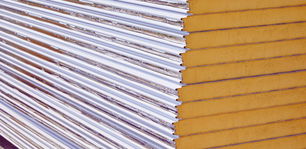
Due to the characteristics of the technology currently used in the construction business, it is necessary to use precisely selected components in order to obtain high-quality materials. Ready-for-use products like masonry mortars, thick-coat plasters, wall and floor coverings, insulation systems and gypsum plasterboards are produced from materials and chemical additives of various functions and characteristics.

Construction sector is among the largest and fastest-growing areas of the industry in Europe. The industry faces the following key challenges: continuously increasing requirements regarding safety, energy efficiency and durability while providing outstanding product quality and competitive price. Compliance with constantly changing legal regulations relating to production, applications, classification and environmental aspects of offered products is equally important. As a result of all those factors, despite the dynamic growth, the chemicals market in the construction sector is not an easy one for manufacturers and requires continuous creativity and quick reaction to the clients’ needs.

Nowadays, an offer of the building chemistry sector is continuously being developed, and entirely new items appear. Thus, in response to these changes, manufacturers of materials and components must provide increasingly innovative and specific methods.

Concrete additives

Additives for concrete and cement mortar constitute an essential part of products offered by PCC Group. Superplasticizers based on naphthalene sulphonic acid are used as the basic raw materials for the production of additives which provide concrete of an increased strength. They can also be successfully used as liquefiers for gypsum products such as gypsum mortars and pasteboards. Surfactants are an important position of our offer as they are used as aeration and air-entraining additives in concrete admixtures. They are used to improve resistance of concrete to temperature fluctuations. They may also act as the emulsifiers in the manufacturing process of bitumen emulsion and plasterboards, provide wetting properties by effective reduction of surface tension in paint or adhesives formulation, or improve lubrication properties. Furthermore, surfactants as components of cleaning agents allow for effective removal of dirt from concrete surfaces, as well as construction tools and equipment.

Another popular addition to concrete is microsilica, also known as silica fume. It belongs to the type II additive group, known as “pigments”. It is generally found as a by-product of the industrial manufacture of silicon metal. Microsilica has exceptional chemical and physical properties that allow us to obtain concrete with a compressive strength of 100-150 MPa. It is also characterized by good pozzolanic properties. Moreover, it is highly compatible with the plasticizers, superplasticizers and other plasticizing additives used with concrete.

The PCC Group also offers high-quality microsilica manufactured at Bakki Industry Park. This product is manufactured in line with the principles of sustainable chemistry. The production process uses renewable energy sourced from Icelandic geothermal springs. This leads to emitting a third of the carbon dioxide by other plants.

Polyurethane systems

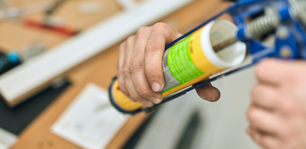
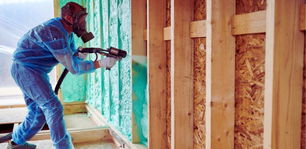
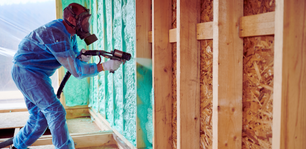
PCC Group produces also one- and two-component polyurethane systems intended, i.a., for the construction industry, where they are widely used in residential, industrial, agricultural engineering and in public utility buildings. Polyurethane systems are intended for the production of insulation materials based on semi-rigid and rigid foams suitable for thermal insulation and waterproofing systems for roofs, attics, walls, floors or foundations. In addition, the product portfolio includes systems intended for the manufacture of various types of adhesives and polyurethane sealants.

PCC Group portfolio is also a wide range of components required in manufacturing OCF (One Component Foam) and rigid polyurethane foam applicable to thermal and acoustic insulation. Among them, there are semi-finished products (polyether polyols), flame retardants and emulsifying agents.

Crossin Insulations series

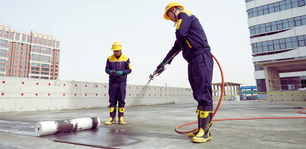
Our offer intended for the construction sector includes a line of innovative solutions regarding thermal and acoustic insulation and waterproofing under the Crossin Insulations trade name. Crossin series includes especially insulation boards for thermal insulation of walls and systems based on spray polyurethane foam intended for weld-free insulation of walls, slabs, ceilings, rooves. Crossin Insulation Systems based on polyurethane foam have the advantage of high effectiveness, quickness and simplicity of installation, sustainability and durability of parameters, as well as resistance to atmospheric factors.

Furthermore, the offer intended for the construction sector provides solutions concerning finishing, decorative materials, e.g. plasticizers used in wall and floor lining, additives to decorative paints or polyurethane-based finished agents for wood imitation.