PCC
RegisterLogin Page

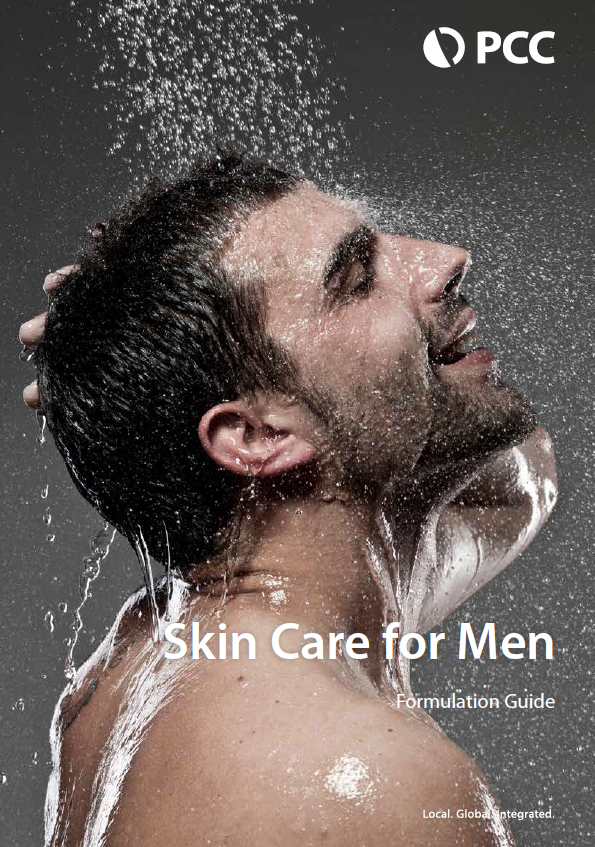
Men’s Care

Men’s cosmetic formulations are based on a set of chemical raw materials that guarantee effectiveness while maintaining a high safety profile. These ingredients must meet the needs of men’s skin – from deep cleansing to care and refreshment – and their selection requires compliance with European quality and safety standards.

Okładka katalogu
Filters
Function
Composition
Segment
Manufacturer
of 5
ROKAmid MRZ4 (PEG-4 Rapeseedamide) ROKAmid MRZ4 is a non-ionic surfactant, part of the group of ethoxylated alkanolamides, under the INCI name PEG-4 Rapeseedamide. The product has the form of a liquid...
Composition
Alkoxylated amides
CAS No.
85536-23-8
ROKAmid MRZ4 (PEG-4 Rapeseedamide)
ROKAmina®K30 (Cocamidopropyl Betaine) ROKAmina K30 belongs to the amphoteric surfactants from the betaine group. The commercial product is an aqueous solution with an active content of about 30% and...
Composition
Betaines
CAS No.
97862-59-4
ROKAmina®K30 (Cocamidopropyl Betaine)
ROKAmina®K40 (Cocamidopropyl Betaine) ROKAmina K40 belongs to the amphoteric surfactants of the betaine group. The commercial product is an aqueous solution with an active substance content of about...
Composition
Betaines
CAS No.
97862-59-4
ROKAmina®K40 (Cocamidopropyl Betaine)
ROKAmina®K40HC (Cocamidopropyl Betaine) ROKAmina K40HC is a very high purity amphoteric surfactant from the betaine group. The commercial product is an aqueous solution with an active substance content...
Composition
Betaines
CAS No.
61789-40-0
ROKAmina®K40HC (Cocamidopropyl Betaine)
ROKAmina®K45HC (Cocamidopropyl Betaine) ROKAmina K45HC is a very high purity amphoteric surfactant from the betaine group. Its INCI name is: Cocamidopropyl Betaine. At room temperature it is a pale yellow...
Composition
Betaines
CAS No.
97862-59-4
ROKAmina®K45HC (Cocamidopropyl Betaine)
ROKAmina®K30 MB (Cocamidopropyl Betaine) ROKAmina K30 MB belongs to the amphoteric surfactants from the betaine group. The commercial product is an aqueous solution with an active content of about 30% and...
Composition
Betaines
CAS No.
97862-59-4
ROKAmina®K30 MB (Cocamidopropyl Betaine)
ROKAmina®K30B MB (Coco-betaine) ROKAmina K30B MB is a very high purity product from the group betaine, classified as amphoteric surfactants. The commercial product is a practically colourless aqueous...
Composition
Betaines
CAS No.
66455-29-6
ROKAmina®K30B MB (Coco-betaine)
ROKAmina®K30K (Cocamidopropyl Betaine) ROKAmina K30K is classified as an amphoteric surfactants from the betaines group. The commercial product is a light yellow aqueous solution containing 29 to 32%...
Composition
Betaines
CAS No.
97862-59-4
ROKAmina®K30K (Cocamidopropyl Betaine)
ROKAmina®K40HC MB (Cocamidopropyl Betaine) ROKAmina K40HC MB is a very high purity amphoteric surfactant from the betaine group. The commercial product is an aqueous solution with an active substance content...
Composition
Betaines
CAS No.
97862-59-4
ROKAmina®K40HC MB (Cocamidopropyl Betaine)
ROKAmina®L30B (Lauryl betaine) ROKAmina L30B is a very high-purity product from the betaine group, classified as an amphoteric surfactant. The commercial product is a virtually colourless aqueous...
Composition
Betaines
CAS No.
66455-29-6
ROKAmina®L30B (Lauryl betaine)
ROKAmina®L30B MB (Lauryl betaine) ROKAmina L30B MB is a very high-purity product from the betaine group, classified as an amphoteric surfactant. The raw material included in ROKAmina L30B MB is a...
Composition
Betaines
CAS No.
66455-29-6
ROKAmina®L30B MB (Lauryl betaine)
ROKAnol®K14 (Cetoleth-14) ROKAnol® K14 is a non-ionic surfactant belonging to the group of ethoxylated fatty alcohols (INCI name: Cetoleth–14). The product is manufactured from raw materials...
Composition
Alkoxylated alcohols, Ethoxylated alcohols
CAS No.
68920-66-1
ROKAnol®K14  (Cetoleth-14)
ROKAnol®K18 (Cetoleth-18) ROKAnol® K18 is a non-ionic surfactant that belongs to the group of ethoxylated fatty alcohols. The product is manufactured on the basis of natural raw materials....
Composition
Alkoxylated alcohols, Ethoxylated alcohols
CAS No.
68920-66-1
ROKAnol®K18  (Cetoleth-18)
ROKAnol®K3 (Cetoleth-3) ROKAnol® K3 is a non-ionic surfactant belonging to the group of ethoxylated fatty alcohols (INCI name: Cetoleth-3). The product is manufactured from raw materials...
Composition
Alkoxylated alcohols, Ethoxylated alcohols
CAS No.
68920-66-1
ROKAnol®K3  (Cetoleth-3)
ROKAnol® L3A (Laureth-3) ROKAnol® L3A is a non-ionic surfactant belonging to the group of ethoxylated fatty alcohols (INCI name: Laureth-3). The product co-creates a group of surfactants...
Composition
Alkoxylated alcohols, Ethoxylated alcohols
CAS No.
68551-12-2
ROKAnol® L3A (Laureth-3)
ROKAnol® L4 (Laureth-4) ROKAnol® L4 is a non-ionic surfactant belonging to the group of ethoxylated fatty alcohols called INCI: Laureth-4. The product is part of a group of surfactants...
Composition
Alkoxylated alcohols, Ethoxylated alcohols
CAS No.
68439-50-9
ROKAnol® L4 (Laureth-4)
ROKAnol® LK2 (Laureth-2) ROKAnol® LK2 is a non-ionic surfactant belonging to the group of ethoxylated fatty alcohols (INCI name: Laureth-2.) The product is part of a group of surfactants...
Composition
Alkoxylated alcohols, Ethoxylated alcohols
CAS No.
68439-50-9
ROKAnol® LK2 (Laureth-2)
ROKAnol® LK2A (Laureth-2) ROKAnol® LK2A is a non-ionic surfactant belonging to the group of ethoxylated fatty alcohols (INCI name: Laureth-2.) The product co-creates a group of surfactants...
Composition
Alkoxylated alcohols, Ethoxylated alcohols
CAS No.
68439-50-9
ROKAnol® LK2A (Laureth-2)
ROKAnol® LK3 (Laureth-3) ROKAnol® LK3 is a non-ionic surfactant belonging to the group of ethoxylated fatty alcohols called INCI: Laureth-3. The product is part of a group of surfactants...
Composition
Alkoxylated alcohols, Ethoxylated alcohols
CAS No.
68439-50-9
ROKAnol® LK3 (Laureth-3)
ROKAnol® LN75/50 (PEG-75 Lanolin) ROKAnol LN75 / 50 is a non-ionic surfactant called INCI: PEG-75 Lanolin, which is an ethoxylated derivative of lanolin, used mainly in cosmetic applications. The...
Composition
Alkoxylated alcohols, Ethoxylated alcohols
ROKAnol® LN75/50 (PEG-75 Lanolin)
21 - 40 of 87 products
Items on page: 20

How do raw materials for the production of men’s cosmetics affect their performance?

Chemical raw materials for the production of cosmetics in the men’s care segment are used in various products: bath and shower gels, shampoos, body washes, 2-in-1 products, shaving gels, aftershaves, body and hair care cosmetics. In the production of men’s cosmetics, raw materials are responsible for:

  • effective cleansing of the scalp and hair,
  • foaming and stable foam (in gels and shampoos),
  • appropriate consistency (gels, emulsions, lotions),
  • dissolving auxiliary substances (oils, fragrances, care additives),
  • comfort of application and care – both in daily washing and after-shave care.

Types of raw materials used in the production of men’s care cosmetics

  1. Surfactants, including: detergents, wetting agents, foaming agents,
  2. emulsifiers and solubilisers,
  3. Rheology modifiers, thickeners and consistency stabilisers,
  4. Auxiliary ingredients and functional additives, such as: fragrances, care ingredients, emollients.

Surfactants, i.e. cleansing agents in men’s skincare

These are the basic chemical raw materials for the production of shower gels, shampoos and soaps – they are responsible for creating foam, facilitating the removal of impurities and sebum, as well as sweat and dirt. PCC offers a wide range of surfactants: amphoteric (e.g. ROKAmina®K30B), anionic (e.g. EXOsoft L3/40) and non-ionic (e.g. ROKwinol 20), which allows for flexibility in adapting to different skin types and the desired level of gentleness.

Emulsifiers and solubilisers – formula stabilisation and phase combination

Emulsifiers and solubilisers are particularly useful substances when a cosmetic combines water and oil ingredients, such as in the case of body gels with fragrances, oils and care ingredients. These chemical raw materials for the production of men’s cosmetics allow for a stable and homogeneous formula, preventing the separation of ingredients. Many PCC Group products are ideal for this purpose, especially those based on betaines, sorbitan esters or alkoxylated fatty acids.
Thickeners and stabilisers – controlling the texture of men’s products
Rheology modifiers affect the viscosity, density and texture of a cosmetic product, which translates into ease of application and perception of product quality. In men’s cosmetics, thickeners help to achieve the desired consistency of gels, shampoos and liquids. Chemical raw materials from this type of group form the basis for the production of men’s care cosmetics with the appropriate technological parameters.

What ingredients improve the comfort of use of men’s cosmetics?

Functional additives play a key role in men’s care cosmetics, affecting both the functional properties and the final quality of the formulation. These ingredients are responsible for: the intensity and durability of the fragrance, the appropriate level of foaming, ease of application and comfort of rinsing off the cosmetic. This group also includes components that improve the smoothness and softness of the skin, as well as substances that support the stability of the formulation. The chemical raw materials for the production of men’s cosmetics available from PCC allow for precise adjustment of the sensory and functional parameters of products to meet user needs and market trends.

Safety of raw materials used in men’s cosmetics

Chemical raw materials for the production of men’s cosmetics must meet the stringent safety requirements applicable in the EU market. It is essential that they comply with the provisions of Regulation (EC) No 1223/2009 on cosmetic products, toxicological assessment standards and ingredient documentation rules. Raw materials offered by manufacturers such as the PCC Group are subject to quality control, have complete technical documentation (SDS, specifications, certificates of analysis) and comply with REACH and GMP. This means they can be safely used in the production of men’s cosmetics, guaranteeing formulation stability and user safety.