PCC
RegisterLogin Page

Dispersants

Dispersants are substances that cause larger particles to break down, preventing them from re-aggregating. A dispersion system consists of two immiscible phases – one is the continuous phase and the other is the dispersed phase. Additional mechanical energy is required to disperse a given substance, which causes the dispersant to mix with the phases that make up the system.

Filters
Function
Composition
Segment
Manufacturer
of 13
ROKAnol® IT8 (Isotrideceth-8) ROKAnol® IT8 is a non-ionic surfactant from the group of ethoxylated fatty alcohols, INCI name: Isotrideceth-8. It belongs to the group of surface active products...
Composition
Alkoxylated alcohols, Ethoxylated alcohols
CAS No.
69011-36-5
ROKAnol® IT8 (Isotrideceth-8)
ROKAnol® IT8W (Isotrideceth-8) ROKAnol IT8W is a non-ionic surfactant from the group of ethoxylated fatty alcohols (isotridecyl alcohol, iso-C13), INCI name: Isotrideceth-8. The commercial product...
Composition
Alkoxylated alcohols
CAS No.
69011-36-5
ROKAnol® IT8W (Isotrideceth-8)
ROKAnol® IT9W (Isotrideceth-9) ROKAnol® IT9W is a non-ionic surfactant of the group of ethoxylated fatty alcohols (INCI name: Isotrideceth-9). The product belongs to a large group of surfactants...
Composition
Alkoxylated alcohols, Ethoxylated alcohols
CAS No.
69011-36-5
ROKAnol® IT9W (Isotrideceth-9)
ROKAnol®K14 (Cetoleth-14) ROKAnol® K14 is a non-ionic surfactant belonging to the group of ethoxylated fatty alcohols (INCI name: Cetoleth–14). The product is manufactured from raw materials...
Composition
Alkoxylated alcohols, Ethoxylated alcohols
CAS No.
68920-66-1
ROKAnol®K14  (Cetoleth-14)
ROKAnol®K18 (Cetoleth-18) ROKAnol® K18 is a non-ionic surfactant that belongs to the group of ethoxylated fatty alcohols. The product is manufactured on the basis of natural raw materials....
Composition
Alkoxylated alcohols, Ethoxylated alcohols
CAS No.
68920-66-1
ROKAnol®K18  (Cetoleth-18)
ROKAnol®K21 (Cetoleth-21) ROKAnol® K21 is a non-ionic surfactant belonging to the group of ethoxylated fatty alcohols (INCI name: Cetoleth–21). The product is manufactured from raw materials...
Composition
Alkoxylated alcohols, Ethoxylated alcohols
CAS No.
68920-66-1
ROKAnol®K21  (Cetoleth-21)
ROKAnol®K3 (Cetoleth-3) ROKAnol® K3 is a non-ionic surfactant belonging to the group of ethoxylated fatty alcohols (INCI name: Cetoleth-3). The product is manufactured from raw materials...
Composition
Alkoxylated alcohols, Ethoxylated alcohols
CAS No.
68920-66-1
ROKAnol®K3  (Cetoleth-3)
ROKAnol®K5 (Cetoleth-5) ROKAnol® K5 is a non-ionic surfactant belonging to the group of ethoxylated fatty alcohols (INCI name: Cetoleth–5). The product is manufactured from raw materials...
Composition
Alkoxylated alcohols, Ethoxylated alcohols
CAS No.
9005-04-3
ROKAnol®K5 (Cetoleth-5)
ROKAnol®K7 (Cetoleth-7) ROKAnol® K7 is a non-ionic surfactant belonging to the group of ethoxylated fatty alcohols (INCI name: Cetoleth–7). The product is manufactured from raw materials...
Composition
Alkoxylated alcohols, Ethoxylated alcohols
CAS No.
68920-66-1
ROKAnol®K7 (Cetoleth-7)
ROKAnol® L7 (Laureth-7) ROKAnol® L7 is a non-ionic surfactant that belongs to the group of ethoxylated fatty alcohols; INCI name: Laureth-7. The product is part of a group of surfactants...
Composition
Alkoxylated alcohols, Ethoxylated alcohols
CAS No.
68439-50-9
ROKAnol® L7 (Laureth-7)
ROKAnol® L7A (C12-16 Laureth-7) ROKAnol® L7A is a non-ionic surfactant belonging to the group of ethoxylated fatty alcohols (INCI name: C12-16 Laureth-7.) The product is part of a group of surfactants...
Composition
Alkoxylated alcohols, Ethoxylated alcohols
CAS No.
68551-12-2
ROKAnol® L7A (C12-16 Laureth-7)
ROKAnol®L7W (Laureth-7) ROKAnol® L7W is a non-ionic surfactant belonging to the group of ethoxylated fatty alcohols (INCI name: Laureth-7.) The product is part of a group of surfactants...
Composition
Alkoxylated alcohols, Ethoxylated alcohols
CAS No.
68439-50-9
ROKAnol®L7W  (Laureth-7)
ROKAnol® LK1 (Laureth-1) ROKAnol® LK1 is a non-ionic surfactant that belongs to the group of ethoxylated fatty alcohols; INCI name: Laureth-1. The product is part of a group of surfactants...
Composition
Alkoxylated alcohols, Ethoxylated alcohols
CAS No.
68439-50-9
ROKAnol® LK1 (Laureth-1)
ROKAnol® LK2 (Laureth-2) ROKAnol® LK2 is a non-ionic surfactant belonging to the group of ethoxylated fatty alcohols (INCI name: Laureth-2.) The product is part of a group of surfactants...
Composition
Alkoxylated alcohols, Ethoxylated alcohols
CAS No.
68439-50-9
ROKAnol® LK2 (Laureth-2)
ROKAnol® LK2A (Laureth-2) ROKAnol® LK2A is a non-ionic surfactant belonging to the group of ethoxylated fatty alcohols (INCI name: Laureth-2.) The product co-creates a group of surfactants...
Composition
Alkoxylated alcohols, Ethoxylated alcohols
CAS No.
68439-50-9
ROKAnol® LK2A (Laureth-2)
ROKAnol® LK3 (Laureth-3) ROKAnol® LK3 is a non-ionic surfactant belonging to the group of ethoxylated fatty alcohols called INCI: Laureth-3. The product is part of a group of surfactants...
Composition
Alkoxylated alcohols, Ethoxylated alcohols
CAS No.
68439-50-9
ROKAnol® LK3 (Laureth-3)
ROKAnol®NL3 (C9-11 alcohol, ethoxylated) ROKAnol® NL3 is a non-ionic surfactant from the group of ethoxylated alcohols (INCI name: C9-11 Pareth-3). The product belongs to the ROKAnol® NL series based on...
Composition
Alkoxylated alcohols, Ethoxylated alcohols
CAS No.
68439-46-3
ROKAnol®NL3  (C9-11 alcohol, ethoxylated)
ROKAnol®NL4 (Alcohol C9-11, ethoxylated) ROKAnol® NL4 is a non-ionic surfactant from the group of ethoxylated alcohols (INCI name: C9-11 Pareth-4). The product belongs to the ROKAnol® NL series based on...
Composition
Alkoxylated alcohols, Ethoxylated alcohols
CAS No.
68439-46-3
ROKAnol®NL4  (Alcohol C9-11, ethoxylated)
ROKAnol®NL6 (C9-11 alcohol, ethoxylated) ROKAnol® NL6 belongs to nonionic surfactants from the group of ethoxylated fatty alcohols (INCI C9-11 Pareth-6). The product belongs to the ROKAnol® NL series, based...
Composition
Alkoxylated alcohols, Ethoxylated alcohols
CAS No.
68439-46-3
ROKAnol®NL6  (C9-11 alcohol, ethoxylated)
ROKAnol®NL6W (C9-11 alcohol, ethoxylated) ROKAnol® NL6W belongs to non-ionic surfactants from the group of ethoxylated fatty alcohols (INCI name: C9-11 Pareth-6). The product belongs to the ROKAnol® NL series...
Composition
Alkoxylated alcohols, Ethoxylated alcohols
CAS No.
68439-46-3
ROKAnol®NL6W  (C9-11 alcohol, ethoxylated)
161 - 180 of 257 products
Items on page: 20

Chemical nature of dispersants

Most often, dispersants are surfactants or mixtures thereof with different HLB values, which adsorb onto the surface of the dispersed phase particles, reducing the interfacial tension and improving their wettability by the continuous medium. Such adsorption reduces van der Waals interactions between fine particles and enhances repulsive interactions, which helps to keep them separate.

Mechanism of action of dispersants

The mechanism of action of dispersants is based on electrostatic and/or steric stabilisation. In the case of electrostatic stabilisation, ionic dispersants adsorb onto the surface of the particles, giving them a surface charge and forming a so-called double electric layer – the resulting charges cause particles of the same sign to repel each other, which prevents their coagulation.

Steric mechanism

In the steric mechanism, dispersants with a high molar mass (e.g. polymeric) form wide protective layers around the particles, whose spatial veil acts as a physical barrier, making it difficult for the particles to approach and recombine. Steric stabilisation is often less sensitive to the presence of electrolytes than electrostatic stabilisation.

Electro-steric stabilisation

In practice, many modern dispersants combine both mechanisms – so-called electro-steric stabilisation, where electrostatic repulsion and a polymer barrier are generated simultaneously, which increases the stability of the dispersion even under variable chemical conditions, such as pH or ionic strength of the environment.

Application of dispersants

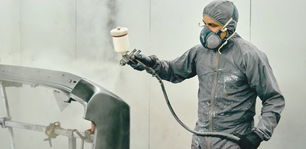
Dispersants are used in many applications, including in the automotive industry as additives to engine oils and in construction as additives to concrete. They can also be found in household and cosmetic chemicals. In the textile industry, they are used as additives to pigments. They are also used in petroleum processing.